

The Great Barrier Reef
92
moorings at popular sites have sharply reduced anchor damage.
Longer term trends
The selectivity of both natural disturbances and human
impacts is a key issue for predicting their longer-term
consequences. If cyclones, overfishing or coral bleaching affected all species equally, they would have no direct impact on species composition. Overall abundance
would decline, but there would be no direct change in
the relative abundance of each species. Massive destruction (e.g. more than a 90% decline in coral cover) is exceptional, even at the relatively small spatial scale that
ecologists normally study. A large number of studies
demonstrate selective mortality among corals and other
organisms—from cyclones, predators, diseases, and human impacts. As well as the immediate changes that
selective mortality induces, natural disturbances and
human impacts also promote longer-term changes. For
example, delayed mortality from outbreaks of disease
among injured survivors (Fig. 9.8), bioerosion of damaged coral skeleton, and altered predator-prey relationships (if one survives better than the other) may occur
for years after a cyclone has struck. Some species also
rebound faster than others after an acute disturbance,
further changing the composition of coral reefs.
Increasingly, many coral reefs today have a diminished ability to recover from recurrent natural disasters, due to other chronic human impacts. For example,
the recovery of Red Sea corals after catastrophic
mortality from low tides were much lower on a reef
flat that was chronically impacted by oil-spills, compared to a nearby location that was free of oil. This erosion of resilience (Box 9.3) is often characterised by
major shifts in species composition, called phase-shifts.
Overfishing typically leads to dominance by fleshy
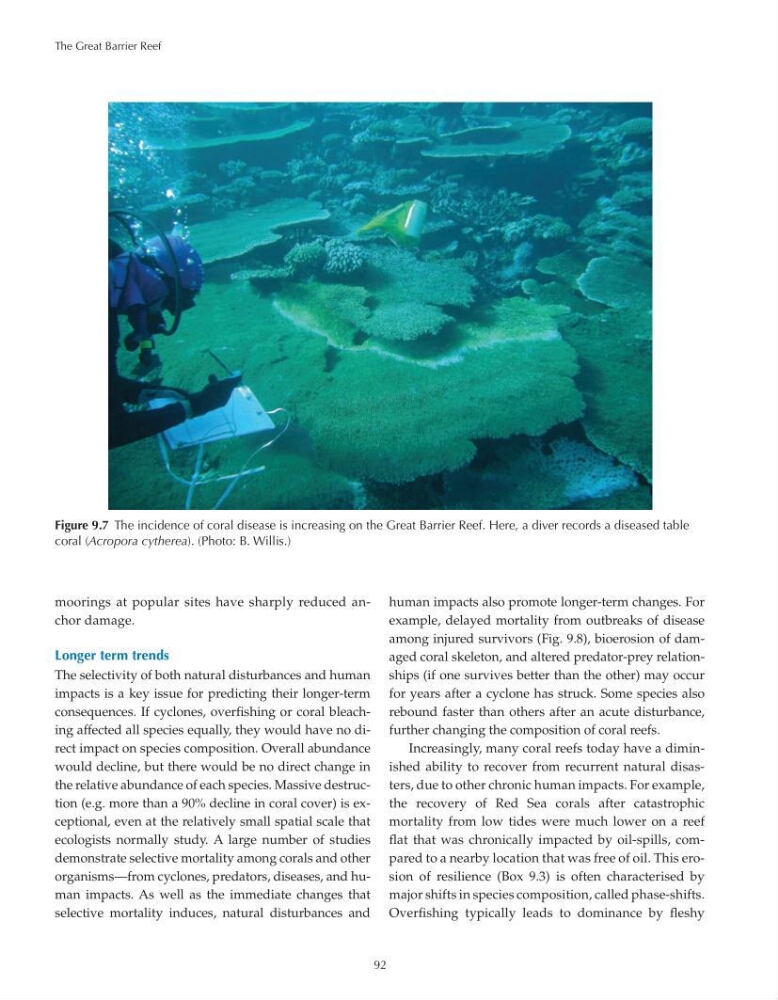
Figure 9.7 The incidence of coral disease is increasing on the Great Barrier Reef. Here, a diver records a diseased table
coral (Acropora cytherea). (Photo: B. Willis.)
92
moorings at popular sites have sharply reduced anchor damage.
Longer term trends
The selectivity of both natural disturbances and human
impacts is a key issue for predicting their longer-term
consequences. If cyclones, overfishing or coral bleaching affected all species equally, they would have no direct impact on species composition. Overall abundance
would decline, but there would be no direct change in
the relative abundance of each species. Massive destruction (e.g. more than a 90% decline in coral cover) is exceptional, even at the relatively small spatial scale that
ecologists normally study. A large number of studies
demonstrate selective mortality among corals and other
organisms—from cyclones, predators, diseases, and human impacts. As well as the immediate changes that
selective mortality induces, natural disturbances and
human impacts also promote longer-term changes. For
example, delayed mortality from outbreaks of disease
among injured survivors (Fig. 9.8), bioerosion of damaged coral skeleton, and altered predator-prey relationships (if one survives better than the other) may occur
for years after a cyclone has struck. Some species also
rebound faster than others after an acute disturbance,
further changing the composition of coral reefs.
Increasingly, many coral reefs today have a diminished ability to recover from recurrent natural disasters, due to other chronic human impacts. For example,
the recovery of Red Sea corals after catastrophic
mortality from low tides were much lower on a reef
flat that was chronically impacted by oil-spills, compared to a nearby location that was free of oil. This erosion of resilience (Box 9.3) is often characterised by
major shifts in species composition, called phase-shifts.
Overfishing typically leads to dominance by fleshy
Figure 9.7 The incidence of coral disease is increasing on the Great Barrier Reef. Here, a diver records a diseased table
coral (Acropora cytherea). (Photo: B. Willis.)