

9 – Human Impact on Coral Reefs
91
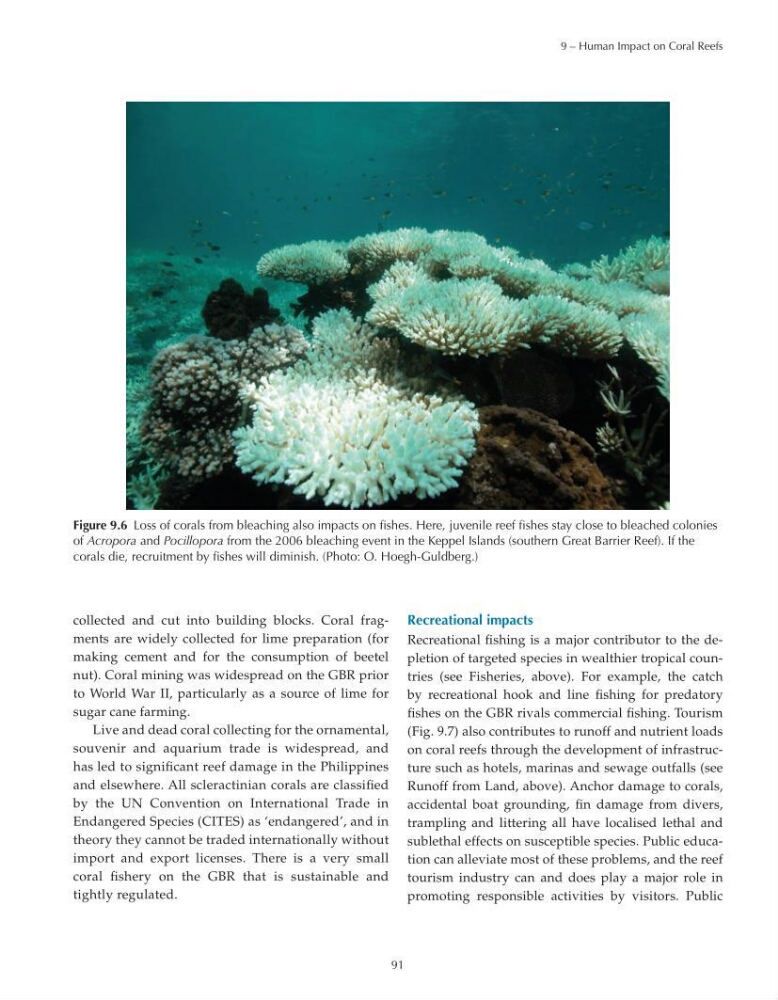
Figure 9.6 Loss of corals from bleaching also impacts on fishes. Here, juvenile reef fishes stay close to bleached colonies
of Acropora and Pocillopora from the 2006 bleaching event in the Keppel Islands (southern Great Barrier Reef). If the
corals die, recruitment by fishes will diminish. (Photo: O. Hoegh-Guldberg.)
collected and cut into building blocks. Coral fragments are widely collected for lime preparation (for
making cement and for the consumption of beetel
nut). Coral mining was widespread on the GBR prior
to World War II, particularly as a source of lime for
sugar cane farming.
Live and dead coral collecting for the ornamental,
souvenir and aquarium trade is widespread, and
has led to significant reef damage in the Philippines
and elsewhere. All scleractinian corals are classified
by the UN Convention on International Trade in
Endangered Species (CITES) as ‘endangered’, and in
theory they cannot be traded internationally without
import and export licenses. There is a very small
coral fishery on the GBR that is sustainable and
tightly regulated.
Recreational impacts
Recreational fishing is a major contributor to the depletion of targeted species in wealthier tropical countries (see Fisheries, above). For example, the catch
by recreational hook and line fishing for predatory
fishes on the GBR rivals commercial fishing. Tourism
(Fig. 9.7) also contributes to runoff and nutrient loads
on coral reefs through the development of infrastructure such as hotels, marinas and sewage outfalls (see
Runoff from Land, above). Anchor damage to corals,
accidental boat grounding, fin damage from divers,
trampling and littering all have localised lethal and
sublethal effects on susceptible species. Public education can alleviate most of these problems, and the reef
tourism industry can and does play a major role in
promoting responsible activities by visitors. Public
91
Figure 9.6 Loss of corals from bleaching also impacts on fishes. Here, juvenile reef fishes stay close to bleached colonies
of Acropora and Pocillopora from the 2006 bleaching event in the Keppel Islands (southern Great Barrier Reef). If the
corals die, recruitment by fishes will diminish. (Photo: O. Hoegh-Guldberg.)
collected and cut into building blocks. Coral fragments are widely collected for lime preparation (for
making cement and for the consumption of beetel
nut). Coral mining was widespread on the GBR prior
to World War II, particularly as a source of lime for
sugar cane farming.
Live and dead coral collecting for the ornamental,
souvenir and aquarium trade is widespread, and
has led to significant reef damage in the Philippines
and elsewhere. All scleractinian corals are classified
by the UN Convention on International Trade in
Endangered Species (CITES) as ‘endangered’, and in
theory they cannot be traded internationally without
import and export licenses. There is a very small
coral fishery on the GBR that is sustainable and
tightly regulated.
Recreational impacts
Recreational fishing is a major contributor to the depletion of targeted species in wealthier tropical countries (see Fisheries, above). For example, the catch
by recreational hook and line fishing for predatory
fishes on the GBR rivals commercial fishing. Tourism
(Fig. 9.7) also contributes to runoff and nutrient loads
on coral reefs through the development of infrastructure such as hotels, marinas and sewage outfalls (see
Runoff from Land, above). Anchor damage to corals,
accidental boat grounding, fin damage from divers,
trampling and littering all have localised lethal and
sublethal effects on susceptible species. Public education can alleviate most of these problems, and the reef
tourism industry can and does play a major role in
promoting responsible activities by visitors. Public