

Analysis of the F content in bone samples from these two animals showed that
F levels of the bones from deer A were 15 to 20 times higher than those of the
bones from deer B.
21
In addition to inducing tooth mottling, F can also cause skeletal fluorosis.
Skeletal fluorosis causes affected bones to lose their normal, hard, smooth
luster and appear rough, porous, and chalky white. A generalized hyperostosis
(excessive formation of bone tissue, especially in the skull) and, in some cases,
exostotic lesions of the otherwise smooth, long bones may be observed
(exostosis is a spur or bony outgrowth from a bone) (Figure 10.7). Lameness or
stiffness is an intermittent sign of F toxicity. Figure 10.8 shows a lame cow,
Environmental Fluoride
159
[16:52 26/8/04 P:/CRC PRESS/4365 MING-HO.751 (1670)/4365-010.3d]
Ref: 4365 MING-HO YU Chap-010 Page: 159 149-170
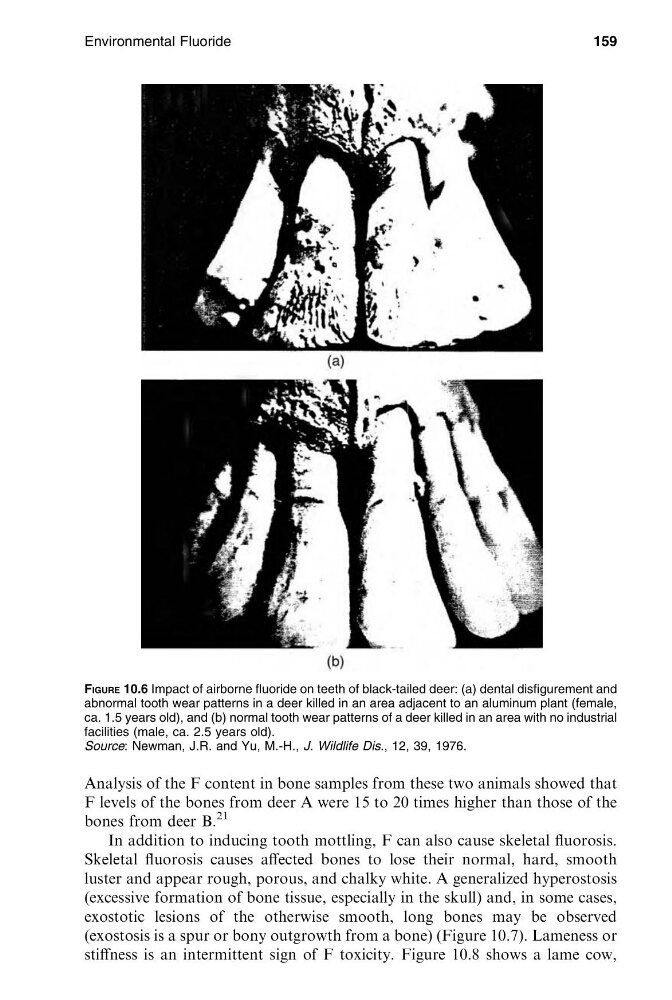
FIGURE 10.6 Impact of airborne fluoride on teeth of black-tailed deer: (a) dental disfigurement and
abnormal tooth wear patterns in a deer killed in an area adjacent to an aluminum plant (female,
ca. 1.5 years old), and (b) normal tooth wear patterns of a deer killed in an area with no industrial
facilities (male, ca. 2.5 years old).
Source: Newman, J.R. and Yu, M.-H., J. Wildlife Dis., 12, 39, 1976.
F levels of the bones from deer A were 15 to 20 times higher than those of the
bones from deer B.
21
In addition to inducing tooth mottling, F can also cause skeletal fluorosis.
Skeletal fluorosis causes affected bones to lose their normal, hard, smooth
luster and appear rough, porous, and chalky white. A generalized hyperostosis
(excessive formation of bone tissue, especially in the skull) and, in some cases,
exostotic lesions of the otherwise smooth, long bones may be observed
(exostosis is a spur or bony outgrowth from a bone) (Figure 10.7). Lameness or
stiffness is an intermittent sign of F toxicity. Figure 10.8 shows a lame cow,
Environmental Fluoride
159
[16:52 26/8/04 P:/CRC PRESS/4365 MING-HO.751 (1670)/4365-010.3d]
Ref: 4365 MING-HO YU Chap-010 Page: 159 149-170
FIGURE 10.6 Impact of airborne fluoride on teeth of black-tailed deer: (a) dental disfigurement and
abnormal tooth wear patterns in a deer killed in an area adjacent to an aluminum plant (female,
ca. 1.5 years old), and (b) normal tooth wear patterns of a deer killed in an area with no industrial
facilities (male, ca. 2.5 years old).
Source: Newman, J.R. and Yu, M.-H., J. Wildlife Dis., 12, 39, 1976.