

(NO 3
À ) and nitrite (NO 2
À
) ions before the plant can metabolize it. NO 2 -
induced plant injury may be due to either acidification or a photooxidation
process.
22 Symptoms exhibited by plants exposed to NO 2 are similar to those
observed in plants exposed to SO 2 , but much higher concentrations are
required to cause acute injury. However, decreased photosynthesis has been
demonstrated even at concentrations that do not produce visible injury. The
combined effect of NO and NO 2 gases appears to be additive.
Photosynthetic inhibition caused by NO x may be due to competition for
NADPH between the processes of nitrite reduction and carbon assimilation in
chloroplasts. NO 2 has been shown to cause swelling of chloroplast membranes.
23 Biochemical and membrane injuries may be caused by NH 3 produced
from NO 3
À
, if NH 3 is not utilized soon after its formation. Plants can
metabolize the dissolved NO x through their NO 2 assimilation pathway, as
shown below:
NO x ! NO 3
À
! NO 2
À ! NH 3 ! amino acids ! proteins
Other biochemical pathways affected by NO x include inhibition of lipid
biosynthesis, oxidation of unsaturated fatty acids in vivo, and stimulation of
peroxidase activity.
8.3.4 HEALTH EFFECTS
Studies on the pathological and physiological effects of NO 2 on animals have
been conducted at concentrations much higher than those found in ambient
Air Pollution – Inorganic Gases
119
[16:53 26/8/04 P:/CRC PRESS/4365 MING-HO.751 (1670)/4365-008.3d]
Ref: 4365 MING-HO YU Chap-008 Page: 119 111-134
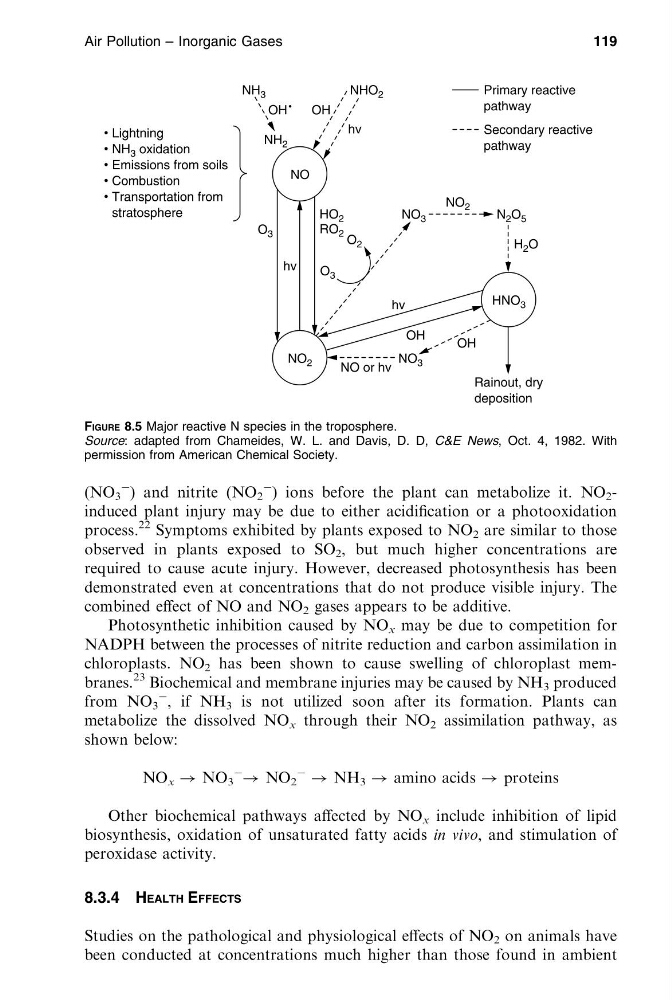
FIGURE 8.5 Major reactive N species in the troposphere.
Source: adapted from Chameides, W. L. and Davis, D. D, C&E News, Oct. 4, 1982. With
permission from American Chemical Society.
À ) and nitrite (NO 2
À
) ions before the plant can metabolize it. NO 2 -
induced plant injury may be due to either acidification or a photooxidation
process.
22 Symptoms exhibited by plants exposed to NO 2 are similar to those
observed in plants exposed to SO 2 , but much higher concentrations are
required to cause acute injury. However, decreased photosynthesis has been
demonstrated even at concentrations that do not produce visible injury. The
combined effect of NO and NO 2 gases appears to be additive.
Photosynthetic inhibition caused by NO x may be due to competition for
NADPH between the processes of nitrite reduction and carbon assimilation in
chloroplasts. NO 2 has been shown to cause swelling of chloroplast membranes.
23 Biochemical and membrane injuries may be caused by NH 3 produced
from NO 3
À
, if NH 3 is not utilized soon after its formation. Plants can
metabolize the dissolved NO x through their NO 2 assimilation pathway, as
shown below:
NO x ! NO 3
À
! NO 2
À ! NH 3 ! amino acids ! proteins
Other biochemical pathways affected by NO x include inhibition of lipid
biosynthesis, oxidation of unsaturated fatty acids in vivo, and stimulation of
peroxidase activity.
8.3.4 HEALTH EFFECTS
Studies on the pathological and physiological effects of NO 2 on animals have
been conducted at concentrations much higher than those found in ambient
Air Pollution – Inorganic Gases
119
[16:53 26/8/04 P:/CRC PRESS/4365 MING-HO.751 (1670)/4365-008.3d]
Ref: 4365 MING-HO YU Chap-008 Page: 119 111-134
FIGURE 8.5 Major reactive N species in the troposphere.
Source: adapted from Chameides, W. L. and Davis, D. D, C&E News, Oct. 4, 1982. With
permission from American Chemical Society.