

Copyright © National Academy of Sciences. All rights reserved.
Solar and Space Physics: A Science for a Technological Society
200
SOLAR AND SPACE PHYSICS: A SCIENCE FOR A TECHNOLOGICAL SOCIETY
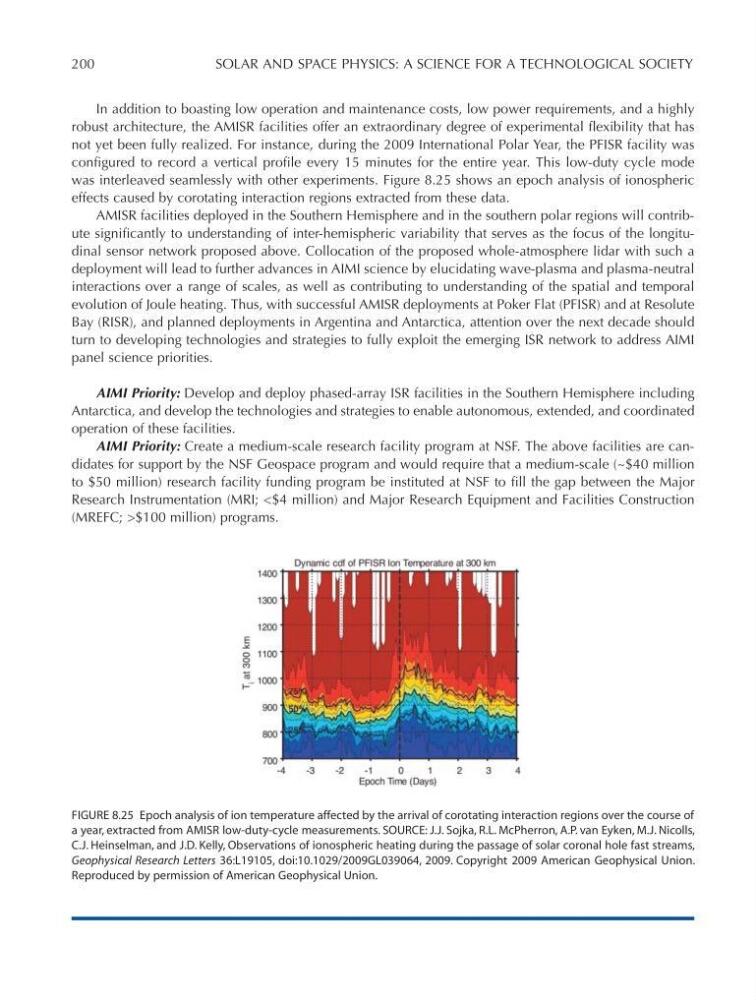
FIGURE 8.25 Epoch analysis of ion temperature affected by the arrival of corotating interaction regions over the course of
a year, extracted from AMISR low-duty-cycle measurements. SOURCE: J.J. Sojka, R.L. McPherron, A.P. van Eyken, M.J. Nicolls,
C.J. Heinselman, and J.D. Kelly, Observations of ionospheric heating during the passage of solar coronal hole fast streams,
Geophysical Research Letters 36:L19105, doi:10.1029/2009GL039064, 2009. Copyright 2009 American Geophysical Union.
Reproduced by permission of American Geophysical Union.
Figure 8-25
In addition to boasting low operation and maintenance costs, low power requirements, and a highly
robust architecture, the AMISR facilities offer an extraordinary degree of experimental flexibility that has
not yet been fully realized. For instance, during the 2009 International Polar Year, the PFISR facility was
configured to record a vertical profile every 15 minutes for the entire year. This low-duty cycle mode
was interleaved seamlessly with other experiments. Figure 8.25 shows an epoch analysis of ionospheric
effects caused by corotating interaction regions extracted from these data.
AMISR facilities deployed in the Southern Hemisphere and in the southern polar regions will contribute significantly to understanding of inter-hemispheric variability that serves as the focus of the longitudinal sensor network proposed above. Collocation of the proposed whole-atmosphere lidar with such a
deployment will lead to further advances in AIMI science by elucidating wave-plasma and plasma-neutral
interactions over a range of scales, as well as contributing to understanding of the spatial and temporal
evolution of Joule heating. Thus, with successful AMISR deployments at Poker Flat (PFISR) and at Resolute
Bay (RISR), and planned deployments in Argentina and Antarctica, attention over the next decade should
turn to developing technologies and strategies to fully exploit the emerging ISR network to address AIMI
panel science priorities.
AIMI Priority: Develop and deploy phased-array ISR facilities in the Southern Hemisphere including
Antarctica, and develop the technologies and strategies to enable autonomous, extended, and coordinated
operation of these facilities.
AIMI Priority: Create a medium-scale research facility program at NSF. The above facilities are candidates for support by the NSF Geospace program and would require that a medium-scale (~$40 million
to $50 million) research facility funding program be instituted at NSF to fill the gap between the Major
Research Instrumentation (MRI; <$4 million) and Major Research Equipment and Facilities Construction
(MREFC; >$100 million) programs.
Solar and Space Physics: A Science for a Technological Society
200
SOLAR AND SPACE PHYSICS: A SCIENCE FOR A TECHNOLOGICAL SOCIETY
FIGURE 8.25 Epoch analysis of ion temperature affected by the arrival of corotating interaction regions over the course of
a year, extracted from AMISR low-duty-cycle measurements. SOURCE: J.J. Sojka, R.L. McPherron, A.P. van Eyken, M.J. Nicolls,
C.J. Heinselman, and J.D. Kelly, Observations of ionospheric heating during the passage of solar coronal hole fast streams,
Geophysical Research Letters 36:L19105, doi:10.1029/2009GL039064, 2009. Copyright 2009 American Geophysical Union.
Reproduced by permission of American Geophysical Union.
Figure 8-25
In addition to boasting low operation and maintenance costs, low power requirements, and a highly
robust architecture, the AMISR facilities offer an extraordinary degree of experimental flexibility that has
not yet been fully realized. For instance, during the 2009 International Polar Year, the PFISR facility was
configured to record a vertical profile every 15 minutes for the entire year. This low-duty cycle mode
was interleaved seamlessly with other experiments. Figure 8.25 shows an epoch analysis of ionospheric
effects caused by corotating interaction regions extracted from these data.
AMISR facilities deployed in the Southern Hemisphere and in the southern polar regions will contribute significantly to understanding of inter-hemispheric variability that serves as the focus of the longitudinal sensor network proposed above. Collocation of the proposed whole-atmosphere lidar with such a
deployment will lead to further advances in AIMI science by elucidating wave-plasma and plasma-neutral
interactions over a range of scales, as well as contributing to understanding of the spatial and temporal
evolution of Joule heating. Thus, with successful AMISR deployments at Poker Flat (PFISR) and at Resolute
Bay (RISR), and planned deployments in Argentina and Antarctica, attention over the next decade should
turn to developing technologies and strategies to fully exploit the emerging ISR network to address AIMI
panel science priorities.
AIMI Priority: Develop and deploy phased-array ISR facilities in the Southern Hemisphere including
Antarctica, and develop the technologies and strategies to enable autonomous, extended, and coordinated
operation of these facilities.
AIMI Priority: Create a medium-scale research facility program at NSF. The above facilities are candidates for support by the NSF Geospace program and would require that a medium-scale (~$40 million
to $50 million) research facility funding program be instituted at NSF to fill the gap between the Major
Research Instrumentation (MRI; <$4 million) and Major Research Equipment and Facilities Construction
(MREFC; >$100 million) programs.