

60
M. Hadj Kacem et al.
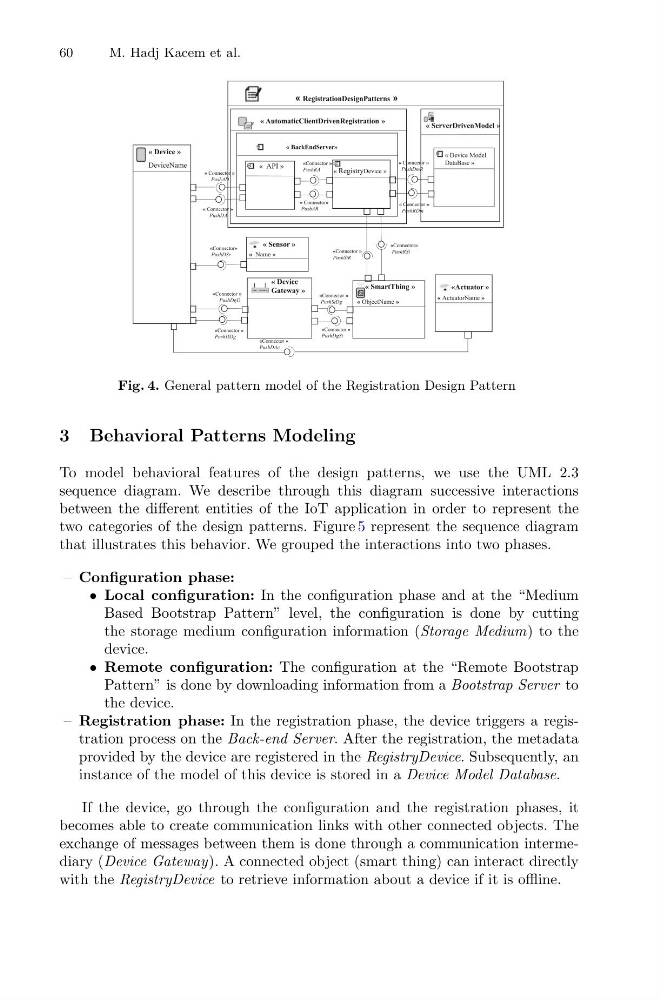
Fig. 4. General pattern model of the Registration Design Pattern
3 Behavioral Patterns Modeling
To model behavioral features of the design patterns, we use the UML 2.3
sequence diagram. We describe through this diagram successive interactions
between the different entities of the IoT application in order to represent the
two categories of the design patterns. Figure 5 represent the sequence diagram
that illustrates this behavior. We grouped the interactions into two phases.
– Configuration phase:
• Local configuration: In the configuration phase and at the “Medium
Based Bootstrap Pattern” level, the configuration is done by cutting
the storage medium configuration information (Storage Medium) to the
device.
• Remote configuration: The configuration at the “Remote Bootstrap
Pattern” is done by downloading information from a Bootstrap Server to
the device.
– Registration phase: In the registration phase, the device triggers a registration process on the Back-end Server. After the registration, the metadata
provided by the device are registered in the RegistryDevice. Subsequently, an
instance of the model of this device is stored in a Device Model Database.
If the device, go through the configuration and the registration phases, it
becomes able to create communication links with other connected objects. The
exchange of messages between them is done through a communication intermediary (Device Gateway). A connected object (smart thing) can interact directly
with the RegistryDevice to retrieve information about a device if it is offline.
M. Hadj Kacem et al.
Fig. 4. General pattern model of the Registration Design Pattern
3 Behavioral Patterns Modeling
To model behavioral features of the design patterns, we use the UML 2.3
sequence diagram. We describe through this diagram successive interactions
between the different entities of the IoT application in order to represent the
two categories of the design patterns. Figure 5 represent the sequence diagram
that illustrates this behavior. We grouped the interactions into two phases.
– Configuration phase:
• Local configuration: In the configuration phase and at the “Medium
Based Bootstrap Pattern” level, the configuration is done by cutting
the storage medium configuration information (Storage Medium) to the
device.
• Remote configuration: The configuration at the “Remote Bootstrap
Pattern” is done by downloading information from a Bootstrap Server to
the device.
– Registration phase: In the registration phase, the device triggers a registration process on the Back-end Server. After the registration, the metadata
provided by the device are registered in the RegistryDevice. Subsequently, an
instance of the model of this device is stored in a Device Model Database.
If the device, go through the configuration and the registration phases, it
becomes able to create communication links with other connected objects. The
exchange of messages between them is done through a communication intermediary (Device Gateway). A connected object (smart thing) can interact directly
with the RegistryDevice to retrieve information about a device if it is offline.