

Modeling of Bootstrapping and Registration IoT Design Patterns
61
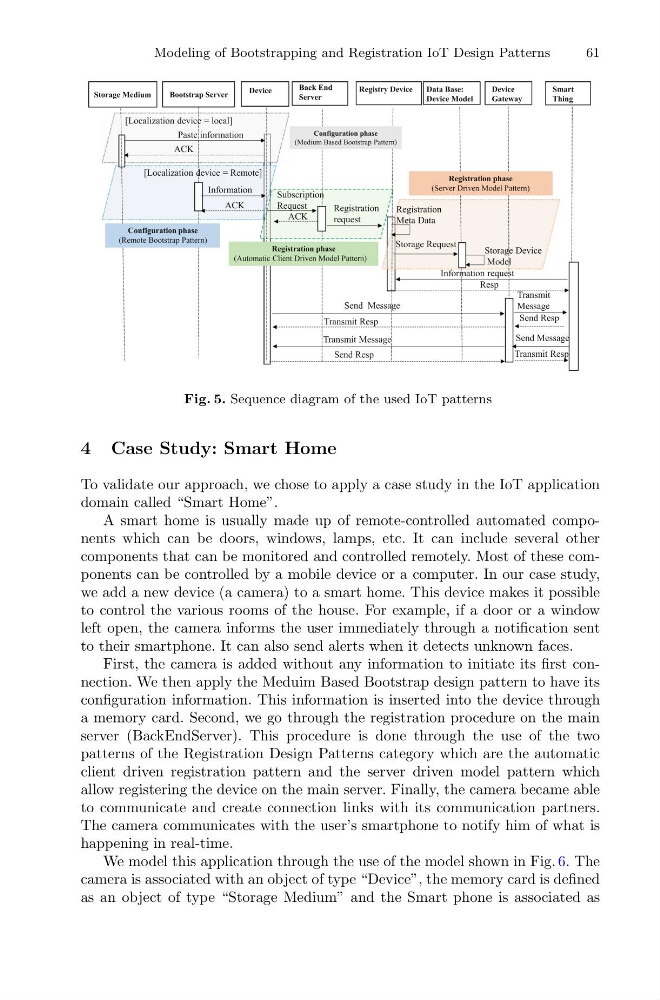
Fig. 5. Sequence diagram of the used IoT patterns
4 Case Study: Smart Home
To validate our approach, we chose to apply a case study in the IoT application
domain called “Smart Home”.
A smart home is usually made up of remote-controlled automated components which can be doors, windows, lamps, etc. It can include several other
components that can be monitored and controlled remotely. Most of these components can be controlled by a mobile device or a computer. In our case study,
we add a new device (a camera) to a smart home. This device makes it possible
to control the various rooms of the house. For example, if a door or a window
left open, the camera informs the user immediately through a notification sent
to their smartphone. It can also send alerts when it detects unknown faces.
First, the camera is added without any information to initiate its first connection. We then apply the Meduim Based Bootstrap design pattern to have its
configuration information. This information is inserted into the device through
a memory card. Second, we go through the registration procedure on the main
server (BackEndServer). This procedure is done through the use of the two
patterns of the Registration Design Patterns category which are the automatic
client driven registration pattern and the server driven model pattern which
allow registering the device on the main server. Finally, the camera became able
to communicate and create connection links with its communication partners.
The camera communicates with the user’s smartphone to notify him of what is
happening in real-time.
We model this application through the use of the model shown in Fig. 6. The
camera is associated with an object of type “Device”, the memory card is defined
as an object of type “Storage Medium” and the Smart phone is associated as
61
Fig. 5. Sequence diagram of the used IoT patterns
4 Case Study: Smart Home
To validate our approach, we chose to apply a case study in the IoT application
domain called “Smart Home”.
A smart home is usually made up of remote-controlled automated components which can be doors, windows, lamps, etc. It can include several other
components that can be monitored and controlled remotely. Most of these components can be controlled by a mobile device or a computer. In our case study,
we add a new device (a camera) to a smart home. This device makes it possible
to control the various rooms of the house. For example, if a door or a window
left open, the camera informs the user immediately through a notification sent
to their smartphone. It can also send alerts when it detects unknown faces.
First, the camera is added without any information to initiate its first connection. We then apply the Meduim Based Bootstrap design pattern to have its
configuration information. This information is inserted into the device through
a memory card. Second, we go through the registration procedure on the main
server (BackEndServer). This procedure is done through the use of the two
patterns of the Registration Design Patterns category which are the automatic
client driven registration pattern and the server driven model pattern which
allow registering the device on the main server. Finally, the camera became able
to communicate and create connection links with its communication partners.
The camera communicates with the user’s smartphone to notify him of what is
happening in real-time.
We model this application through the use of the model shown in Fig. 6. The
camera is associated with an object of type “Device”, the memory card is defined
as an object of type “Storage Medium” and the Smart phone is associated as