

18
data in the CPU caches must be flushed by the application using the CLWB, CLFLUSHOPT,
CLFLUSH, non-temporal stores, or WBINVD machine instructions.
Enhanced Asynchronous DRAM Refresh (eADR) requires that a non-maskable
interrupt (NMI) routine be called to flush the CPU caches before the ADR event can begin.
Applications running on an eADR platform do not need to perform flush operations
because the hardware should flush the data automatically, but they are still required
to perform an SFENCE operation to maintain write order correctness. Stores should be
considered persistent only when they are globally visible, which the SFENCE guarantees.
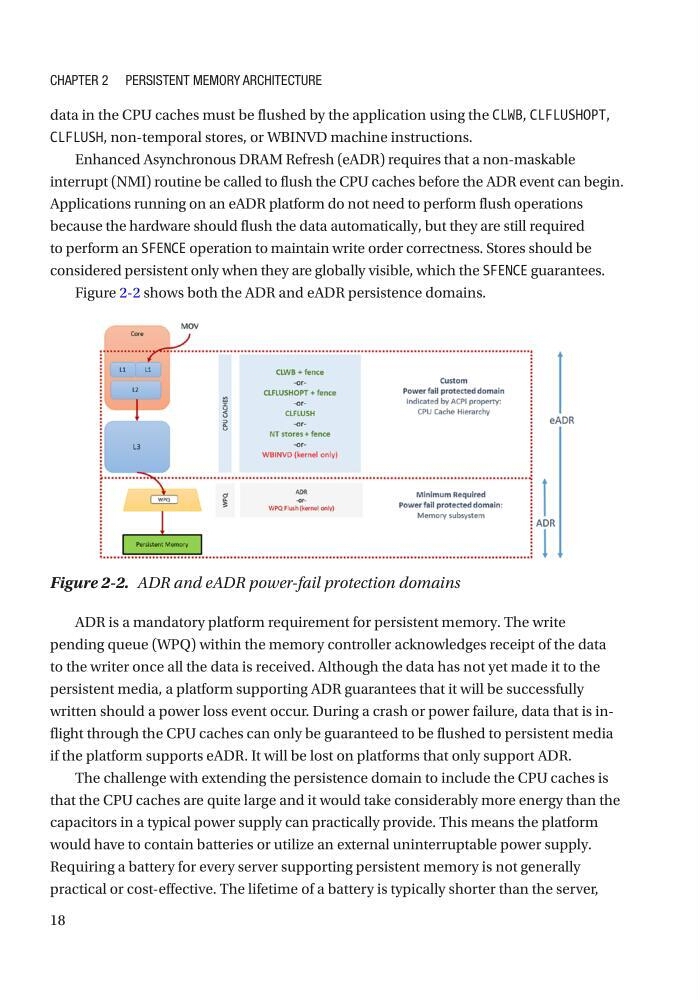
Figure 2-2 shows both the ADR and eADR persistence domains.
ADR is a mandatory platform requirement for persistent memory. The write
pending queue (WPQ) within the memory controller acknowledges receipt of the data
to the writer once all the data is received. Although the data has not yet made it to the
persistent media, a platform supporting ADR guarantees that it will be successfully
written should a power loss event occur. During a crash or power failure, data that is inflight through the CPU caches can only be guaranteed to be flushed to persistent media
if the platform supports eADR. It will be lost on platforms that only support ADR.
The challenge with extending the persistence domain to include the CPU caches is
that the CPU caches are quite large and it would take considerably more energy than the
capacitors in a typical power supply can practically provide. This means the platform
would have to contain batteries or utilize an external uninterruptable power supply.
Requiring a battery for every server supporting persistent memory is not generally
practical or cost-effective. The lifetime of a battery is typically shorter than the server,
Figure 2-2. ADR and eADR power-fail protection domains
Chapter 2 persistent MeMory arChiteCture
data in the CPU caches must be flushed by the application using the CLWB, CLFLUSHOPT,
CLFLUSH, non-temporal stores, or WBINVD machine instructions.
Enhanced Asynchronous DRAM Refresh (eADR) requires that a non-maskable
interrupt (NMI) routine be called to flush the CPU caches before the ADR event can begin.
Applications running on an eADR platform do not need to perform flush operations
because the hardware should flush the data automatically, but they are still required
to perform an SFENCE operation to maintain write order correctness. Stores should be
considered persistent only when they are globally visible, which the SFENCE guarantees.
Figure 2-2 shows both the ADR and eADR persistence domains.
ADR is a mandatory platform requirement for persistent memory. The write
pending queue (WPQ) within the memory controller acknowledges receipt of the data
to the writer once all the data is received. Although the data has not yet made it to the
persistent media, a platform supporting ADR guarantees that it will be successfully
written should a power loss event occur. During a crash or power failure, data that is inflight through the CPU caches can only be guaranteed to be flushed to persistent media
if the platform supports eADR. It will be lost on platforms that only support ADR.
The challenge with extending the persistence domain to include the CPU caches is
that the CPU caches are quite large and it would take considerably more energy than the
capacitors in a typical power supply can practically provide. This means the platform
would have to contain batteries or utilize an external uninterruptable power supply.
Requiring a battery for every server supporting persistent memory is not generally
practical or cost-effective. The lifetime of a battery is typically shorter than the server,
Figure 2-2. ADR and eADR power-fail protection domains
Chapter 2 persistent MeMory arChiteCture