

215
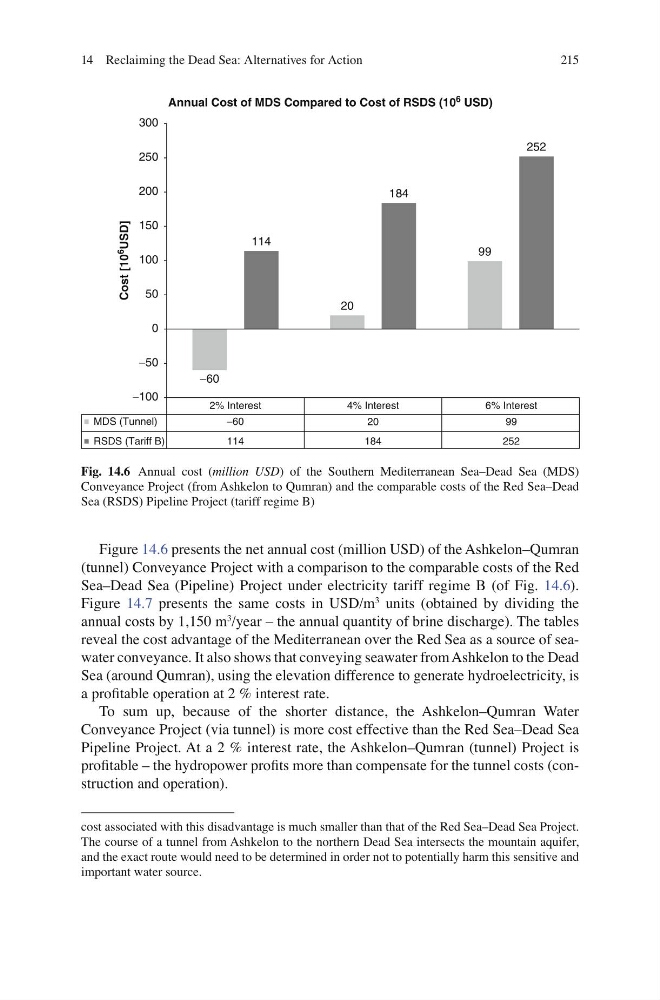
Figure 14.6 presents the net annual cost (million USD) of the Ashkelon–Qumran
(tunnel) Conveyance Project with a comparison to the comparable costs of the Red
Sea–Dead Sea (Pipeline) Project under electricity tariff regime B (of Fig. 14.6 ).
Figure 14.7 presents the same costs in USD/m
3 units (obtained by dividing the
annual costs by 1,150 m
3 /year – the annual quantity of brine discharge). The tables
reveal the cost advantage of the Mediterranean over the Red Sea as a source of seawater conveyance. It also shows that conveying seawater from Ashkelon to the Dead
Sea (around Qumran), using the elevation difference to generate hydroelectricity, is
a profi table operation at 2 % interest rate.
To sum up, because of the shorter distance, the Ashkelon–Qumran Water
Conveyance Project (via tunnel) is more cost effective than the Red Sea–Dead Sea
Pipeline Project. At a 2 % interest rate, the Ashkelon–Qumran (tunnel) Project is
profi table – the hydropower profi ts more than compensate for the tunnel costs (construction and operation).
cost associated with this disadvantage is much smaller than that of the Red Sea–Dead Sea Project.
The course of a tunnel from Ashkelon to the northern Dead Sea intersects the mountain aquifer,
and the exact route would need to be determined in order not to potentially harm this sensitive and
important water source.
2% Interest
4% Interest
6% Interest
MDS (Tunnel)
−60
20
99
RSDS (Tariff B)
114
184
252
−60
20
99
114
184
252
−100
−50
0
50
100
150
200
250
300
Annual Cost of MDS Compared to Cost of RSDS (10 6 USD)
Cost [10 6
USD]
Fig. 14.6 Annual cost ( million USD ) of the Southern Mediterranean Sea–Dead Sea (MDS)
Conveyance Project (from Ashkelon to Qumran) and the comparable costs of the Red Sea–Dead
Sea (RSDS) Pipeline Project (tariff regime B)
14 Reclaiming the Dead Sea: Alternatives for Action
Figure 14.6 presents the net annual cost (million USD) of the Ashkelon–Qumran
(tunnel) Conveyance Project with a comparison to the comparable costs of the Red
Sea–Dead Sea (Pipeline) Project under electricity tariff regime B (of Fig. 14.6 ).
Figure 14.7 presents the same costs in USD/m
3 units (obtained by dividing the
annual costs by 1,150 m
3 /year – the annual quantity of brine discharge). The tables
reveal the cost advantage of the Mediterranean over the Red Sea as a source of seawater conveyance. It also shows that conveying seawater from Ashkelon to the Dead
Sea (around Qumran), using the elevation difference to generate hydroelectricity, is
a profi table operation at 2 % interest rate.
To sum up, because of the shorter distance, the Ashkelon–Qumran Water
Conveyance Project (via tunnel) is more cost effective than the Red Sea–Dead Sea
Pipeline Project. At a 2 % interest rate, the Ashkelon–Qumran (tunnel) Project is
profi table – the hydropower profi ts more than compensate for the tunnel costs (construction and operation).
cost associated with this disadvantage is much smaller than that of the Red Sea–Dead Sea Project.
The course of a tunnel from Ashkelon to the northern Dead Sea intersects the mountain aquifer,
and the exact route would need to be determined in order not to potentially harm this sensitive and
important water source.
2% Interest
4% Interest
6% Interest
MDS (Tunnel)
−60
20
99
RSDS (Tariff B)
114
184
252
−60
20
99
114
184
252
−100
−50
0
50
100
150
200
250
300
Annual Cost of MDS Compared to Cost of RSDS (10 6 USD)
Cost [10 6
USD]
Fig. 14.6 Annual cost ( million USD ) of the Southern Mediterranean Sea–Dead Sea (MDS)
Conveyance Project (from Ashkelon to Qumran) and the comparable costs of the Red Sea–Dead
Sea (RSDS) Pipeline Project (tariff regime B)
14 Reclaiming the Dead Sea: Alternatives for Action