

157
farm level. We are interested in revealing how water policy and regulations get
translated into irrigation management practices on the ground and what informal
“rules in use” (Ostrom 1990 ) are emerging in response. To this end, we have analysed the literature on WUAs in the Fergana Valley – in particular studies emerging
from the IWRM Fergana Valley project funded by the Swiss Agency for Development
and Cooperation – and fi eld notes taken during a study trip visiting various WUAs
and irrigation authorities in the region in May 2014. The section explores four
practices pertinent to the role of WUAs: practices of representation, leadership,
regulation and education.
11.3.1 Practices of Representation
The potential value of WUAs – following the global discourse on IWRM – lies in
them providing an institutional basis for water users in an irrigation area to manage
available water resources more effectively and equitably through collective action.
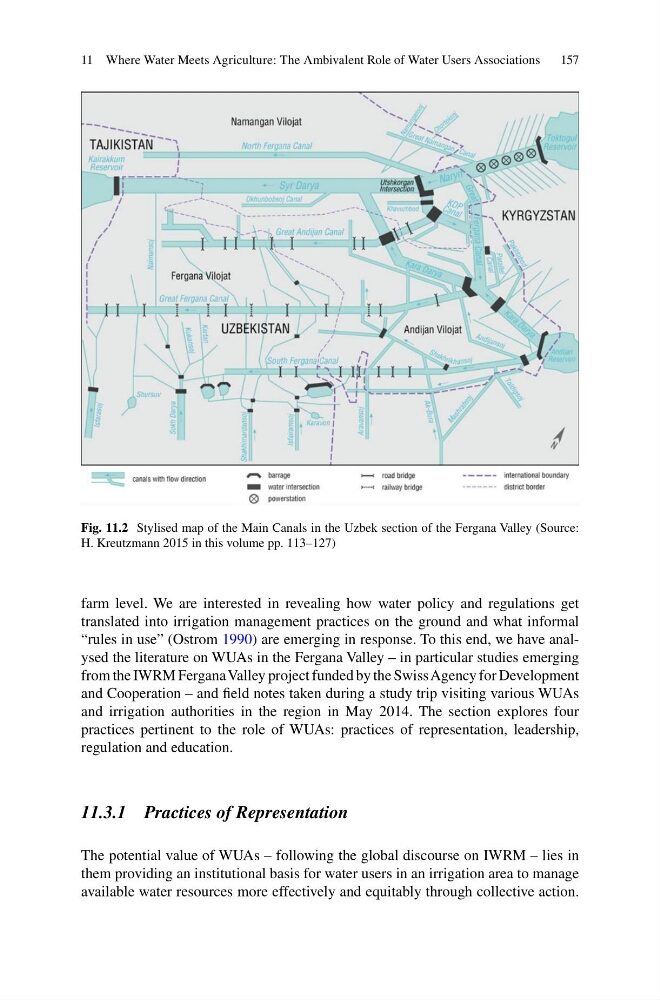
Fig. 11.2 Stylised map of the Main Canals in the Uzbek section of the Fergana Valley (Source:
H. Kreutzmann 2015 in this volume pp. 113–127)
11 Where Water Meets Agriculture: The Ambivalent Role of Water Users Associations
farm level. We are interested in revealing how water policy and regulations get
translated into irrigation management practices on the ground and what informal
“rules in use” (Ostrom 1990 ) are emerging in response. To this end, we have analysed the literature on WUAs in the Fergana Valley – in particular studies emerging
from the IWRM Fergana Valley project funded by the Swiss Agency for Development
and Cooperation – and fi eld notes taken during a study trip visiting various WUAs
and irrigation authorities in the region in May 2014. The section explores four
practices pertinent to the role of WUAs: practices of representation, leadership,
regulation and education.
11.3.1 Practices of Representation
The potential value of WUAs – following the global discourse on IWRM – lies in
them providing an institutional basis for water users in an irrigation area to manage
available water resources more effectively and equitably through collective action.
Fig. 11.2 Stylised map of the Main Canals in the Uzbek section of the Fergana Valley (Source:
H. Kreutzmann 2015 in this volume pp. 113–127)
11 Where Water Meets Agriculture: The Ambivalent Role of Water Users Associations