

7.5 MYRRHA, A Research Tool in Support
of the European Roadmap for P&T
Spent nuclear fuel from light water reactors (LWR) contains a mixture of uranium
and plutonium (up to 95 % of the initial uranium mass), fission products, and minor
actinides such as neptunium, americium, and curium. In the shorter term, the highly
active but short-lived fission products will dominate the activity of this spent fuel.
However, the transuranics including plutonium and the minor actinides (together
with a few long-lived fission products) are largely responsible for the long-term
radiotoxicity and heat production of LWR spent fuel.
The principle behind Partitioning and Transmutation (P&T) is to isolate the
minor actinides from this LWR spent fuel and transmute them. As for these isotopes
the fission to capture ratio increases with increasing neutron energy, a fast neutron
spectrum facility is required. By burning the minor actinides, the long-lived, heatproducing component of spent fuel can be strongly reduced, which decreases the
radiotoxicity of the spent fuel and its heat load. Both conditions will ease the design
and construction of a long-term storage solution (geological disposal) from the
engineering point of view.
Partitioning & Transmutation requires the development of an advanced fuel
cycle. Currently, two major options for P&T are being studied worldwide: the
single-stratum approach wherein the minor actinides are burned in fast reactors that
are deployed for electricity production and the double-strata approach where the Pu
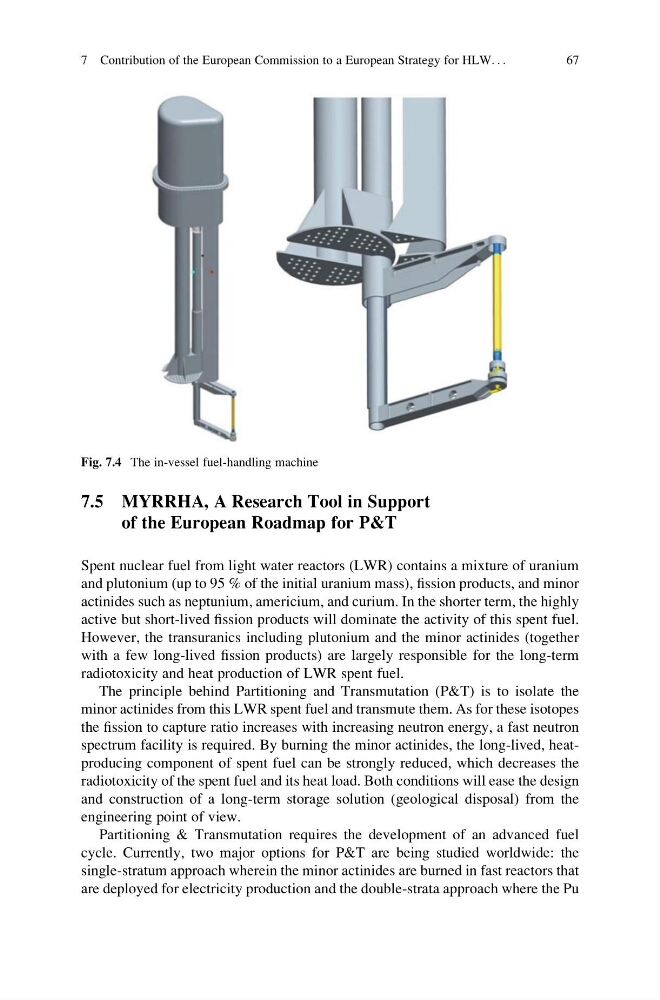
Fig. 7.4 The in-vessel fuel-handling machine
7 Contribution of the European Commission to a European Strategy for HLW. . .
67
of the European Roadmap for P&T
Spent nuclear fuel from light water reactors (LWR) contains a mixture of uranium
and plutonium (up to 95 % of the initial uranium mass), fission products, and minor
actinides such as neptunium, americium, and curium. In the shorter term, the highly
active but short-lived fission products will dominate the activity of this spent fuel.
However, the transuranics including plutonium and the minor actinides (together
with a few long-lived fission products) are largely responsible for the long-term
radiotoxicity and heat production of LWR spent fuel.
The principle behind Partitioning and Transmutation (P&T) is to isolate the
minor actinides from this LWR spent fuel and transmute them. As for these isotopes
the fission to capture ratio increases with increasing neutron energy, a fast neutron
spectrum facility is required. By burning the minor actinides, the long-lived, heatproducing component of spent fuel can be strongly reduced, which decreases the
radiotoxicity of the spent fuel and its heat load. Both conditions will ease the design
and construction of a long-term storage solution (geological disposal) from the
engineering point of view.
Partitioning & Transmutation requires the development of an advanced fuel
cycle. Currently, two major options for P&T are being studied worldwide: the
single-stratum approach wherein the minor actinides are burned in fast reactors that
are deployed for electricity production and the double-strata approach where the Pu
Fig. 7.4 The in-vessel fuel-handling machine
7 Contribution of the European Commission to a European Strategy for HLW. . .
67