

Two fuel-handling machines are used, located at opposite sides of the core
(Fig. 7.4). Each machine covers one side of the core. The use of two machines
provides sufficient range to cover the necessary fuel storage positions without the
need of an increase for the reactor vessel when only one fuel-handling machine is
used. Each machine is based on the well-known fast reactor technology of the
‘rotating plug’ concept using SCARA (Selective Compliant Assembly Robot Arm)
robots. To extract or insert the fuel assemblies, the robot arm can move up or down
for about 2 m. A gripper and guide arm is used to handle the FAs: the gripper locks
the FA, and the guide has two functions, namely to hold the FA in the vertical
orientation and to ensure neighboring FAs are not disturbed when a FA is extracted
from the core. An ultrasonic (US) sensor is used to uniquely identify the FAs.
The in-vessel fuel-handling machine will also perform in-vessel inspection and
recovery of an unconstrained FA. Incremental single-point scanning of the diaphragm can be performed by an US sensor mounted at the gripper of the IVFHM.
The baffle under the diaphragm is crucial for the strategy as it limits the work area
where inspection and recovery are needed. It eliminates also the need of additional
recovery and inspection manipulators, prevents items from migrating into the space
between the diaphragm and the reactor cover, and permits side scanning.
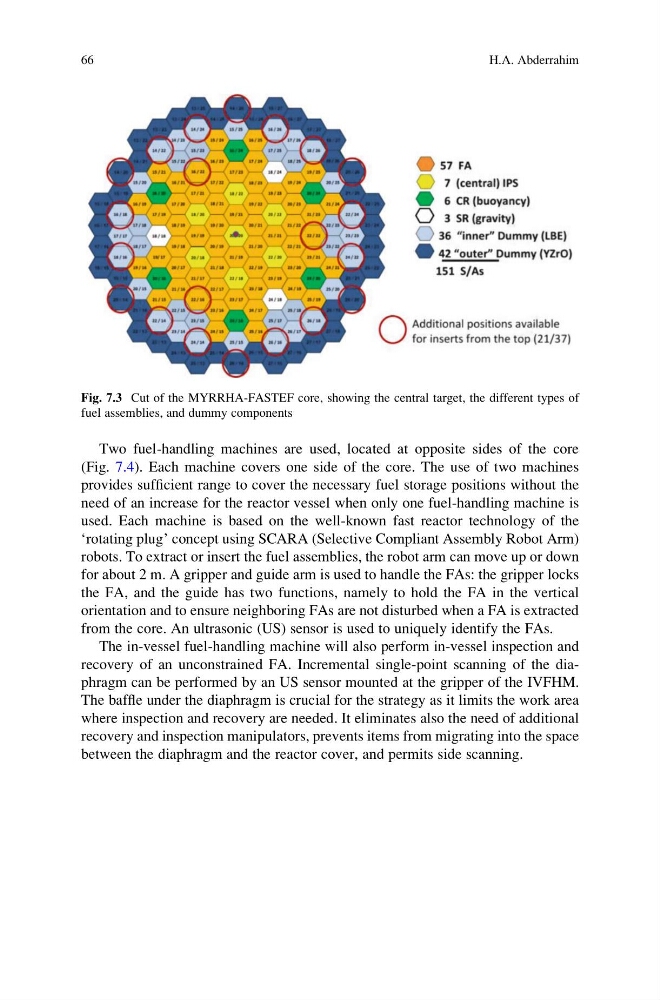
Fig. 7.3 Cut of the MYRRHA-FASTEF core, showing the central target, the different types of
fuel assemblies, and dummy components
66
H.A. Abderrahim
(Fig. 7.4). Each machine covers one side of the core. The use of two machines
provides sufficient range to cover the necessary fuel storage positions without the
need of an increase for the reactor vessel when only one fuel-handling machine is
used. Each machine is based on the well-known fast reactor technology of the
‘rotating plug’ concept using SCARA (Selective Compliant Assembly Robot Arm)
robots. To extract or insert the fuel assemblies, the robot arm can move up or down
for about 2 m. A gripper and guide arm is used to handle the FAs: the gripper locks
the FA, and the guide has two functions, namely to hold the FA in the vertical
orientation and to ensure neighboring FAs are not disturbed when a FA is extracted
from the core. An ultrasonic (US) sensor is used to uniquely identify the FAs.
The in-vessel fuel-handling machine will also perform in-vessel inspection and
recovery of an unconstrained FA. Incremental single-point scanning of the diaphragm can be performed by an US sensor mounted at the gripper of the IVFHM.
The baffle under the diaphragm is crucial for the strategy as it limits the work area
where inspection and recovery are needed. It eliminates also the need of additional
recovery and inspection manipulators, prevents items from migrating into the space
between the diaphragm and the reactor cover, and permits side scanning.
Fig. 7.3 Cut of the MYRRHA-FASTEF core, showing the central target, the different types of
fuel assemblies, and dummy components
66
H.A. Abderrahim