

core, brings the proton beam via the beam tube into the central core region. The
spallation heat deposit is dissipated to the reactor primary circuit. The spallation
module guarantees the barrier between the reactor LBE and the reactor hall and
ensures optimal conditions for the spallation reaction. The spallation module
assembly is conceived as an IPS and is easily removable or replaceable.
The primary, secondary, and tertiary cooling systems have been designed to
evacuate a maximum thermal core power of 110 MW. The 10 MW more than the
nominal core power account for the power deposited by the protons, for the power
of in-vessel fuel, and for the power deposited in the structures by γ-heating. The
average coolant temperature increase in the core in nominal conditions is 140
C
with a coolant velocity of 2 m/s. The primary cooling system consists of two pumps
and four primary heat exchangers (PHX).
The interference of the core with the proton beam, the fact that the room located
directly above the core will be occupied by much instrumentation and IPS penetrations, and core compactness result in insufficient space for fuel handling to
(un)load the core from above. Since the very first design of MYRRHA, fuel
handling has been performed from underneath the core. Fuel assemblies are kept
by buoyancy under the core support plate.
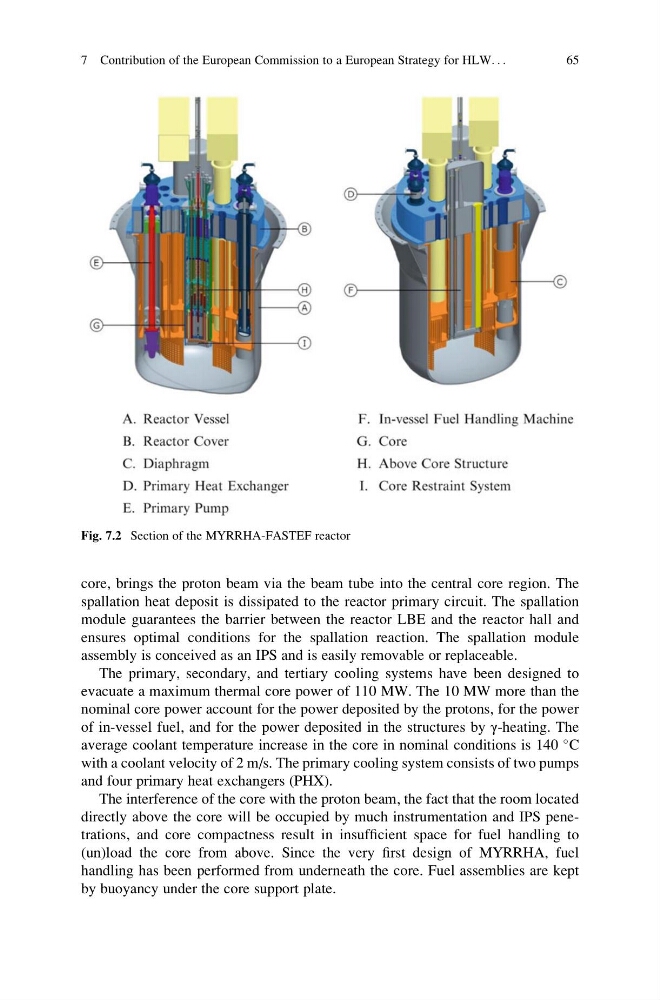
Fig. 7.2 Section of the MYRRHA-FASTEF reactor
7 Contribution of the European Commission to a European Strategy for HLW. . .
65
spallation heat deposit is dissipated to the reactor primary circuit. The spallation
module guarantees the barrier between the reactor LBE and the reactor hall and
ensures optimal conditions for the spallation reaction. The spallation module
assembly is conceived as an IPS and is easily removable or replaceable.
The primary, secondary, and tertiary cooling systems have been designed to
evacuate a maximum thermal core power of 110 MW. The 10 MW more than the
nominal core power account for the power deposited by the protons, for the power
of in-vessel fuel, and for the power deposited in the structures by γ-heating. The
average coolant temperature increase in the core in nominal conditions is 140
C
with a coolant velocity of 2 m/s. The primary cooling system consists of two pumps
and four primary heat exchangers (PHX).
The interference of the core with the proton beam, the fact that the room located
directly above the core will be occupied by much instrumentation and IPS penetrations, and core compactness result in insufficient space for fuel handling to
(un)load the core from above. Since the very first design of MYRRHA, fuel
handling has been performed from underneath the core. Fuel assemblies are kept
by buoyancy under the core support plate.
Fig. 7.2 Section of the MYRRHA-FASTEF reactor
7 Contribution of the European Commission to a European Strategy for HLW. . .
65