

Next, the applicability of the present method for fuel debris in Fukushima
Daiichi NPP is examined. The fuel debris in Fukushima Daiichi NPP contains
highly concentrated B-10, which has a large neutron absorption cross section.
Thus, numerical validation of the present method and the conventional neutron
transmission method for the sample with B-10 were carried out. The burn-up of the
1.0E-11
1.0E-10
1.0E-09
1.0E-08
1.0E-07
1.0E-06
1.0E-05
1.0E+00
1.0E+01
1.0E+02
Arbitrary unit
Energy (eV)
I129 capture rate yield
Transmission
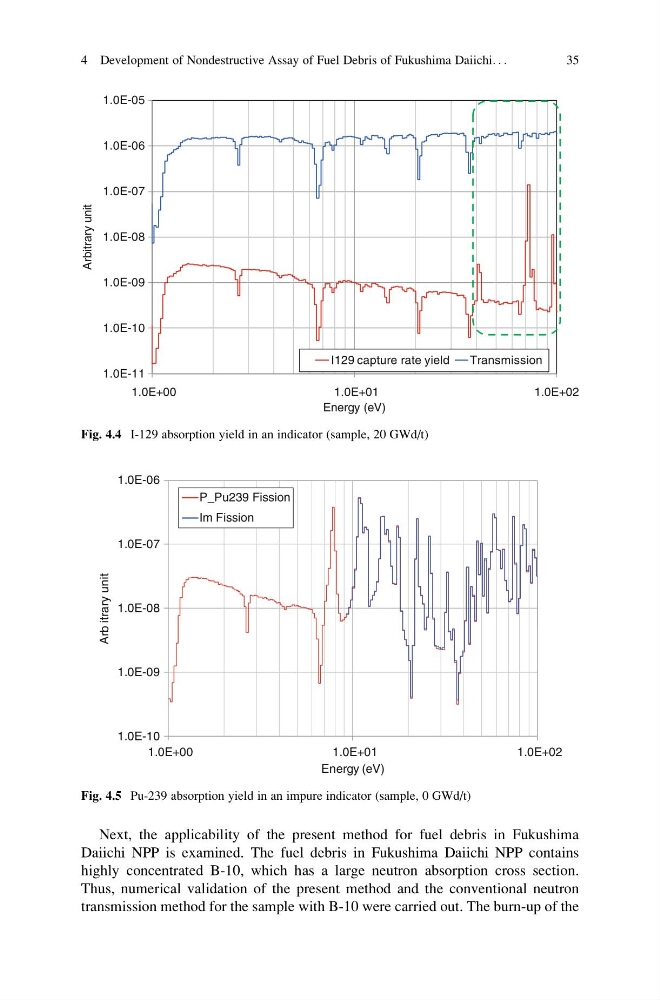
Fig. 4.4 I-129 absorption yield in an indicator (sample, 20 GWd/t)
1.0E-10
1.0E-09
1.0E-08
1.0E-07
1.0E-06
1.0E+00
1.0E+01
1.0E+02
Arb itrary unit
Energy (eV)
P_Pu239 Fission
Im Fission
Fig. 4.5 Pu-239 absorption yield in an impure indicator (sample, 0 GWd/t)
4 Development of Nondestructive Assay of Fuel Debris of Fukushima Daiichi. . .
35
Daiichi NPP is examined. The fuel debris in Fukushima Daiichi NPP contains
highly concentrated B-10, which has a large neutron absorption cross section.
Thus, numerical validation of the present method and the conventional neutron
transmission method for the sample with B-10 were carried out. The burn-up of the
1.0E-11
1.0E-10
1.0E-09
1.0E-08
1.0E-07
1.0E-06
1.0E-05
1.0E+00
1.0E+01
1.0E+02
Arbitrary unit
Energy (eV)
I129 capture rate yield
Transmission
Fig. 4.4 I-129 absorption yield in an indicator (sample, 20 GWd/t)
1.0E-10
1.0E-09
1.0E-08
1.0E-07
1.0E-06
1.0E+00
1.0E+01
1.0E+02
Arb itrary unit
Energy (eV)
P_Pu239 Fission
Im Fission
Fig. 4.5 Pu-239 absorption yield in an impure indicator (sample, 0 GWd/t)
4 Development of Nondestructive Assay of Fuel Debris of Fukushima Daiichi. . .
35