

17.4 Sensitivity Calculation Method
17.4.1 Sensitivity to Infinite-Dilution Cross Section
Core characteristics such as k eff , power distribution, and control rod worth are
calculated by using effective cross section in deterministic methods. Sensitivities
are usually calculated by using sensitivity calculation codes such as SAGEP [9],
SAGEP-T [10], and SAINT [11]. However, the sensitivities are for relative changes
of effective cross sections. Here we derive a calculation method of sensitivities
relative to infinite-dilution cross sections for fast reactor analysis. Usually the
effective cross sections are calculated by using the Bondarenko self-shielding
factor method, the subgroup method. In that method the effective cross sections
are expressed by the infinite-dilution cross section and the self-shielding factors f
e
σ ¼ f Á σ
ð17:10Þ
The self-shielding factors depend on the background cross section and temperature.
The background cross section for nuclide i
0 in a homogeneous medium is calculated
by the formula
σ
b
i
0 ¼
1
N i 0
X
k6 ¼i 0
N k Á σ
k
t
ð17:11Þ
where N k is the atomic number density of light nuclide k and σ
k
t is the microscopic
total cross section. The sensitivity coefficient is defined by the relative changes of
the core characteristics caused by the relative changes of the cross sections. Here we
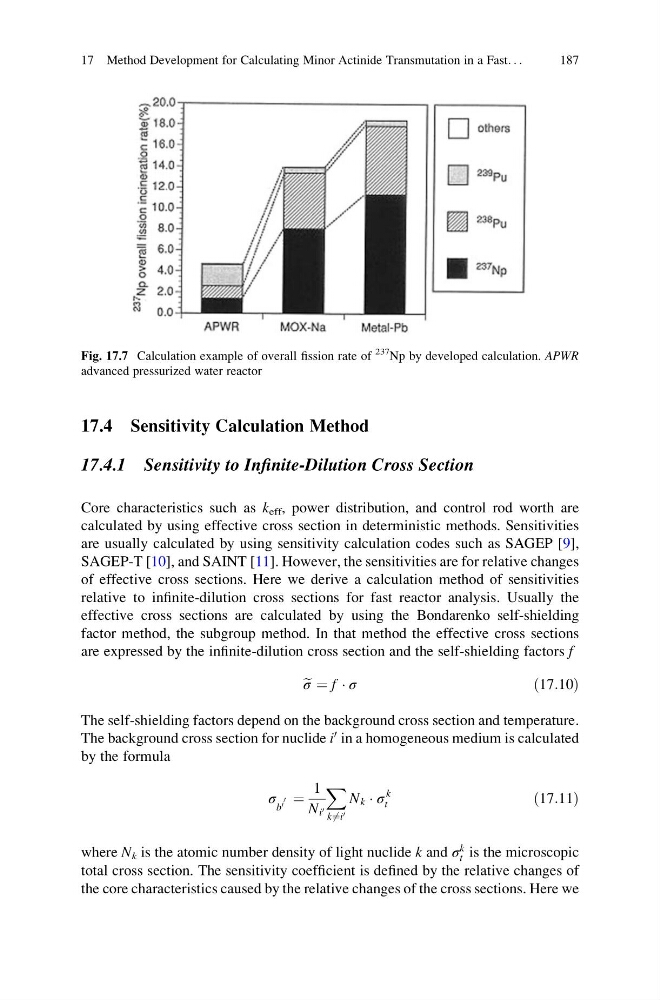
Fig. 17.7 Calculation example of overall fission rate of
237
Np by developed calculation. APWR
advanced pressurized water reactor
17 Method Development for Calculating Minor Actinide Transmutation in a Fast. . .
187
17.4.1 Sensitivity to Infinite-Dilution Cross Section
Core characteristics such as k eff , power distribution, and control rod worth are
calculated by using effective cross section in deterministic methods. Sensitivities
are usually calculated by using sensitivity calculation codes such as SAGEP [9],
SAGEP-T [10], and SAINT [11]. However, the sensitivities are for relative changes
of effective cross sections. Here we derive a calculation method of sensitivities
relative to infinite-dilution cross sections for fast reactor analysis. Usually the
effective cross sections are calculated by using the Bondarenko self-shielding
factor method, the subgroup method. In that method the effective cross sections
are expressed by the infinite-dilution cross section and the self-shielding factors f
e
σ ¼ f Á σ
ð17:10Þ
The self-shielding factors depend on the background cross section and temperature.
The background cross section for nuclide i
0 in a homogeneous medium is calculated
by the formula
σ
b
i
0 ¼
1
N i 0
X
k6 ¼i 0
N k Á σ
k
t
ð17:11Þ
where N k is the atomic number density of light nuclide k and σ
k
t is the microscopic
total cross section. The sensitivity coefficient is defined by the relative changes of
the core characteristics caused by the relative changes of the cross sections. Here we
Fig. 17.7 Calculation example of overall fission rate of
237
Np by developed calculation. APWR
advanced pressurized water reactor
17 Method Development for Calculating Minor Actinide Transmutation in a Fast. . .
187