

change: changes in the distribution, composition, structure and functions, as well as
changes in successional processes and in the value and services they provide.
There is also increasing evidence for ecological responses to recent climate
changes and for the need of more information concerning the different possible
climate change impacts and the linkages between them (Walther 2007).
Based on the climate change effects reported from the ten protected investigation areas of the HABIT-CHANGE project, seven impact classes related to 14 habitat groups were identified: seasonality, hydrology, soil, sea-level rise, extreme
events, CO 2 concentration, and cumulative effects.
The 14 groups of Natura 2000 habitats taken into consideration in this chapter are
simultaneously subjected to various categories of climate change impacts. All of
them are being affected to different degrees by cumulative effects of climate change.
It is quite difficult to estimate which of these groups of habitats will be more
profoundly affected by climate change impact in the future. The magnitude of
impacts varies depending on the ecological requirements of plant species, in combination with their distribution range and dispersal ability (Normand et al. 2007).
However, some assertions can be made. The extent and rate of climate change
puts forest ecosystems at high risk. Forestry in general faces particular difficulties,
such as strong dependency on existing site conditions that cannot be modified,
existing stand conditions exposed to nitrogen deposition and acidification, and
multiple demands and expectations by society that have a direct influence on
management strategies. A positive effect on forest growths can be expected on
the short- and medium-term due to changes in mean climatic variables, but on the
long term increasing drought and extreme weather events will become great risk
factors for forest sustainability (Lindner et al. 2010).
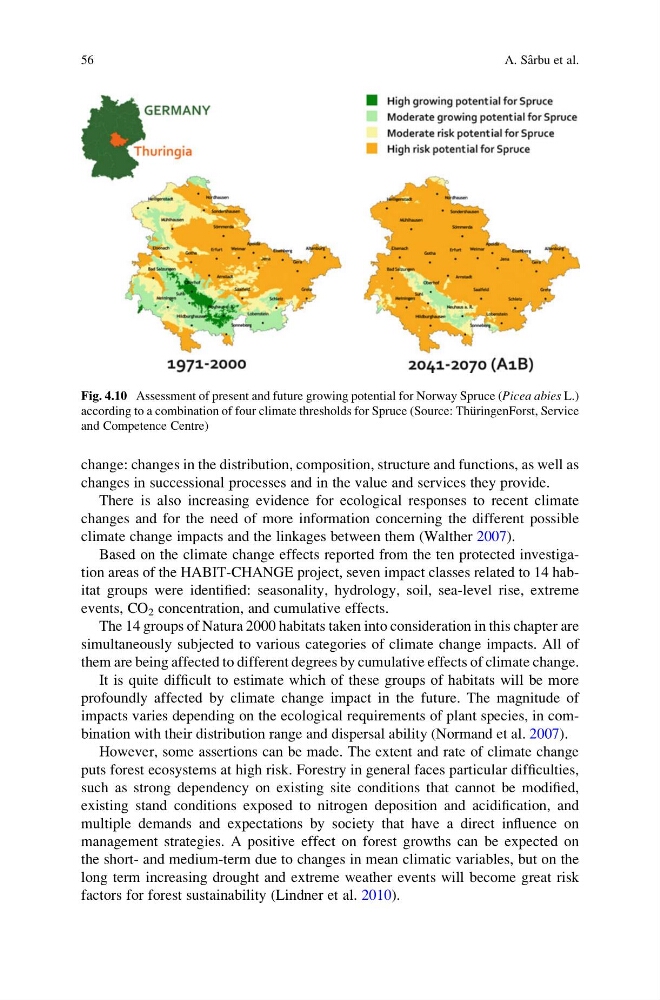
Fig. 4.10 Assessment of present and future growing potential for Norway Spruce (Picea abies L.)
according to a combination of four climate thresholds for Spruce (Source: Thu ¨ringenForst, Service
and Competence Centre)
56
A. Sa ˆrbu et al.
changes in successional processes and in the value and services they provide.
There is also increasing evidence for ecological responses to recent climate
changes and for the need of more information concerning the different possible
climate change impacts and the linkages between them (Walther 2007).
Based on the climate change effects reported from the ten protected investigation areas of the HABIT-CHANGE project, seven impact classes related to 14 habitat groups were identified: seasonality, hydrology, soil, sea-level rise, extreme
events, CO 2 concentration, and cumulative effects.
The 14 groups of Natura 2000 habitats taken into consideration in this chapter are
simultaneously subjected to various categories of climate change impacts. All of
them are being affected to different degrees by cumulative effects of climate change.
It is quite difficult to estimate which of these groups of habitats will be more
profoundly affected by climate change impact in the future. The magnitude of
impacts varies depending on the ecological requirements of plant species, in combination with their distribution range and dispersal ability (Normand et al. 2007).
However, some assertions can be made. The extent and rate of climate change
puts forest ecosystems at high risk. Forestry in general faces particular difficulties,
such as strong dependency on existing site conditions that cannot be modified,
existing stand conditions exposed to nitrogen deposition and acidification, and
multiple demands and expectations by society that have a direct influence on
management strategies. A positive effect on forest growths can be expected on
the short- and medium-term due to changes in mean climatic variables, but on the
long term increasing drought and extreme weather events will become great risk
factors for forest sustainability (Lindner et al. 2010).
Fig. 4.10 Assessment of present and future growing potential for Norway Spruce (Picea abies L.)
according to a combination of four climate thresholds for Spruce (Source: Thu ¨ringenForst, Service
and Competence Centre)
56
A. Sa ˆrbu et al.