

8.3.1 Alpine Region
The Alpine biogeographical region is characterised by species disjunct to mountain
areas or endemic species. Beside the conservation status and other criteria, this is
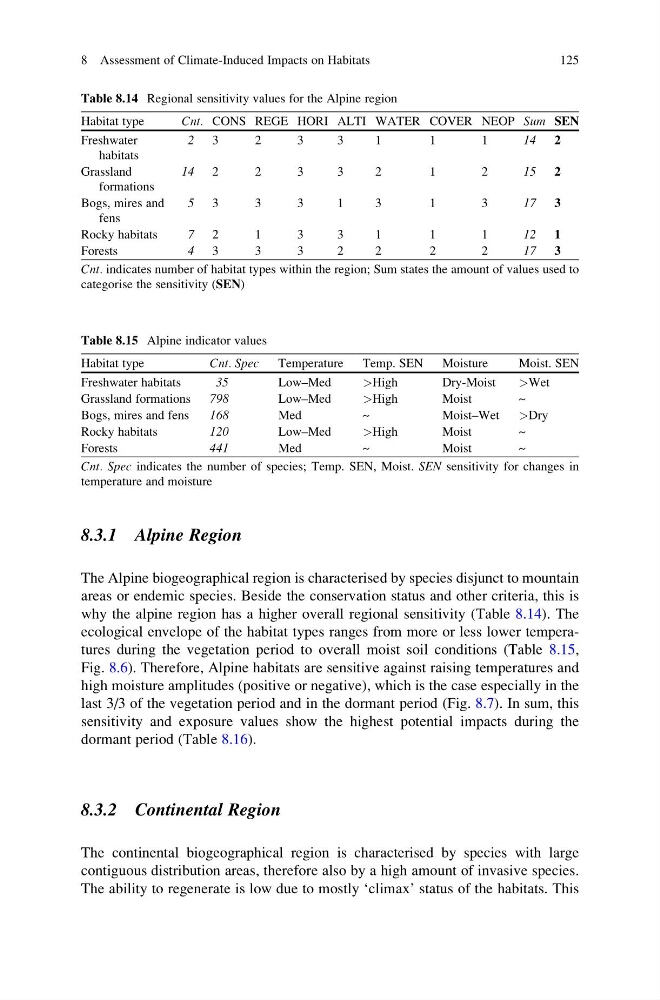
why the alpine region has a higher overall regional sensitivity (Table 8.14). The
ecological envelope of the habitat types ranges from more or less lower temperatures during the vegetation period to overall moist soil conditions (Table 8.15,
Fig. 8.6). Therefore, Alpine habitats are sensitive against raising temperatures and
high moisture amplitudes (positive or negative), which is the case especially in the
last 3/3 of the vegetation period and in the dormant period (Fig. 8.7). In sum, this
sensitivity and exposure values show the highest potential impacts during the
dormant period (Table 8.16).
8.3.2 Continental Region
The continental biogeographical region is characterised by species with large
contiguous distribution areas, therefore also by a high amount of invasive species.
The ability to regenerate is low due to mostly ‘climax’ status of the habitats. This
Table 8.14 Regional sensitivity values for the Alpine region
Habitat type
Cnt. CONS REGE HORI ALTI WATER COVER NEOP Sum SEN
Freshwater
habitats
2 3
2
3
3
1
1
1
14 2
Grassland
formations
14 2
2
3
3
2
1
2
15 2
Bogs, mires and
fens
5 3
3
3
1
3
1
3
17 3
Rocky habitats
7 2
1
3
3
1
1
1
12 1
Forests
4 3
3
3
2
2
2
2
17 3
Cnt. indicates number of habitat types within the region; Sum states the amount of values used to
categorise the sensitivity (SEN)
Table 8.15 Alpine indicator values
Habitat type
Cnt. Spec
Temperature
Temp. SEN
Moisture
Moist. SEN
Freshwater habitats
35
Low–Med
>High
Dry-Moist
>Wet
Grassland formations
798
Low–Med
>High
Moist
~
Bogs, mires and fens
168
Med
~
Moist–Wet
>Dry
Rocky habitats
120
Low–Med
>High
Moist
~
Forests
441
Med
~
Moist
~
Cnt. Spec indicates the number of species; Temp. SEN, Moist. SEN sensitivity for changes in
temperature and moisture
8 Assessment of Climate-Induced Impacts on Habitats
125
The Alpine biogeographical region is characterised by species disjunct to mountain
areas or endemic species. Beside the conservation status and other criteria, this is
why the alpine region has a higher overall regional sensitivity (Table 8.14). The
ecological envelope of the habitat types ranges from more or less lower temperatures during the vegetation period to overall moist soil conditions (Table 8.15,
Fig. 8.6). Therefore, Alpine habitats are sensitive against raising temperatures and
high moisture amplitudes (positive or negative), which is the case especially in the
last 3/3 of the vegetation period and in the dormant period (Fig. 8.7). In sum, this
sensitivity and exposure values show the highest potential impacts during the
dormant period (Table 8.16).
8.3.2 Continental Region
The continental biogeographical region is characterised by species with large
contiguous distribution areas, therefore also by a high amount of invasive species.
The ability to regenerate is low due to mostly ‘climax’ status of the habitats. This
Table 8.14 Regional sensitivity values for the Alpine region
Habitat type
Cnt. CONS REGE HORI ALTI WATER COVER NEOP Sum SEN
Freshwater
habitats
2 3
2
3
3
1
1
1
14 2
Grassland
formations
14 2
2
3
3
2
1
2
15 2
Bogs, mires and
fens
5 3
3
3
1
3
1
3
17 3
Rocky habitats
7 2
1
3
3
1
1
1
12 1
Forests
4 3
3
3
2
2
2
2
17 3
Cnt. indicates number of habitat types within the region; Sum states the amount of values used to
categorise the sensitivity (SEN)
Table 8.15 Alpine indicator values
Habitat type
Cnt. Spec
Temperature
Temp. SEN
Moisture
Moist. SEN
Freshwater habitats
35
Low–Med
>High
Dry-Moist
>Wet
Grassland formations
798
Low–Med
>High
Moist
~
Bogs, mires and fens
168
Med
~
Moist–Wet
>Dry
Rocky habitats
120
Low–Med
>High
Moist
~
Forests
441
Med
~
Moist
~
Cnt. Spec indicates the number of species; Temp. SEN, Moist. SEN sensitivity for changes in
temperature and moisture
8 Assessment of Climate-Induced Impacts on Habitats
125