

depressions, Anthrosols were found like in Laos. When considering the three
catchments in Thailand, Acrisols and Alisols dominated; whereas in Laos,
Luvisols, together with Acrisols, covered the karstic areas. In Vietnam, the
Alisols seemed to be the most dominant soils (Table 2.12).
2.5.4 Soil Properties and Soil Forming Processes in Southeast
Asian Karst Areas
Texturally undifferentiated soils like Cambisols and Umbrisols were found to
represent only a minor share, and most soils showed a clear tendency towards
clay illuviation, a fact reinforced during field observations. Most soil profiles and
augering showed a textural differentiation and an abundance of clay skins at the ped
surfaces in the subsoil. Furthermore, all soils analysed showed an increase in clay
from the topsoil to the subsoil layers – amounting to 15–20 wt.% of the fine earth.
There is a tendency for Luvisols and Alisols to have a less distinct textural
difference than more developed soils such as the Acrisols, as the latter may contain
more than 80 wt.% of clay in the argic horizon. Umbrisols and Cambisols did not
show this increase and only reached clay content levels of about 50 wt.% in the
subsoil. In this respect, one issue to be discussed is the possible layering of the
parent material. As frequently observed in temperate or mediterranean zones,
widespread evidence was found for higher silt and sand shares in the topsoils;
however, in the analysed areas there was no sign – neither from the textural nor the
mineralogical data – of real stratification. The texture transition was found to be
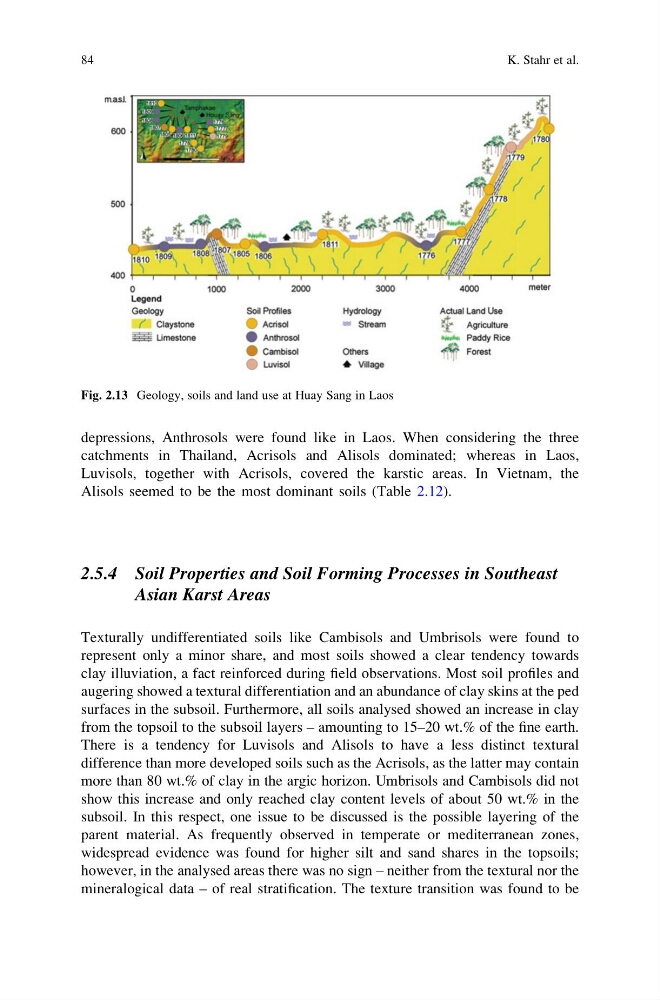
Fig. 2.13 Geology, soils and land use at Huay Sang in Laos
84
K. Stahr et al.
catchments in Thailand, Acrisols and Alisols dominated; whereas in Laos,
Luvisols, together with Acrisols, covered the karstic areas. In Vietnam, the
Alisols seemed to be the most dominant soils (Table 2.12).
2.5.4 Soil Properties and Soil Forming Processes in Southeast
Asian Karst Areas
Texturally undifferentiated soils like Cambisols and Umbrisols were found to
represent only a minor share, and most soils showed a clear tendency towards
clay illuviation, a fact reinforced during field observations. Most soil profiles and
augering showed a textural differentiation and an abundance of clay skins at the ped
surfaces in the subsoil. Furthermore, all soils analysed showed an increase in clay
from the topsoil to the subsoil layers – amounting to 15–20 wt.% of the fine earth.
There is a tendency for Luvisols and Alisols to have a less distinct textural
difference than more developed soils such as the Acrisols, as the latter may contain
more than 80 wt.% of clay in the argic horizon. Umbrisols and Cambisols did not
show this increase and only reached clay content levels of about 50 wt.% in the
subsoil. In this respect, one issue to be discussed is the possible layering of the
parent material. As frequently observed in temperate or mediterranean zones,
widespread evidence was found for higher silt and sand shares in the topsoils;
however, in the analysed areas there was no sign – neither from the textural nor the
mineralogical data – of real stratification. The texture transition was found to be
Fig. 2.13 Geology, soils and land use at Huay Sang in Laos
84
K. Stahr et al.