

gradual and the mineralogical composition of the coarser grain size fractions was
similar. Therefore, it can be concluded that the major textural differentiation was
caused by clay illuviation.
In the Bor Krai area, the clay mineral spectrum was found to be variable, with
illite dominating, a larger share of mixed layer illite-vermiculite, some vermiculite,
plus a large share of kaolinite, quartz and the oxides of hematite and goethite.
Already in the younger stages of soil development (Luvisol and Alisol), the
feldspars had already disappeared, meaning that hydrolytic weathering was very
pronounced. The share of 2:1 clay minerals had been reduced or transformed into
mixed layer clay minerals, and in Acrisols, the share of kaolinite was becoming
important – the start of Si-export (desilification).
The above findings represent a continuation of the weathering tendency, with
Illite and mixed layers reduced, vermiculite still present and kaolinite reaching its
maximum, plus with hematite increasing and quartz already diminished. As a
prominent new formation in the bulk soil and clay minerals, Gibbsite was found.
Coming to the Ferralsol, this tendency was found to be continuing, though from
three or four mineral layers, only Chlorite could be found, quartz had almost
disappeared and almost all the iron was bound in hematite. Kaolinite had also
reduced and Gibbsite was found to be the dominant mineral (Table 2.13).
As the pH of most of the local soils in water is around 6 after decalcification,
only a mild acidification was found to be taking place in this limestone environment; however, a strong leaching of the bases must have taken place. The tendency
towards an initial increase but then decrease in kaolinite and the near disappearance
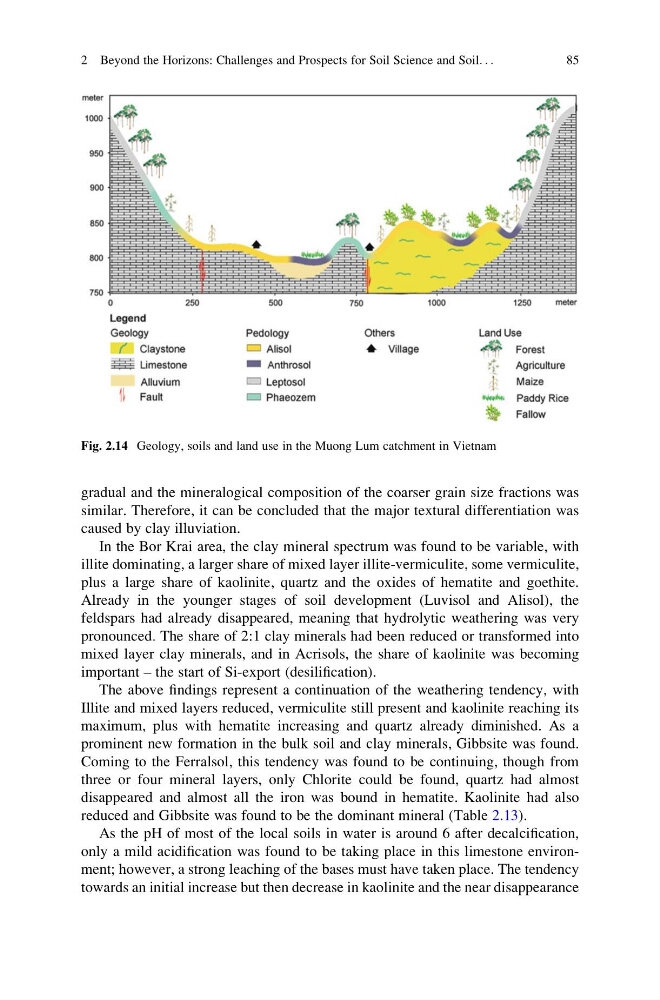
Fig. 2.14 Geology, soils and land use in the Muong Lum catchment in Vietnam
2 Beyond the Horizons: Challenges and Prospects for Soil Science and Soil. . .
85
similar. Therefore, it can be concluded that the major textural differentiation was
caused by clay illuviation.
In the Bor Krai area, the clay mineral spectrum was found to be variable, with
illite dominating, a larger share of mixed layer illite-vermiculite, some vermiculite,
plus a large share of kaolinite, quartz and the oxides of hematite and goethite.
Already in the younger stages of soil development (Luvisol and Alisol), the
feldspars had already disappeared, meaning that hydrolytic weathering was very
pronounced. The share of 2:1 clay minerals had been reduced or transformed into
mixed layer clay minerals, and in Acrisols, the share of kaolinite was becoming
important – the start of Si-export (desilification).
The above findings represent a continuation of the weathering tendency, with
Illite and mixed layers reduced, vermiculite still present and kaolinite reaching its
maximum, plus with hematite increasing and quartz already diminished. As a
prominent new formation in the bulk soil and clay minerals, Gibbsite was found.
Coming to the Ferralsol, this tendency was found to be continuing, though from
three or four mineral layers, only Chlorite could be found, quartz had almost
disappeared and almost all the iron was bound in hematite. Kaolinite had also
reduced and Gibbsite was found to be the dominant mineral (Table 2.13).
As the pH of most of the local soils in water is around 6 after decalcification,
only a mild acidification was found to be taking place in this limestone environment; however, a strong leaching of the bases must have taken place. The tendency
towards an initial increase but then decrease in kaolinite and the near disappearance
Fig. 2.14 Geology, soils and land use in the Muong Lum catchment in Vietnam
2 Beyond the Horizons: Challenges and Prospects for Soil Science and Soil. . .
85