

the soil. Other off-site effects of erosion include reservoir siltation and the downstream sedimentation of arable land (Clemens et al. 2010). Changes in the water
runoff pathways within a watershed also alter stream flow responses and stream
water quality, as discussed in Fro ¨hlich et al. (Chap. 3). In addition, road construction and logging—which also accompany the process of agricultural intensification,
can reduce the strength of wetted soils on sloping lands and increase susceptibility
to shallow landslides (see Ahlheim et al. 2010).
Dung et al. (2008) measured an average annual amount of soil loss of 20 Mg/ha
in the cultivated fields of Hoa Binh province in northern Vietnam, as compared
to < 1 Mg/ha in fields under secondary forest fallow. Comparing forest land with
arable land in north-western Vietnam, Haering et al. (2010) found that the conversion of forest land to arable land reduced organic matter content by 66 %, nitrogen
by 67 %, phosphorus by 75 %, cation exchange capacity by 56 % and raised soil
compaction by 40 %.
Clemens et al. (2010) found that farmers in north-western Vietnam were generally aware that more intensive maize cultivation increases erosion and reduces crop
yields, but they found that farmers tended to underestimate these impacts. SaintMacary et al. (2010) found that most farmers in the same area knew about methods
of soil conservation, but found them economically unattractive. Using simulation
modeling, Marohn et al. (in press) confirmed that soil conservation methods tended
to be unattractive for farmers under existing economic conditions, but showed that
they became more attractive as the prices of mineral fertilizers rose.
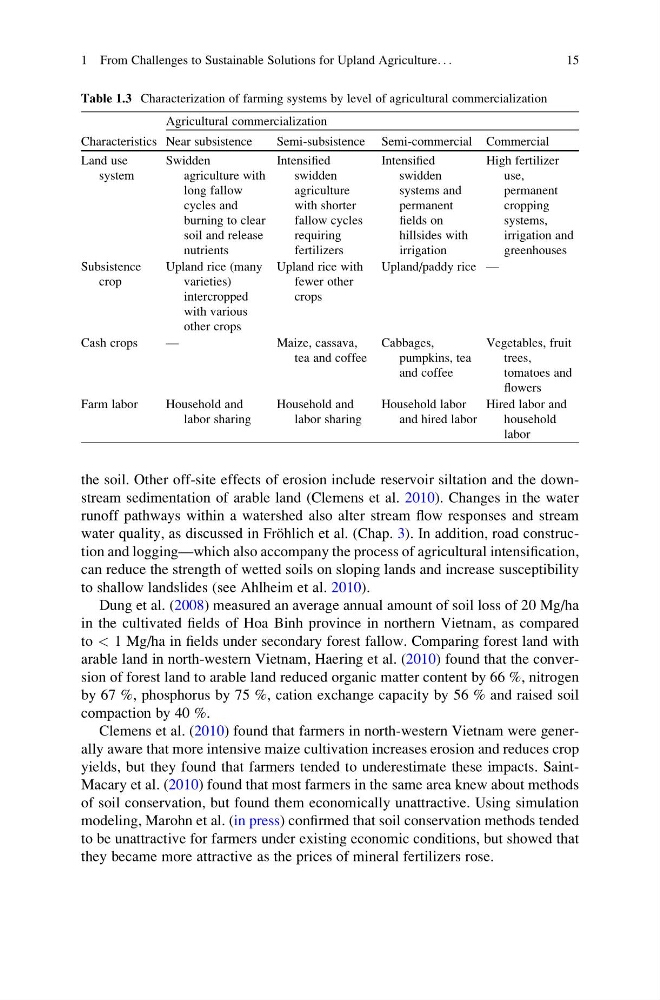
Table 1.3 Characterization of farming systems by level of agricultural commercialization
Characteristics
Agricultural commercialization
Near subsistence
Semi-subsistence Semi-commercial Commercial
Land use
system
Swidden
agriculture with
long fallow
cycles and
burning to clear
soil and release
nutrients
Intensified
swidden
agriculture
with shorter
fallow cycles
requiring
fertilizers
Intensified
swidden
systems and
permanent
fields on
hillsides with
irrigation
High fertilizer
use,
permanent
cropping
systems,
irrigation and
greenhouses
Subsistence
crop
Upland rice (many
varieties)
intercropped
with various
other crops
Upland rice with
fewer other
crops
Upland/paddy rice —
Cash crops
—
Maize, cassava,
tea and coffee
Cabbages,
pumpkins, tea
and coffee
Vegetables, fruit
trees,
tomatoes and
flowers
Farm labor
Household and
labor sharing
Household and
labor sharing
Household labor
and hired labor
Hired labor and
household
labor
1 From Challenges to Sustainable Solutions for Upland Agriculture. . .
15
runoff pathways within a watershed also alter stream flow responses and stream
water quality, as discussed in Fro ¨hlich et al. (Chap. 3). In addition, road construction and logging—which also accompany the process of agricultural intensification,
can reduce the strength of wetted soils on sloping lands and increase susceptibility
to shallow landslides (see Ahlheim et al. 2010).
Dung et al. (2008) measured an average annual amount of soil loss of 20 Mg/ha
in the cultivated fields of Hoa Binh province in northern Vietnam, as compared
to < 1 Mg/ha in fields under secondary forest fallow. Comparing forest land with
arable land in north-western Vietnam, Haering et al. (2010) found that the conversion of forest land to arable land reduced organic matter content by 66 %, nitrogen
by 67 %, phosphorus by 75 %, cation exchange capacity by 56 % and raised soil
compaction by 40 %.
Clemens et al. (2010) found that farmers in north-western Vietnam were generally aware that more intensive maize cultivation increases erosion and reduces crop
yields, but they found that farmers tended to underestimate these impacts. SaintMacary et al. (2010) found that most farmers in the same area knew about methods
of soil conservation, but found them economically unattractive. Using simulation
modeling, Marohn et al. (in press) confirmed that soil conservation methods tended
to be unattractive for farmers under existing economic conditions, but showed that
they became more attractive as the prices of mineral fertilizers rose.
Table 1.3 Characterization of farming systems by level of agricultural commercialization
Characteristics
Agricultural commercialization
Near subsistence
Semi-subsistence Semi-commercial Commercial
Land use
system
Swidden
agriculture with
long fallow
cycles and
burning to clear
soil and release
nutrients
Intensified
swidden
agriculture
with shorter
fallow cycles
requiring
fertilizers
Intensified
swidden
systems and
permanent
fields on
hillsides with
irrigation
High fertilizer
use,
permanent
cropping
systems,
irrigation and
greenhouses
Subsistence
crop
Upland rice (many
varieties)
intercropped
with various
other crops
Upland rice with
fewer other
crops
Upland/paddy rice —
Cash crops
—
Maize, cassava,
tea and coffee
Cabbages,
pumpkins, tea
and coffee
Vegetables, fruit
trees,
tomatoes and
flowers
Farm labor
Household and
labor sharing
Household and
labor sharing
Household labor
and hired labor
Hired labor and
household
labor
1 From Challenges to Sustainable Solutions for Upland Agriculture. . .
15