

stressed treatments decreased, but were still visible. The cooling effect was more
pronounced at a moderate wind speed, and the leaf temperature of the stressed tree
dropped to the same level as the irrigated tree. Consequently, the CWSI for both
treatments was similar, to the extent that the stressed and unstressed treatments
could not be distinguished based on the CWSI (Fig. 6.7).
6.4 Conclusion
In order to improve the level of competitiveness of fruit production activities in
Thailand, and ensure a high export potential, one which can contribute to farmers’
incomes and to rural development, irrigation can play a potentially important role.
To do this, irrigation needs to ensure the appropriate use of existing water
resources, as their availability is likely to become increasingly insecure in the
coming years due to climatic peculiarities, which have tended to increase over
the last few decades. Irrigation needs to be planned and based on objective
parameters, such as plant water stress indicators, to ensure an optimal supply of
water and nutrients to trees and so guarantee product quality. The method with the
greatest potential in terms of achieving this goal is micro-irrigation, in combination
with irrigation scheduling based on a climatic water balance. DI strategies offer the
potential to increase WUE, but this may have a direct impact on farmers’ incomes
only when applied on a communal scale. To put this into practice, methods of plant
stress monitoring, together with climatic water balance calculations, can support
local planning processes. Thermal imaging, which is too expensive to be applied by
a single farmer, could play a role in communal irrigation planning and water
allocation activities, so as to exploit the benefits of the increased WUE achieved
by the general application of DI strategies. However, future research should focus
on plant specific parameters and the larger-scale applicability of stress monitoring
technologies. Extension and farmer education will also be needed in order to raise
awareness of the problems involved, and to convey the knowledge needed to apply
modern water saving irrigation methods in practice.
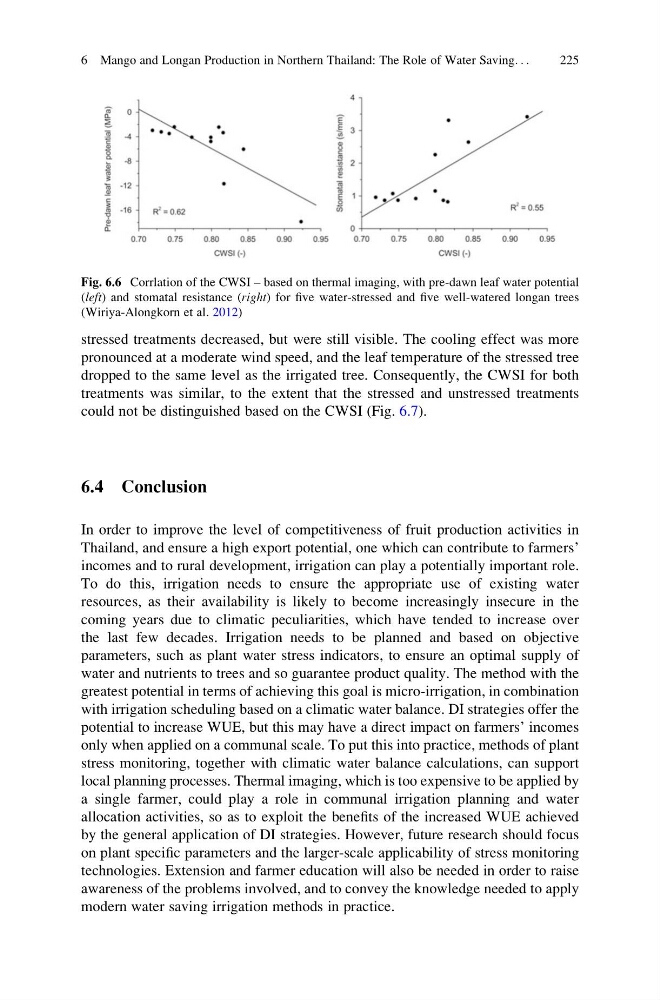
Fig. 6.6 Corrlation of the CWSI – based on thermal imaging, with pre-dawn leaf water potential
(left) and stomatal resistance (right) for five water-stressed and five well-watered longan trees
(Wiriya-Alongkorn et al. 2012)
6 Mango and Longan Production in Northern Thailand: The Role of Water Saving. . .
225
pronounced at a moderate wind speed, and the leaf temperature of the stressed tree
dropped to the same level as the irrigated tree. Consequently, the CWSI for both
treatments was similar, to the extent that the stressed and unstressed treatments
could not be distinguished based on the CWSI (Fig. 6.7).
6.4 Conclusion
In order to improve the level of competitiveness of fruit production activities in
Thailand, and ensure a high export potential, one which can contribute to farmers’
incomes and to rural development, irrigation can play a potentially important role.
To do this, irrigation needs to ensure the appropriate use of existing water
resources, as their availability is likely to become increasingly insecure in the
coming years due to climatic peculiarities, which have tended to increase over
the last few decades. Irrigation needs to be planned and based on objective
parameters, such as plant water stress indicators, to ensure an optimal supply of
water and nutrients to trees and so guarantee product quality. The method with the
greatest potential in terms of achieving this goal is micro-irrigation, in combination
with irrigation scheduling based on a climatic water balance. DI strategies offer the
potential to increase WUE, but this may have a direct impact on farmers’ incomes
only when applied on a communal scale. To put this into practice, methods of plant
stress monitoring, together with climatic water balance calculations, can support
local planning processes. Thermal imaging, which is too expensive to be applied by
a single farmer, could play a role in communal irrigation planning and water
allocation activities, so as to exploit the benefits of the increased WUE achieved
by the general application of DI strategies. However, future research should focus
on plant specific parameters and the larger-scale applicability of stress monitoring
technologies. Extension and farmer education will also be needed in order to raise
awareness of the problems involved, and to convey the knowledge needed to apply
modern water saving irrigation methods in practice.
Fig. 6.6 Corrlation of the CWSI – based on thermal imaging, with pre-dawn leaf water potential
(left) and stomatal resistance (right) for five water-stressed and five well-watered longan trees
(Wiriya-Alongkorn et al. 2012)
6 Mango and Longan Production in Northern Thailand: The Role of Water Saving. . .
225