

7.4 Conical Base Optimization
479
region and dead region are about 5–6 pebble diameters wide in total. In the diffusion
region, pebbles move with moderate velocities and velocity gradients. The velocity is
gradually reduced from the rapid region to the boundary region through the diffusion
region.
Thus, it is found that the quality of uniformity of a pebble flow and stagnation of
pebbles are generally related to the width of dead regions, which is usually in good
agreement with the above sequence of levels of bed configurations. In other words,
it is necessary to evaluate the general uniformity and stagnation characteristics by
the width of dead regions, when another more detailed quantification is not possible
in practical nuclear engineering.
7.4.2.4 Radial Distribution of Residence Time
In detail, the radial distribution of residence time can be shown by the combined
probabilities of p(x m , T m )
p(x m , T m ) =
Number of pebbles of mean radial position x m and mean residence time t m
Total number of pebbles
(7.11)
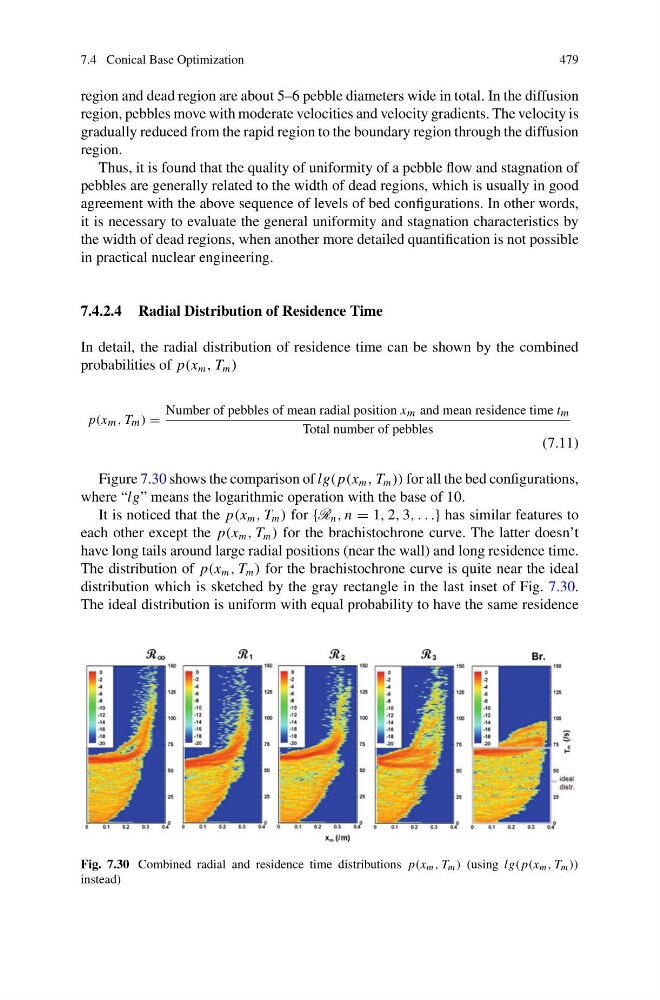
Figure 7.30 shows the comparison of lg( p(x m , T m )) for all the bed configurations,
where “lg” means the logarithmic operation with the base of 10.
It is noticed that the p(x m , T m ) for {R n , n = 1, 2, 3, . . .} has similar features to
each other except the p(x m , T m ) for the brachistochrone curve. The latter doesn’t
have long tails around large radial positions (near the wall) and long residence time.
The distribution of p(x m , T m ) for the brachistochrone curve is quite near the ideal
distribution which is sketched by the gray rectangle in the last inset of Fig. 7.30.
The ideal distribution is uniform with equal probability to have the same residence
Fig. 7.30 Combined radial and residence time distributions p(x m , T m ) (using lg( p(x m , T m ))
instead)
479
region and dead region are about 5–6 pebble diameters wide in total. In the diffusion
region, pebbles move with moderate velocities and velocity gradients. The velocity is
gradually reduced from the rapid region to the boundary region through the diffusion
region.
Thus, it is found that the quality of uniformity of a pebble flow and stagnation of
pebbles are generally related to the width of dead regions, which is usually in good
agreement with the above sequence of levels of bed configurations. In other words,
it is necessary to evaluate the general uniformity and stagnation characteristics by
the width of dead regions, when another more detailed quantification is not possible
in practical nuclear engineering.
7.4.2.4 Radial Distribution of Residence Time
In detail, the radial distribution of residence time can be shown by the combined
probabilities of p(x m , T m )
p(x m , T m ) =
Number of pebbles of mean radial position x m and mean residence time t m
Total number of pebbles
(7.11)
Figure 7.30 shows the comparison of lg( p(x m , T m )) for all the bed configurations,
where “lg” means the logarithmic operation with the base of 10.
It is noticed that the p(x m , T m ) for {R n , n = 1, 2, 3, . . .} has similar features to
each other except the p(x m , T m ) for the brachistochrone curve. The latter doesn’t
have long tails around large radial positions (near the wall) and long residence time.
The distribution of p(x m , T m ) for the brachistochrone curve is quite near the ideal
distribution which is sketched by the gray rectangle in the last inset of Fig. 7.30.
The ideal distribution is uniform with equal probability to have the same residence
Fig. 7.30 Combined radial and residence time distributions p(x m , T m ) (using lg( p(x m , T m ))
instead)