

338
5 Numerical Models for Pebble-Bed Heat Transfer
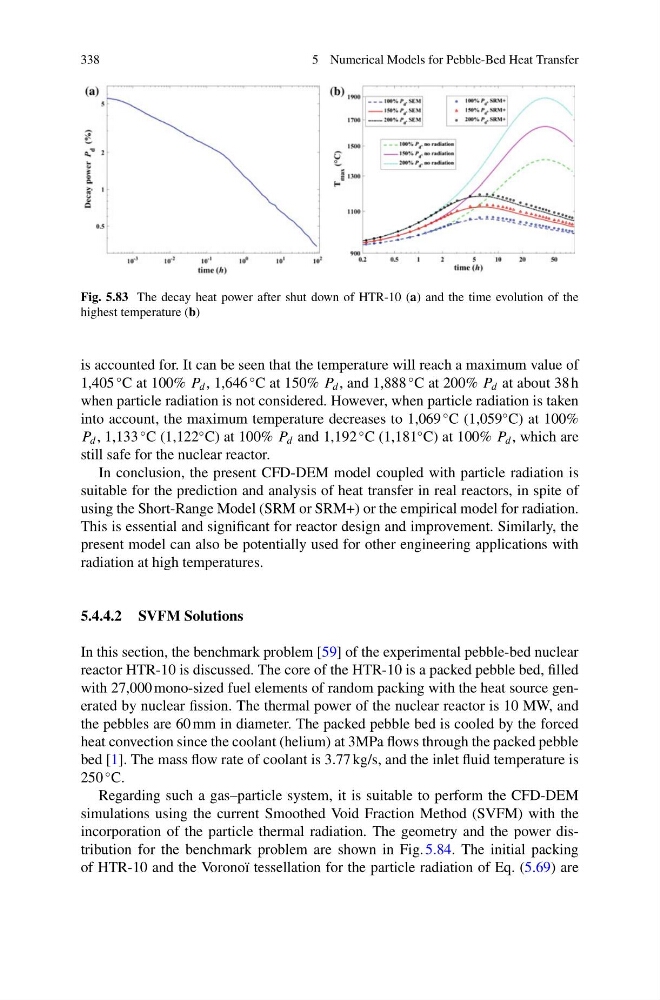
Fig. 5.83 The decay heat power after shut down of HTR-10 (a) and the time evolution of the
highest temperature (b)
is accounted for. It can be seen that the temperature will reach a maximum value of
1,405
◦ C at 100% P d , 1,646
◦ C at 150% P d , and 1,888
◦ C at 200% P d at about 38 h
when particle radiation is not considered. However, when particle radiation is taken
into account, the maximum temperature decreases to 1,069
◦ C (1,059
◦ C) at 100%
P d , 1,133
◦ C (1,122
◦ C) at 100% P d and 1,192
◦ C (1,181
◦ C) at 100% P d , which are
still safe for the nuclear reactor.
In conclusion, the present CFD-DEM model coupled with particle radiation is
suitable for the prediction and analysis of heat transfer in real reactors, in spite of
using the Short-Range Model (SRM or SRM+) or the empirical model for radiation.
This is essential and significant for reactor design and improvement. Similarly, the
present model can also be potentially used for other engineering applications with
radiation at high temperatures.
5.4.4.2 SVFM Solutions
In this section, the benchmark problem [59] of the experimental pebble-bed nuclear
reactor HTR-10 is discussed. The core of the HTR-10 is a packed pebble bed, filled
with 27,000 mono-sized fuel elements of random packing with the heat source generated by nuclear fission. The thermal power of the nuclear reactor is 10 MW, and
the pebbles are 60 mm in diameter. The packed pebble bed is cooled by the forced
heat convection since the coolant (helium) at 3MPa flows through the packed pebble
bed [1]. The mass flow rate of coolant is 3.77 kg/s, and the inlet fluid temperature is
250
◦ C.
Regarding such a gas–particle system, it is suitable to perform the CFD-DEM
simulations using the current Smoothed Void Fraction Method (SVFM) with the
incorporation of the particle thermal radiation. The geometry and the power distribution for the benchmark problem are shown in Fig. 5.84. The initial packing
of HTR-10 and the Voronoï tessellation for the particle radiation of Eq. (5.69) are
5 Numerical Models for Pebble-Bed Heat Transfer
Fig. 5.83 The decay heat power after shut down of HTR-10 (a) and the time evolution of the
highest temperature (b)
is accounted for. It can be seen that the temperature will reach a maximum value of
1,405
◦ C at 100% P d , 1,646
◦ C at 150% P d , and 1,888
◦ C at 200% P d at about 38 h
when particle radiation is not considered. However, when particle radiation is taken
into account, the maximum temperature decreases to 1,069
◦ C (1,059
◦ C) at 100%
P d , 1,133
◦ C (1,122
◦ C) at 100% P d and 1,192
◦ C (1,181
◦ C) at 100% P d , which are
still safe for the nuclear reactor.
In conclusion, the present CFD-DEM model coupled with particle radiation is
suitable for the prediction and analysis of heat transfer in real reactors, in spite of
using the Short-Range Model (SRM or SRM+) or the empirical model for radiation.
This is essential and significant for reactor design and improvement. Similarly, the
present model can also be potentially used for other engineering applications with
radiation at high temperatures.
5.4.4.2 SVFM Solutions
In this section, the benchmark problem [59] of the experimental pebble-bed nuclear
reactor HTR-10 is discussed. The core of the HTR-10 is a packed pebble bed, filled
with 27,000 mono-sized fuel elements of random packing with the heat source generated by nuclear fission. The thermal power of the nuclear reactor is 10 MW, and
the pebbles are 60 mm in diameter. The packed pebble bed is cooled by the forced
heat convection since the coolant (helium) at 3MPa flows through the packed pebble
bed [1]. The mass flow rate of coolant is 3.77 kg/s, and the inlet fluid temperature is
250
◦ C.
Regarding such a gas–particle system, it is suitable to perform the CFD-DEM
simulations using the current Smoothed Void Fraction Method (SVFM) with the
incorporation of the particle thermal radiation. The geometry and the power distribution for the benchmark problem are shown in Fig. 5.84. The initial packing
of HTR-10 and the Voronoï tessellation for the particle radiation of Eq. (5.69) are