

4.3 Three-Dimensional Pebble Flow
229
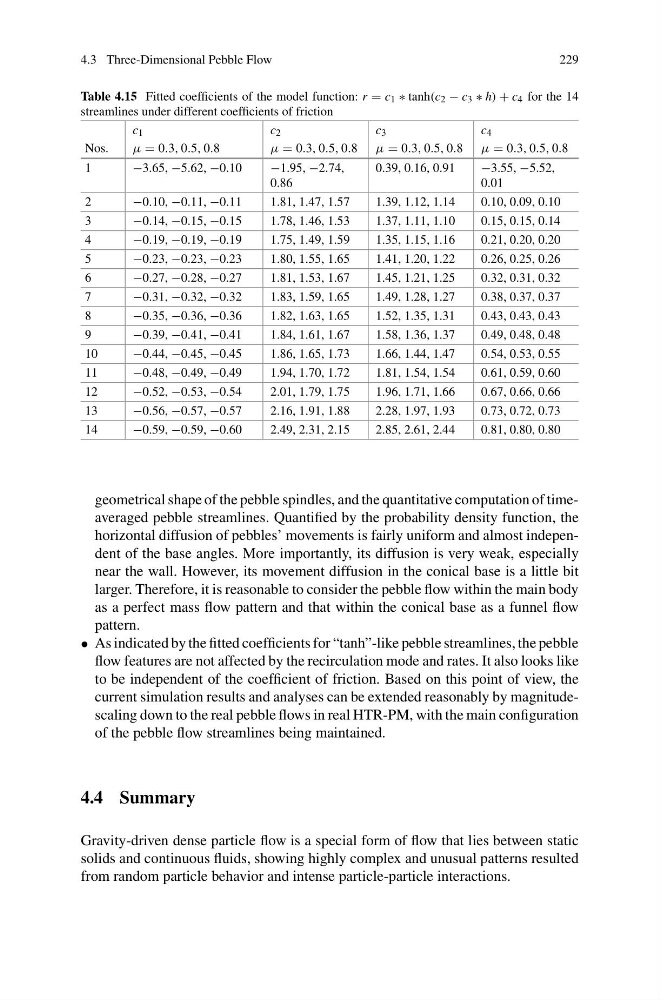
Table 4.15 Fitted coefficients of the model function: r = c 1 ∗ tanh(c 2 − c 3 ∗ h) + c 4 for the 14
streamlines under different coefficients of friction
c 1
c 2
c 3
c 4
Nos.
μ = 0.3, 0.5, 0.8
μ = 0.3, 0.5, 0.8 μ = 0.3, 0.5, 0.8 μ = 0.3, 0.5, 0.8
1
−3.65, −5.62, −0.10
−1.95, −2.74,
0.86
0.39, 0.16, 0.91
−3.55, −5.52,
0.01
2
−0.10, −0.11, −0.11
1.81, 1.47, 1.57
1.39, 1.12, 1.14
0.10, 0.09, 0.10
3
−0.14, −0.15, −0.15
1.78, 1.46, 1.53
1.37, 1.11, 1.10
0.15, 0.15, 0.14
4
−0.19, −0.19, −0.19
1.75, 1.49, 1.59
1.35, 1.15, 1.16
0.21, 0.20, 0.20
5
−0.23, −0.23, −0.23
1.80, 1.55, 1.65
1.41, 1.20, 1.22
0.26, 0.25, 0.26
6
−0.27, −0.28, −0.27
1.81, 1.53, 1.67
1.45, 1.21, 1.25
0.32, 0.31, 0.32
7
−0.31, −0.32, −0.32
1.83, 1.59, 1.65
1.49, 1.28, 1.27
0.38, 0.37, 0.37
8
−0.35, −0.36, −0.36
1.82, 1.63, 1.65
1.52, 1.35, 1.31
0.43, 0.43, 0.43
9
−0.39, −0.41, −0.41
1.84, 1.61, 1.67
1.58, 1.36, 1.37
0.49, 0.48, 0.48
10
−0.44, −0.45, −0.45
1.86, 1.65, 1.73
1.66, 1.44, 1.47
0.54, 0.53, 0.55
11
−0.48, −0.49, −0.49
1.94, 1.70, 1.72
1.81, 1.54, 1.54
0.61, 0.59, 0.60
12
−0.52, −0.53, −0.54
2.01, 1.79, 1.75
1.96, 1.71, 1.66
0.67, 0.66, 0.66
13
−0.56, −0.57, −0.57
2.16, 1.91, 1.88
2.28, 1.97, 1.93
0.73, 0.72, 0.73
14
−0.59, −0.59, −0.60
2.49, 2.31, 2.15
2.85, 2.61, 2.44
0.81, 0.80, 0.80
geometrical shape of the pebble spindles, and the quantitative computation of timeaveraged pebble streamlines. Quantified by the probability density function, the
horizontal diffusion of pebbles’ movements is fairly uniform and almost independent of the base angles. More importantly, its diffusion is very weak, especially
near the wall. However, its movement diffusion in the conical base is a little bit
larger. Therefore, it is reasonable to consider the pebble flow within the main body
as a perfect mass flow pattern and that within the conical base as a funnel flow
pattern.
• As indicated by the fitted coefficients for “tanh”-like pebble streamlines, the pebble
flow features are not affected by the recirculation mode and rates. It also looks like
to be independent of the coefficient of friction. Based on this point of view, the
current simulation results and analyses can be extended reasonably by magnitudescaling down to the real pebble flows in real HTR-PM, with the main configuration
of the pebble flow streamlines being maintained.
4.4 Summary
Gravity-driven dense particle flow is a special form of flow that lies between static
solids and continuous fluids, showing highly complex and unusual patterns resulted
from random particle behavior and intense particle-particle interactions.
229
Table 4.15 Fitted coefficients of the model function: r = c 1 ∗ tanh(c 2 − c 3 ∗ h) + c 4 for the 14
streamlines under different coefficients of friction
c 1
c 2
c 3
c 4
Nos.
μ = 0.3, 0.5, 0.8
μ = 0.3, 0.5, 0.8 μ = 0.3, 0.5, 0.8 μ = 0.3, 0.5, 0.8
1
−3.65, −5.62, −0.10
−1.95, −2.74,
0.86
0.39, 0.16, 0.91
−3.55, −5.52,
0.01
2
−0.10, −0.11, −0.11
1.81, 1.47, 1.57
1.39, 1.12, 1.14
0.10, 0.09, 0.10
3
−0.14, −0.15, −0.15
1.78, 1.46, 1.53
1.37, 1.11, 1.10
0.15, 0.15, 0.14
4
−0.19, −0.19, −0.19
1.75, 1.49, 1.59
1.35, 1.15, 1.16
0.21, 0.20, 0.20
5
−0.23, −0.23, −0.23
1.80, 1.55, 1.65
1.41, 1.20, 1.22
0.26, 0.25, 0.26
6
−0.27, −0.28, −0.27
1.81, 1.53, 1.67
1.45, 1.21, 1.25
0.32, 0.31, 0.32
7
−0.31, −0.32, −0.32
1.83, 1.59, 1.65
1.49, 1.28, 1.27
0.38, 0.37, 0.37
8
−0.35, −0.36, −0.36
1.82, 1.63, 1.65
1.52, 1.35, 1.31
0.43, 0.43, 0.43
9
−0.39, −0.41, −0.41
1.84, 1.61, 1.67
1.58, 1.36, 1.37
0.49, 0.48, 0.48
10
−0.44, −0.45, −0.45
1.86, 1.65, 1.73
1.66, 1.44, 1.47
0.54, 0.53, 0.55
11
−0.48, −0.49, −0.49
1.94, 1.70, 1.72
1.81, 1.54, 1.54
0.61, 0.59, 0.60
12
−0.52, −0.53, −0.54
2.01, 1.79, 1.75
1.96, 1.71, 1.66
0.67, 0.66, 0.66
13
−0.56, −0.57, −0.57
2.16, 1.91, 1.88
2.28, 1.97, 1.93
0.73, 0.72, 0.73
14
−0.59, −0.59, −0.60
2.49, 2.31, 2.15
2.85, 2.61, 2.44
0.81, 0.80, 0.80
geometrical shape of the pebble spindles, and the quantitative computation of timeaveraged pebble streamlines. Quantified by the probability density function, the
horizontal diffusion of pebbles’ movements is fairly uniform and almost independent of the base angles. More importantly, its diffusion is very weak, especially
near the wall. However, its movement diffusion in the conical base is a little bit
larger. Therefore, it is reasonable to consider the pebble flow within the main body
as a perfect mass flow pattern and that within the conical base as a funnel flow
pattern.
• As indicated by the fitted coefficients for “tanh”-like pebble streamlines, the pebble
flow features are not affected by the recirculation mode and rates. It also looks like
to be independent of the coefficient of friction. Based on this point of view, the
current simulation results and analyses can be extended reasonably by magnitudescaling down to the real pebble flows in real HTR-PM, with the main configuration
of the pebble flow streamlines being maintained.
4.4 Summary
Gravity-driven dense particle flow is a special form of flow that lies between static
solids and continuous fluids, showing highly complex and unusual patterns resulted
from random particle behavior and intense particle-particle interactions.