

212
4 Numerical Methods and Simulation for Pebble Flows
Axial Distribution of Void Fraction
In this regard, this section shows the height-dependent variation of void fraction,
which is averaged in the radial and circumferential directions. Thus, the axial void
fraction is expressed as follows:
(z) = 1 −
1
A 2 (z)δz
N
j=1
ΔV j | z i−1 ≤z(δV j )≤z i , A(z) = π r
2
(z
i ),
(4.28)
where δz = z i − z i−1 is the small divisions of bed height, and is the median height of
z i and z i−1 . In Eq. (4.28), the bed is discretized into 800 divisions, with the division
size about 1/20 of pebble diameter.
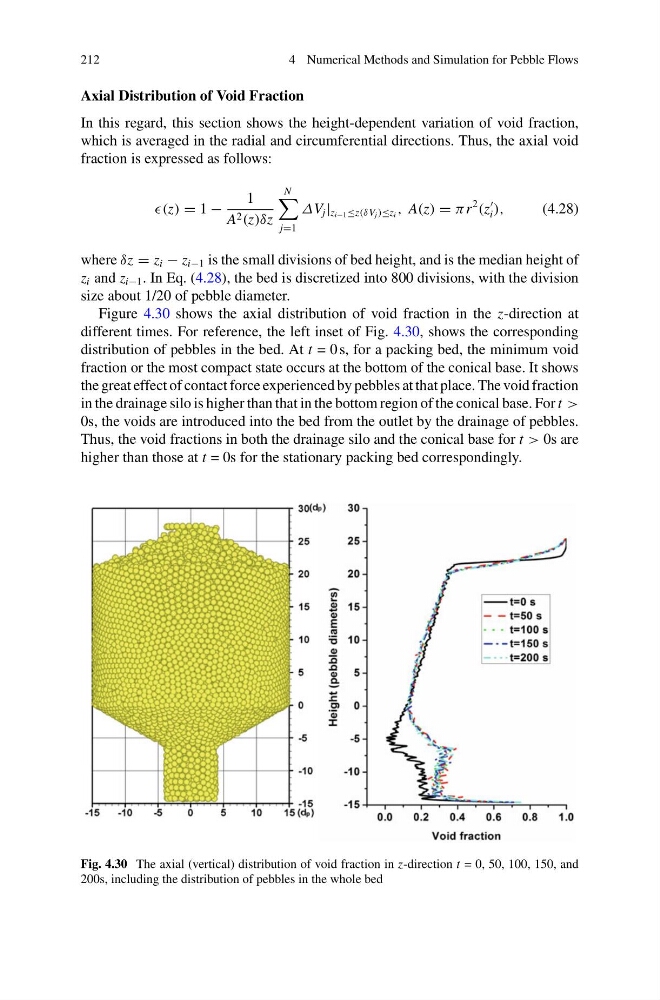
Figure 4.30 shows the axial distribution of void fraction in the z-direction at
different times. For reference, the left inset of Fig. 4.30, shows the corresponding
distribution of pebbles in the bed. At t = 0 s, for a packing bed, the minimum void
fraction or the most compact state occurs at the bottom of the conical base. It shows
the great effect of contact force experienced by pebbles at that place. The void fraction
in the drainage silo is higher than that in the bottom region of the conical base. For t >
0s, the voids are introduced into the bed from the outlet by the drainage of pebbles.
Thus, the void fractions in both the drainage silo and the conical base for t > 0s are
higher than those at t = 0s for the stationary packing bed correspondingly.
Fig. 4.30 The axial (vertical) distribution of void fraction in z-direction t = 0, 50, 100, 150, and
200s, including the distribution of pebbles in the whole bed
4 Numerical Methods and Simulation for Pebble Flows
Axial Distribution of Void Fraction
In this regard, this section shows the height-dependent variation of void fraction,
which is averaged in the radial and circumferential directions. Thus, the axial void
fraction is expressed as follows:
(z) = 1 −
1
A 2 (z)δz
N
j=1
ΔV j | z i−1 ≤z(δV j )≤z i , A(z) = π r
2
(z
i ),
(4.28)
where δz = z i − z i−1 is the small divisions of bed height, and is the median height of
z i and z i−1 . In Eq. (4.28), the bed is discretized into 800 divisions, with the division
size about 1/20 of pebble diameter.
Figure 4.30 shows the axial distribution of void fraction in the z-direction at
different times. For reference, the left inset of Fig. 4.30, shows the corresponding
distribution of pebbles in the bed. At t = 0 s, for a packing bed, the minimum void
fraction or the most compact state occurs at the bottom of the conical base. It shows
the great effect of contact force experienced by pebbles at that place. The void fraction
in the drainage silo is higher than that in the bottom region of the conical base. For t >
0s, the voids are introduced into the bed from the outlet by the drainage of pebbles.
Thus, the void fractions in both the drainage silo and the conical base for t > 0s are
higher than those at t = 0s for the stationary packing bed correspondingly.
Fig. 4.30 The axial (vertical) distribution of void fraction in z-direction t = 0, 50, 100, 150, and
200s, including the distribution of pebbles in the whole bed