

208
4 Numerical Methods and Simulation for Pebble Flows
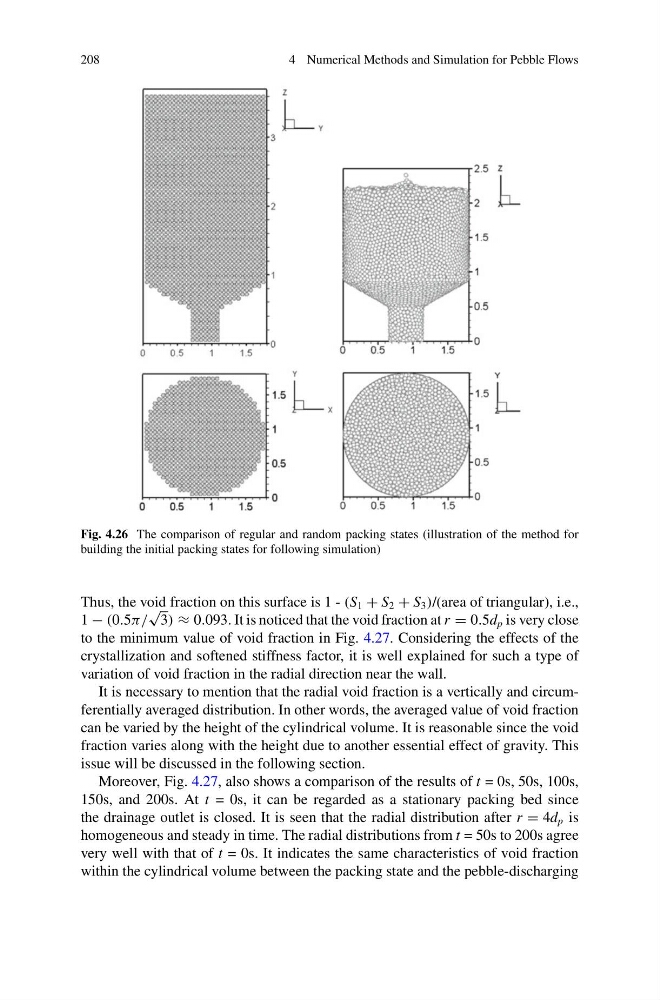
Fig. 4.26 The comparison of regular and random packing states (illustration of the method for
building the initial packing states for following simulation)
Thus, the void fraction on this surface is 1 - (S 1 + S 2 + S 3 )/(area of triangular), i.e.,
1 − (0.5π/
√
3) ≈ 0.093. It is noticed that the void fraction at r = 0.5d p is very close
to the minimum value of void fraction in Fig. 4.27. Considering the effects of the
crystallization and softened stiffness factor, it is well explained for such a type of
variation of void fraction in the radial direction near the wall.
It is necessary to mention that the radial void fraction is a vertically and circumferentially averaged distribution. In other words, the averaged value of void fraction
can be varied by the height of the cylindrical volume. It is reasonable since the void
fraction varies along with the height due to another essential effect of gravity. This
issue will be discussed in the following section.
Moreover, Fig. 4.27, also shows a comparison of the results of t = 0s, 50s, 100s,
150s, and 200s. At t = 0s, it can be regarded as a stationary packing bed since
the drainage outlet is closed. It is seen that the radial distribution after r = 4d p is
homogeneous and steady in time. The radial distributions from t = 50s to 200s agree
very well with that of t = 0s. It indicates the same characteristics of void fraction
within the cylindrical volume between the packing state and the pebble-discharging
4 Numerical Methods and Simulation for Pebble Flows
Fig. 4.26 The comparison of regular and random packing states (illustration of the method for
building the initial packing states for following simulation)
Thus, the void fraction on this surface is 1 - (S 1 + S 2 + S 3 )/(area of triangular), i.e.,
1 − (0.5π/
√
3) ≈ 0.093. It is noticed that the void fraction at r = 0.5d p is very close
to the minimum value of void fraction in Fig. 4.27. Considering the effects of the
crystallization and softened stiffness factor, it is well explained for such a type of
variation of void fraction in the radial direction near the wall.
It is necessary to mention that the radial void fraction is a vertically and circumferentially averaged distribution. In other words, the averaged value of void fraction
can be varied by the height of the cylindrical volume. It is reasonable since the void
fraction varies along with the height due to another essential effect of gravity. This
issue will be discussed in the following section.
Moreover, Fig. 4.27, also shows a comparison of the results of t = 0s, 50s, 100s,
150s, and 200s. At t = 0s, it can be regarded as a stationary packing bed since
the drainage outlet is closed. It is seen that the radial distribution after r = 4d p is
homogeneous and steady in time. The radial distributions from t = 50s to 200s agree
very well with that of t = 0s. It indicates the same characteristics of void fraction
within the cylindrical volume between the packing state and the pebble-discharging