

108
2 Experiments in Pebble Flows
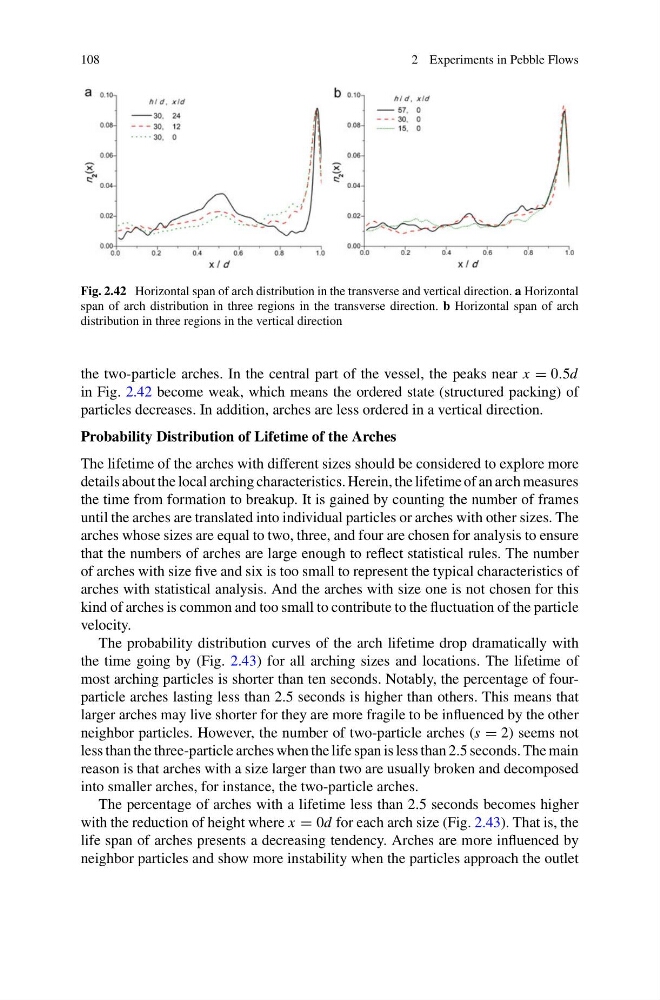
Fig. 2.42 Horizontal span of arch distribution in the transverse and vertical direction. a Horizontal
span of arch distribution in three regions in the transverse direction. b Horizontal span of arch
distribution in three regions in the vertical direction
the two-particle arches. In the central part of the vessel, the peaks near x = 0.5d
in Fig. 2.42 become weak, which means the ordered state (structured packing) of
particles decreases. In addition, arches are less ordered in a vertical direction.
Probability Distribution of Lifetime of the Arches
The lifetime of the arches with different sizes should be considered to explore more
details about the local arching characteristics. Herein, the lifetime of an arch measures
the time from formation to breakup. It is gained by counting the number of frames
until the arches are translated into individual particles or arches with other sizes. The
arches whose sizes are equal to two, three, and four are chosen for analysis to ensure
that the numbers of arches are large enough to reflect statistical rules. The number
of arches with size five and six is too small to represent the typical characteristics of
arches with statistical analysis. And the arches with size one is not chosen for this
kind of arches is common and too small to contribute to the fluctuation of the particle
velocity.
The probability distribution curves of the arch lifetime drop dramatically with
the time going by (Fig. 2.43) for all arching sizes and locations. The lifetime of
most arching particles is shorter than ten seconds. Notably, the percentage of fourparticle arches lasting less than 2.5 seconds is higher than others. This means that
larger arches may live shorter for they are more fragile to be influenced by the other
neighbor particles. However, the number of two-particle arches (s = 2) seems not
less than the three-particle arches when the life span is less than 2.5 seconds. The main
reason is that arches with a size larger than two are usually broken and decomposed
into smaller arches, for instance, the two-particle arches.
The percentage of arches with a lifetime less than 2.5 seconds becomes higher
with the reduction of height where x = 0d for each arch size (Fig. 2.43). That is, the
life span of arches presents a decreasing tendency. Arches are more influenced by
neighbor particles and show more instability when the particles approach the outlet
2 Experiments in Pebble Flows
Fig. 2.42 Horizontal span of arch distribution in the transverse and vertical direction. a Horizontal
span of arch distribution in three regions in the transverse direction. b Horizontal span of arch
distribution in three regions in the vertical direction
the two-particle arches. In the central part of the vessel, the peaks near x = 0.5d
in Fig. 2.42 become weak, which means the ordered state (structured packing) of
particles decreases. In addition, arches are less ordered in a vertical direction.
Probability Distribution of Lifetime of the Arches
The lifetime of the arches with different sizes should be considered to explore more
details about the local arching characteristics. Herein, the lifetime of an arch measures
the time from formation to breakup. It is gained by counting the number of frames
until the arches are translated into individual particles or arches with other sizes. The
arches whose sizes are equal to two, three, and four are chosen for analysis to ensure
that the numbers of arches are large enough to reflect statistical rules. The number
of arches with size five and six is too small to represent the typical characteristics of
arches with statistical analysis. And the arches with size one is not chosen for this
kind of arches is common and too small to contribute to the fluctuation of the particle
velocity.
The probability distribution curves of the arch lifetime drop dramatically with
the time going by (Fig. 2.43) for all arching sizes and locations. The lifetime of
most arching particles is shorter than ten seconds. Notably, the percentage of fourparticle arches lasting less than 2.5 seconds is higher than others. This means that
larger arches may live shorter for they are more fragile to be influenced by the other
neighbor particles. However, the number of two-particle arches (s = 2) seems not
less than the three-particle arches when the life span is less than 2.5 seconds. The main
reason is that arches with a size larger than two are usually broken and decomposed
into smaller arches, for instance, the two-particle arches.
The percentage of arches with a lifetime less than 2.5 seconds becomes higher
with the reduction of height where x = 0d for each arch size (Fig. 2.43). That is, the
life span of arches presents a decreasing tendency. Arches are more influenced by
neighbor particles and show more instability when the particles approach the outlet