

558
R. W. Kessler and W. Kessler
process control abilities and are highly efficient. But these world-scale plants are
inflexible in the case of variations like raw material changes, reaction systems, or
amount of production capacity [16].
Future production must be decentralized, modularly packed in standardized
compartments, and should enable continuous production even for small- to mediumscale applications. An example is the so-called F3 factory. The objective of the F3
factory is to demonstrate the economic advantages of modular, small-scale production plants compared with multiproduct batch plants [17]. The metal framework
allows for rapid module exchange and replacement as well as stepwise increase of
the plant. An increasing market demand could easily be followed by just numbering
up the containers, or if in cases of volatile markets, the demands decrease, individual
containers could be decoupled from the production stream. No extra time for scaling
up is needed [16–18].
Another core element of the new production concepts is micro- and millistructured devices assisting continuous-flow processes due to their superior transport
characteristics and small holdup. Microreactors are characterized by rapid mixing
and excellent heat transfer conditions.
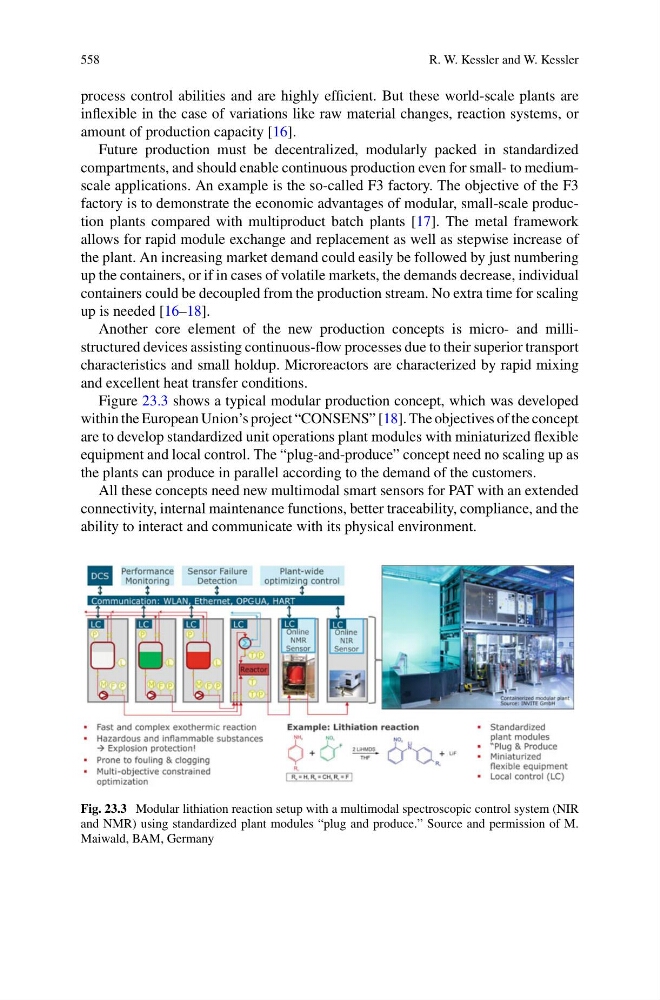
Figure 23.3 shows a typical modular production concept, which was developed
within the European Union’s project “CONSENS” [18]. The objectives of the concept
are to develop standardized unit operations plant modules with miniaturized flexible
equipment and local control. The “plug-and-produce” concept need no scaling up as
the plants can produce in parallel according to the demand of the customers.
All these concepts need new multimodal smart sensors for PAT with an extended
connectivity, internal maintenance functions, better traceability, compliance, and the
ability to interact and communicate with its physical environment.
Fig. 23.3 Modular lithiation reaction setup with a multimodal spectroscopic control system (NIR
and NMR) using standardized plant modules “plug and produce.” Source and permission of M.
Maiwald, BAM, Germany
R. W. Kessler and W. Kessler
process control abilities and are highly efficient. But these world-scale plants are
inflexible in the case of variations like raw material changes, reaction systems, or
amount of production capacity [16].
Future production must be decentralized, modularly packed in standardized
compartments, and should enable continuous production even for small- to mediumscale applications. An example is the so-called F3 factory. The objective of the F3
factory is to demonstrate the economic advantages of modular, small-scale production plants compared with multiproduct batch plants [17]. The metal framework
allows for rapid module exchange and replacement as well as stepwise increase of
the plant. An increasing market demand could easily be followed by just numbering
up the containers, or if in cases of volatile markets, the demands decrease, individual
containers could be decoupled from the production stream. No extra time for scaling
up is needed [16–18].
Another core element of the new production concepts is micro- and millistructured devices assisting continuous-flow processes due to their superior transport
characteristics and small holdup. Microreactors are characterized by rapid mixing
and excellent heat transfer conditions.
Figure 23.3 shows a typical modular production concept, which was developed
within the European Union’s project “CONSENS” [18]. The objectives of the concept
are to develop standardized unit operations plant modules with miniaturized flexible
equipment and local control. The “plug-and-produce” concept need no scaling up as
the plants can produce in parallel according to the demand of the customers.
All these concepts need new multimodal smart sensors for PAT with an extended
connectivity, internal maintenance functions, better traceability, compliance, and the
ability to interact and communicate with its physical environment.
Fig. 23.3 Modular lithiation reaction setup with a multimodal spectroscopic control system (NIR
and NMR) using standardized plant modules “plug and produce.” Source and permission of M.
Maiwald, BAM, Germany