

23 Inline and Online Process Analytical Technology with an Outlook …
557
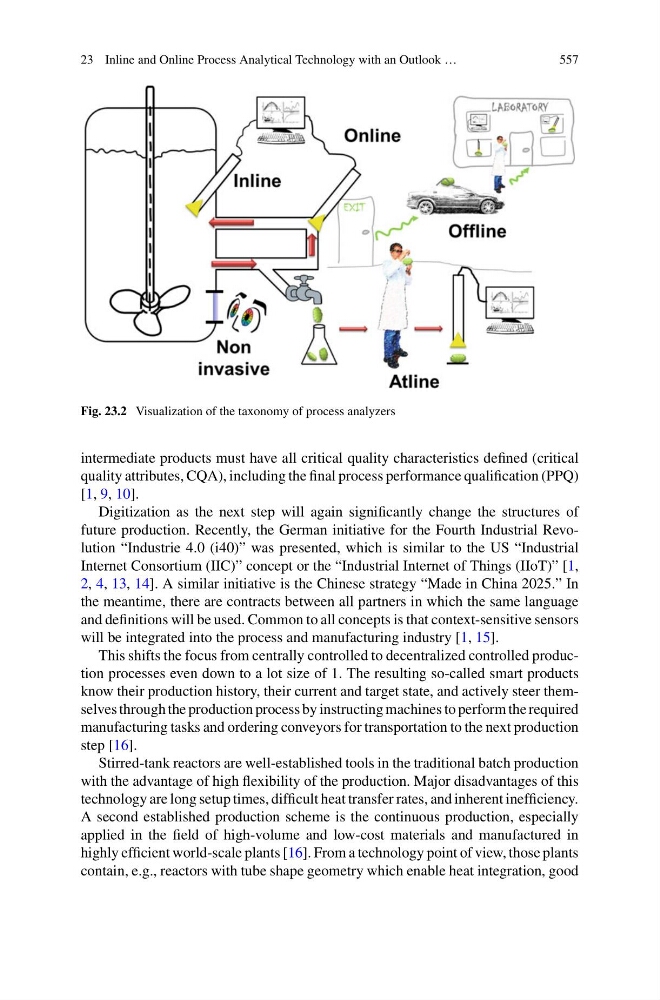
Fig. 23.2 Visualization of the taxonomy of process analyzers
intermediate products must have all critical quality characteristics defined (critical
quality attributes, CQA), including the final process performance qualification (PPQ)
[1, 9, 10].
Digitization as the next step will again significantly change the structures of
future production. Recently, the German initiative for the Fourth Industrial Revolution “Industrie 4.0 (i40)” was presented, which is similar to the US “Industrial
Internet Consortium (IIC)” concept or the “Industrial Internet of Things (IIoT)” [1,
2, 4, 13, 14]. A similar initiative is the Chinese strategy “Made in China 2025.” In
the meantime, there are contracts between all partners in which the same language
and definitions will be used. Common to all concepts is that context-sensitive sensors
will be integrated into the process and manufacturing industry [1, 15].
This shifts the focus from centrally controlled to decentralized controlled production processes even down to a lot size of 1. The resulting so-called smart products
know their production history, their current and target state, and actively steer themselves through the production process by instructing machines to perform the required
manufacturing tasks and ordering conveyors for transportation to the next production
step [16].
Stirred-tank reactors are well-established tools in the traditional batch production
with the advantage of high flexibility of the production. Major disadvantages of this
technology are long setup times, difficult heat transfer rates, and inherent inefficiency.
A second established production scheme is the continuous production, especially
applied in the field of high-volume and low-cost materials and manufactured in
highly efficient world-scale plants [16]. From a technology point of view, those plants
contain, e.g., reactors with tube shape geometry which enable heat integration, good
557
Fig. 23.2 Visualization of the taxonomy of process analyzers
intermediate products must have all critical quality characteristics defined (critical
quality attributes, CQA), including the final process performance qualification (PPQ)
[1, 9, 10].
Digitization as the next step will again significantly change the structures of
future production. Recently, the German initiative for the Fourth Industrial Revolution “Industrie 4.0 (i40)” was presented, which is similar to the US “Industrial
Internet Consortium (IIC)” concept or the “Industrial Internet of Things (IIoT)” [1,
2, 4, 13, 14]. A similar initiative is the Chinese strategy “Made in China 2025.” In
the meantime, there are contracts between all partners in which the same language
and definitions will be used. Common to all concepts is that context-sensitive sensors
will be integrated into the process and manufacturing industry [1, 15].
This shifts the focus from centrally controlled to decentralized controlled production processes even down to a lot size of 1. The resulting so-called smart products
know their production history, their current and target state, and actively steer themselves through the production process by instructing machines to perform the required
manufacturing tasks and ordering conveyors for transportation to the next production
step [16].
Stirred-tank reactors are well-established tools in the traditional batch production
with the advantage of high flexibility of the production. Major disadvantages of this
technology are long setup times, difficult heat transfer rates, and inherent inefficiency.
A second established production scheme is the continuous production, especially
applied in the field of high-volume and low-cost materials and manufactured in
highly efficient world-scale plants [16]. From a technology point of view, those plants
contain, e.g., reactors with tube shape geometry which enable heat integration, good