

characteristic of nanoionic devices: reducing the size to the nanoscale order leads to
novel functions. In this sense, GO-based devices are typical nanoionic devices.
3 Magnetization and Magnetoresistance Tuning Achieved
by Redox Reaction
Recently, magnetic storage devices [e.g., hard disks, magneto-optical disks, and
magnetic random access memory (MRAM)] have been attracting much attention due
to its high density. In particular, MRAM are of great importance to overcome
limitation in conventional information and communication technology. One drawback for practical application of conventional MRAM is a relatively high energy
consumption needed to switch ON and OFF, corresponding to tuning magnetization
of ferromagnetic layer in the MRAM device. To the redox reaction occurring in
nanoscale has been applied to in situ tuning of magnetic properties including
magnetization and magnetoresistance in the quest to develop new forms of highdensity magnetic storage.
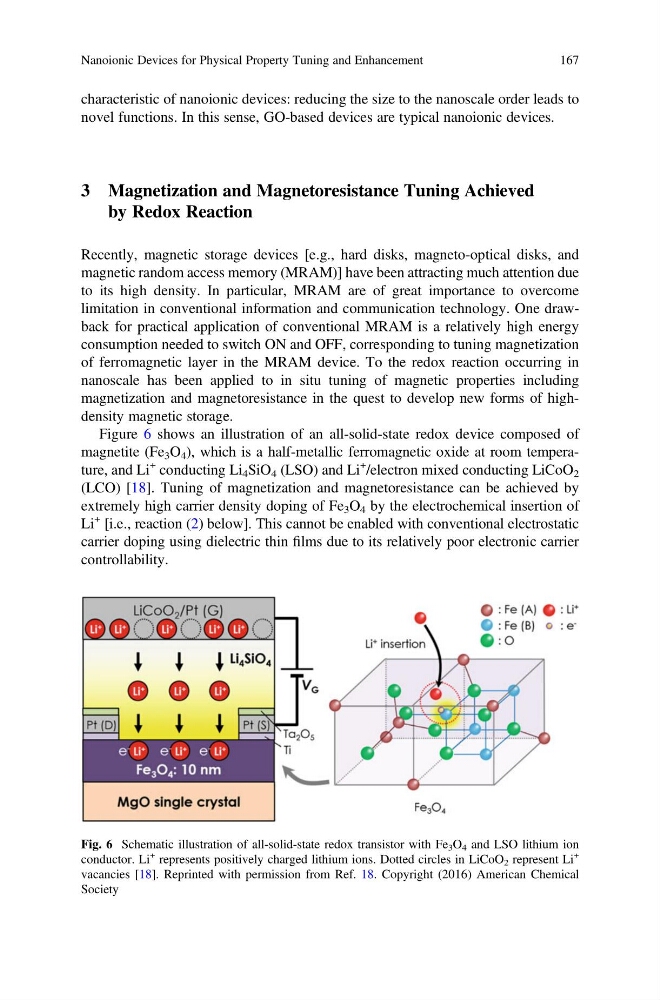
Figure 6 shows an illustration of an all-solid-state redox device composed of
magnetite (Fe 3 O 4 ), which is a half-metallic ferromagnetic oxide at room temperature, and Li
+ conducting Li 4 SiO 4 (LSO) and Li
+
/electron mixed conducting LiCoO 2
(LCO) [18]. Tuning of magnetization and magnetoresistance can be achieved by
extremely high carrier density doping of Fe 3 O 4 by the electrochemical insertion of
Li
+ [i.e., reaction (2) below]. This cannot be enabled with conventional electrostatic
carrier doping using dielectric thin films due to its relatively poor electronic carrier
controllability.
Fig. 6 Schematic illustration of all-solid-state redox transistor with Fe 3 O 4 and LSO lithium ion
conductor. Li
+ represents positively charged lithium ions. Dotted circles in LiCoO 2 represent Li
+
vacancies [18]. Reprinted with permission from Ref. 18. Copyright (2016) American Chemical
Society
Nanoionic Devices for Physical Property Tuning and Enhancement
167
novel functions. In this sense, GO-based devices are typical nanoionic devices.
3 Magnetization and Magnetoresistance Tuning Achieved
by Redox Reaction
Recently, magnetic storage devices [e.g., hard disks, magneto-optical disks, and
magnetic random access memory (MRAM)] have been attracting much attention due
to its high density. In particular, MRAM are of great importance to overcome
limitation in conventional information and communication technology. One drawback for practical application of conventional MRAM is a relatively high energy
consumption needed to switch ON and OFF, corresponding to tuning magnetization
of ferromagnetic layer in the MRAM device. To the redox reaction occurring in
nanoscale has been applied to in situ tuning of magnetic properties including
magnetization and magnetoresistance in the quest to develop new forms of highdensity magnetic storage.
Figure 6 shows an illustration of an all-solid-state redox device composed of
magnetite (Fe 3 O 4 ), which is a half-metallic ferromagnetic oxide at room temperature, and Li
+ conducting Li 4 SiO 4 (LSO) and Li
+
/electron mixed conducting LiCoO 2
(LCO) [18]. Tuning of magnetization and magnetoresistance can be achieved by
extremely high carrier density doping of Fe 3 O 4 by the electrochemical insertion of
Li
+ [i.e., reaction (2) below]. This cannot be enabled with conventional electrostatic
carrier doping using dielectric thin films due to its relatively poor electronic carrier
controllability.
Fig. 6 Schematic illustration of all-solid-state redox transistor with Fe 3 O 4 and LSO lithium ion
conductor. Li
+ represents positively charged lithium ions. Dotted circles in LiCoO 2 represent Li
+
vacancies [18]. Reprinted with permission from Ref. 18. Copyright (2016) American Chemical
Society
Nanoionic Devices for Physical Property Tuning and Enhancement
167