

2 Bandgap Tuning of Graphene Oxide Achieved by Redox
Reaction
Redox reaction is very useful to tune oxidation state of nonstoichiometric compounds. In particular, materials with both wide nonstoichiometry range and unique
physical property related to oxidation state are well fit to redox reaction-based
nanoionics devices. In such a view point, graphene oxide (GO), a derivative of
graphene, is an idealistic material.
GO has been attracting much attention as a promising functional material. For
instance, variable bandgap, wide energy range of photoluminescence, roomtemperature ferromagnetism and other unique electronic properties are of great
interest [33–37]. The unique functions of GO are caused by the electronic disorder
due to sp
3 hybridization carbon in sp
2 conjugated networks. Because such sp
3
hybridization carbons are usually bonded with oxygen atoms or hydroxide ions,
the sp
2 /sp
3 fraction and the carbon/oxygen ratio (C/O) are in positive relationship,
resulting in modulation of the band gap and other interesting properties [33–37]. We
fabricated nanoionics devices to tune the sp
2 /sp
3 fraction in situ by using redox
reaction for development of multifunctional devices with merits of transparent,
ultrathin, flexible, and low-cost [13–15].
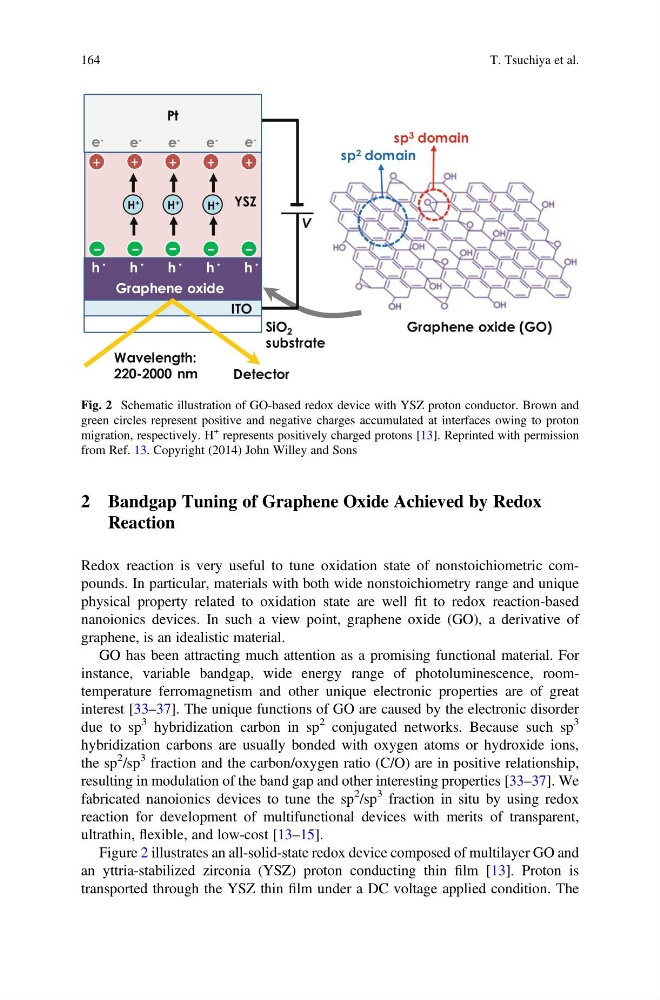
Figure 2 illustrates an all-solid-state redox device composed of multilayer GO and
an yttria-stabilized zirconia (YSZ) proton conducting thin film [13]. Proton is
transported through the YSZ thin film under a DC voltage applied condition. The
Pt
YSZ
+
+
+
H +
+
+
V
H +
H +
e -
e -
e -
e -
e -
ITO
Graphene oxide
h
h
h
h
h
Wavelength:
220-2000 nm
Detector
SiO 2
substrate
Graphene oxide (GO)
sp 2 domain
sp 3 domain
Fig. 2 Schematic illustration of GO-based redox device with YSZ proton conductor. Brown and
green circles represent positive and negative charges accumulated at interfaces owing to proton
migration, respectively. H
+ represents positively charged protons [13]. Reprinted with permission
from Ref. 13. Copyright (2014) John Willey and Sons
164
T. Tsuchiya et al.
Reaction
Redox reaction is very useful to tune oxidation state of nonstoichiometric compounds. In particular, materials with both wide nonstoichiometry range and unique
physical property related to oxidation state are well fit to redox reaction-based
nanoionics devices. In such a view point, graphene oxide (GO), a derivative of
graphene, is an idealistic material.
GO has been attracting much attention as a promising functional material. For
instance, variable bandgap, wide energy range of photoluminescence, roomtemperature ferromagnetism and other unique electronic properties are of great
interest [33–37]. The unique functions of GO are caused by the electronic disorder
due to sp
3 hybridization carbon in sp
2 conjugated networks. Because such sp
3
hybridization carbons are usually bonded with oxygen atoms or hydroxide ions,
the sp
2 /sp
3 fraction and the carbon/oxygen ratio (C/O) are in positive relationship,
resulting in modulation of the band gap and other interesting properties [33–37]. We
fabricated nanoionics devices to tune the sp
2 /sp
3 fraction in situ by using redox
reaction for development of multifunctional devices with merits of transparent,
ultrathin, flexible, and low-cost [13–15].
Figure 2 illustrates an all-solid-state redox device composed of multilayer GO and
an yttria-stabilized zirconia (YSZ) proton conducting thin film [13]. Proton is
transported through the YSZ thin film under a DC voltage applied condition. The
Pt
YSZ
+
+
+
H +
+
+
V
H +
H +
e -
e -
e -
e -
e -
ITO
Graphene oxide
h
h
h
h
h
Wavelength:
220-2000 nm
Detector
SiO 2
substrate
Graphene oxide (GO)
sp 2 domain
sp 3 domain
Fig. 2 Schematic illustration of GO-based redox device with YSZ proton conductor. Brown and
green circles represent positive and negative charges accumulated at interfaces owing to proton
migration, respectively. H
+ represents positively charged protons [13]. Reprinted with permission
from Ref. 13. Copyright (2014) John Willey and Sons
164
T. Tsuchiya et al.