

2.1 Basic Operation Principle
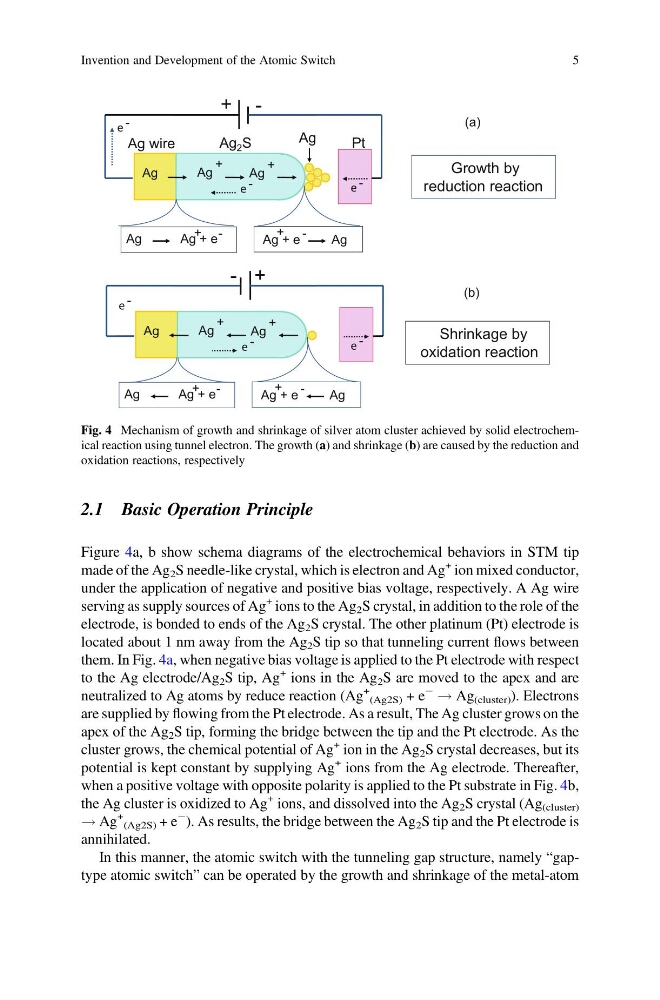
Figure 4a, b show schema diagrams of the electrochemical behaviors in STM tip
made of the Ag 2 S needle-like crystal, which is electron and Ag
+ ion mixed conductor,
under the application of negative and positive bias voltage, respectively. A Ag wire
serving as supply sources of Ag
+ ions to the Ag 2 S crystal, in addition to the role of the
electrode, is bonded to ends of the Ag 2 S crystal. The other platinum (Pt) electrode is
located about 1 nm away from the Ag 2 S tip so that tunneling current flows between
them. In Fig. 4a, when negative bias voltage is applied to the Pt electrode with respect
to the Ag electrode/Ag 2 S tip, Ag
+ ions in the Ag 2 S are moved to the apex and are
neutralized to Ag atoms by reduce reaction (Ag
+
(Ag2S) + e
À
! Ag (cluster) ). Electrons
are supplied by flowing from the Pt electrode. As a result, The Ag cluster grows on the
apex of the Ag 2 S tip, forming the bridge between the tip and the Pt electrode. As the
cluster grows, the chemical potential of Ag
+ ion in the Ag 2 S crystal decreases, but its
potential is kept constant by supplying Ag
+ ions from the Ag electrode. Thereafter,
when a positive voltage with opposite polarity is applied to the Pt substrate in Fig. 4b,
the Ag cluster is oxidized to Ag
+ ions, and dissolved into the Ag 2 S crystal (Ag (cluster)
! Ag
+
(Ag2S) + e
À
). As results, the bridge between the Ag 2 S tip and the Pt electrode is
annihilated.
In this manner, the atomic switch with the tunneling gap structure, namely “gaptype atomic switch” can be operated by the growth and shrinkage of the metal-atom
Growth by
reduction reaction
Ag wire
Ag 2 S
P t
e -
e -
Ag
Ag
+
Ag
+
e -
+ -
Ag
Ag + e
+ -
Ag + e
Ag
+ -
Ag
+
-
e -
e -
Ag
Ag
+
Ag
+
e -
Ag
Ag + e
+ -
Ag + e
Ag
+ -
Shrinkage by
oxidation reaction
(a)
(b)
Fig. 4 Mechanism of growth and shrinkage of silver atom cluster achieved by solid electrochemical reaction using tunnel electron. The growth (a) and shrinkage (b) are caused by the reduction and
oxidation reactions, respectively
Invention and Development of the Atomic Switch
5
Figure 4a, b show schema diagrams of the electrochemical behaviors in STM tip
made of the Ag 2 S needle-like crystal, which is electron and Ag
+ ion mixed conductor,
under the application of negative and positive bias voltage, respectively. A Ag wire
serving as supply sources of Ag
+ ions to the Ag 2 S crystal, in addition to the role of the
electrode, is bonded to ends of the Ag 2 S crystal. The other platinum (Pt) electrode is
located about 1 nm away from the Ag 2 S tip so that tunneling current flows between
them. In Fig. 4a, when negative bias voltage is applied to the Pt electrode with respect
to the Ag electrode/Ag 2 S tip, Ag
+ ions in the Ag 2 S are moved to the apex and are
neutralized to Ag atoms by reduce reaction (Ag
+
(Ag2S) + e
À
! Ag (cluster) ). Electrons
are supplied by flowing from the Pt electrode. As a result, The Ag cluster grows on the
apex of the Ag 2 S tip, forming the bridge between the tip and the Pt electrode. As the
cluster grows, the chemical potential of Ag
+ ion in the Ag 2 S crystal decreases, but its
potential is kept constant by supplying Ag
+ ions from the Ag electrode. Thereafter,
when a positive voltage with opposite polarity is applied to the Pt substrate in Fig. 4b,
the Ag cluster is oxidized to Ag
+ ions, and dissolved into the Ag 2 S crystal (Ag (cluster)
! Ag
+
(Ag2S) + e
À
). As results, the bridge between the Ag 2 S tip and the Pt electrode is
annihilated.
In this manner, the atomic switch with the tunneling gap structure, namely “gaptype atomic switch” can be operated by the growth and shrinkage of the metal-atom
Growth by
reduction reaction
Ag wire
Ag 2 S
P t
e -
e -
Ag
Ag
+
Ag
+
e -
+ -
Ag
Ag + e
+ -
Ag + e
Ag
+ -
Ag
+
-
e -
e -
Ag
Ag
+
Ag
+
e -
Ag
Ag + e
+ -
Ag + e
Ag
+ -
Shrinkage by
oxidation reaction
(a)
(b)
Fig. 4 Mechanism of growth and shrinkage of silver atom cluster achieved by solid electrochemical reaction using tunnel electron. The growth (a) and shrinkage (b) are caused by the reduction and
oxidation reactions, respectively
Invention and Development of the Atomic Switch
5