

Order and Dielectric Relaxation During Polymer Crystallization
213
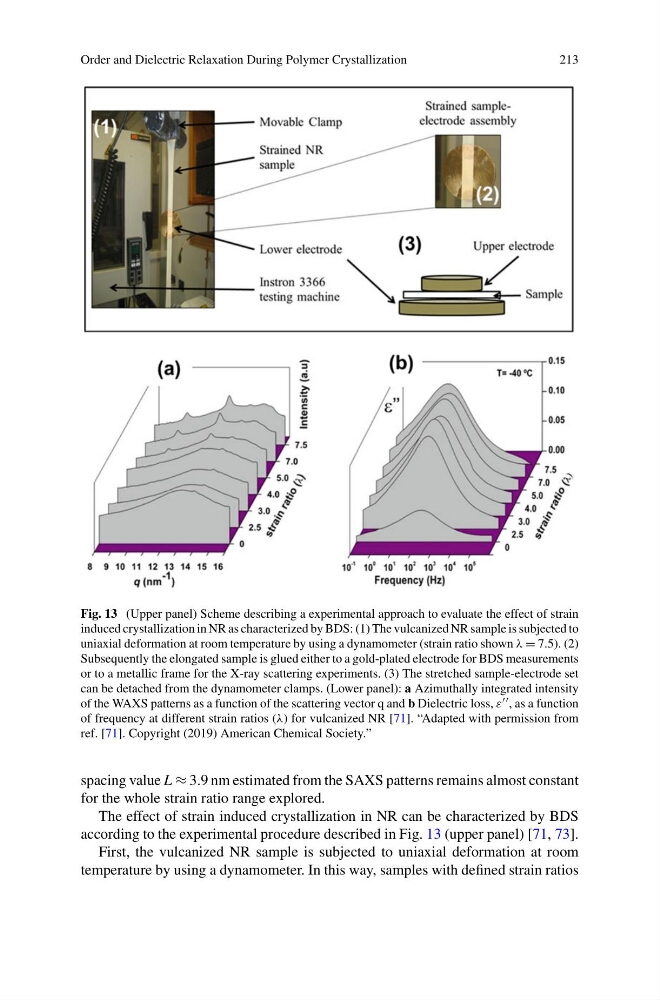
Fig. 13 (Upper panel) Scheme describing a experimental approach to evaluate the effect of strain
induced crystallization in NR as characterized by BDS: (1) The vulcanized NR sample is subjected to
uniaxial deformation at room temperature by using a dynamometer (strain ratio shown λ = 7.5). (2)
Subsequently the elongated sample is glued either to a gold-plated electrode for BDS measurements
or to a metallic frame for the X-ray scattering experiments. (3) The stretched sample-electrode set
can be detached from the dynamometer clamps. (Lower panel): a Azimuthally integrated intensity
of the WAXS patterns as a function of the scattering vector q and b Dielectric loss, ε , as a function
of frequency at different strain ratios (λ) for vulcanized NR [71]. “Adapted with permission from
ref. [71]. Copyright (2019) American Chemical Society.”
spacing value L ≈ 3.9 nm estimated from the SAXS patterns remains almost constant
for the whole strain ratio range explored.
The effect of strain induced crystallization in NR can be characterized by BDS
according to the experimental procedure described in Fig. 13 (upper panel) [71, 73].
First, the vulcanized NR sample is subjected to uniaxial deformation at room
temperature by using a dynamometer. In this way, samples with defined strain ratios
213
Fig. 13 (Upper panel) Scheme describing a experimental approach to evaluate the effect of strain
induced crystallization in NR as characterized by BDS: (1) The vulcanized NR sample is subjected to
uniaxial deformation at room temperature by using a dynamometer (strain ratio shown λ = 7.5). (2)
Subsequently the elongated sample is glued either to a gold-plated electrode for BDS measurements
or to a metallic frame for the X-ray scattering experiments. (3) The stretched sample-electrode set
can be detached from the dynamometer clamps. (Lower panel): a Azimuthally integrated intensity
of the WAXS patterns as a function of the scattering vector q and b Dielectric loss, ε , as a function
of frequency at different strain ratios (λ) for vulcanized NR [71]. “Adapted with permission from
ref. [71]. Copyright (2019) American Chemical Society.”
spacing value L ≈ 3.9 nm estimated from the SAXS patterns remains almost constant
for the whole strain ratio range explored.
The effect of strain induced crystallization in NR can be characterized by BDS
according to the experimental procedure described in Fig. 13 (upper panel) [71, 73].
First, the vulcanized NR sample is subjected to uniaxial deformation at room
temperature by using a dynamometer. In this way, samples with defined strain ratios