

5 Laser Specklometer, Speckle-Optical Diagnostics and Laser …
369
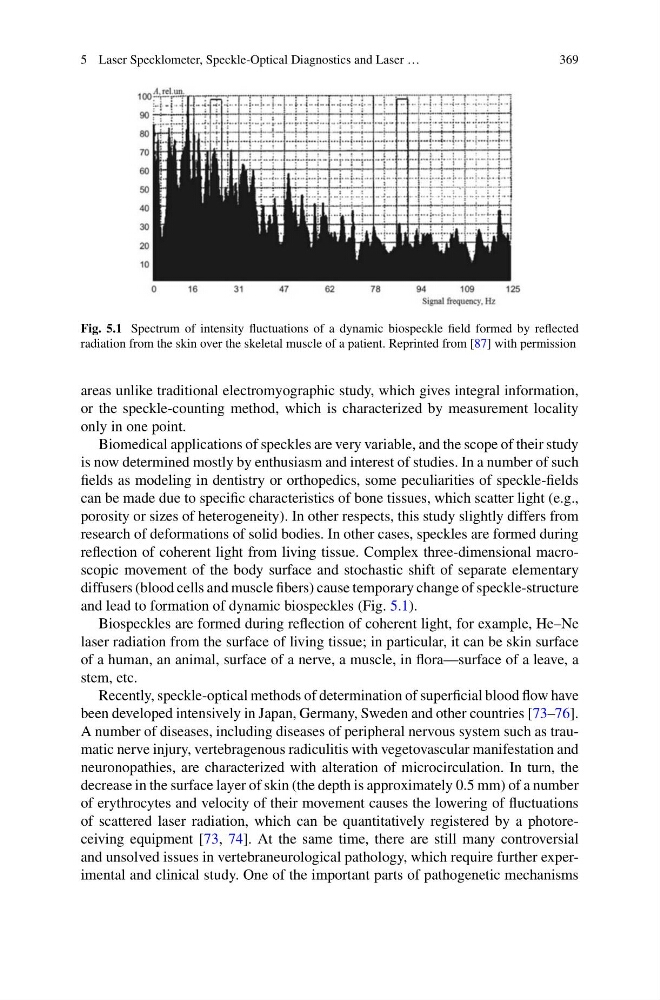
Fig. 5.1 Spectrum of intensity fluctuations of a dynamic biospeckle field formed by reflected
radiation from the skin over the skeletal muscle of a patient. Reprinted from [87] with permission
areas unlike traditional electromyographic study, which gives integral information,
or the speckle-counting method, which is characterized by measurement locality
only in one point.
Biomedical applications of speckles are very variable, and the scope of their study
is now determined mostly by enthusiasm and interest of studies. In a number of such
fields as modeling in dentistry or orthopedics, some peculiarities of speckle-fields
can be made due to specific characteristics of bone tissues, which scatter light (e.g.,
porosity or sizes of heterogeneity). In other respects, this study slightly differs from
research of deformations of solid bodies. In other cases, speckles are formed during
reflection of coherent light from living tissue. Complex three-dimensional macroscopic movement of the body surface and stochastic shift of separate elementary
diffusers (blood cells and muscle fibers) cause temporary change of speckle-structure
and lead to formation of dynamic biospeckles (Fig. 5.1).
Biospeckles are formed during reflection of coherent light, for example, He–Ne
laser radiation from the surface of living tissue; in particular, it can be skin surface
of a human, an animal, surface of a nerve, a muscle, in flora—surface of a leave, a
stem, etc.
Recently, speckle-optical methods of determination of superficial blood flow have
been developed intensively in Japan, Germany, Sweden and other countries [73–76].
A number of diseases, including diseases of peripheral nervous system such as traumatic nerve injury, vertebragenous radiculitis with vegetovascular manifestation and
neuronopathies, are characterized with alteration of microcirculation. In turn, the
decrease in the surface layer of skin (the depth is approximately 0.5 mm) of a number
of erythrocytes and velocity of their movement causes the lowering of fluctuations
of scattered laser radiation, which can be quantitatively registered by a photoreceiving equipment [73, 74]. At the same time, there are still many controversial
and unsolved issues in vertebraneurological pathology, which require further experimental and clinical study. One of the important parts of pathogenetic mechanisms
369
Fig. 5.1 Spectrum of intensity fluctuations of a dynamic biospeckle field formed by reflected
radiation from the skin over the skeletal muscle of a patient. Reprinted from [87] with permission
areas unlike traditional electromyographic study, which gives integral information,
or the speckle-counting method, which is characterized by measurement locality
only in one point.
Biomedical applications of speckles are very variable, and the scope of their study
is now determined mostly by enthusiasm and interest of studies. In a number of such
fields as modeling in dentistry or orthopedics, some peculiarities of speckle-fields
can be made due to specific characteristics of bone tissues, which scatter light (e.g.,
porosity or sizes of heterogeneity). In other respects, this study slightly differs from
research of deformations of solid bodies. In other cases, speckles are formed during
reflection of coherent light from living tissue. Complex three-dimensional macroscopic movement of the body surface and stochastic shift of separate elementary
diffusers (blood cells and muscle fibers) cause temporary change of speckle-structure
and lead to formation of dynamic biospeckles (Fig. 5.1).
Biospeckles are formed during reflection of coherent light, for example, He–Ne
laser radiation from the surface of living tissue; in particular, it can be skin surface
of a human, an animal, surface of a nerve, a muscle, in flora—surface of a leave, a
stem, etc.
Recently, speckle-optical methods of determination of superficial blood flow have
been developed intensively in Japan, Germany, Sweden and other countries [73–76].
A number of diseases, including diseases of peripheral nervous system such as traumatic nerve injury, vertebragenous radiculitis with vegetovascular manifestation and
neuronopathies, are characterized with alteration of microcirculation. In turn, the
decrease in the surface layer of skin (the depth is approximately 0.5 mm) of a number
of erythrocytes and velocity of their movement causes the lowering of fluctuations
of scattered laser radiation, which can be quantitatively registered by a photoreceiving equipment [73, 74]. At the same time, there are still many controversial
and unsolved issues in vertebraneurological pathology, which require further experimental and clinical study. One of the important parts of pathogenetic mechanisms