

2.7 Numerical Simulation of Fluid Flow in Weld Pool …
61
the laser power increases from 1.87 kW to 2.00 kW, sizes of the cross section of the
weld joint decrease. This relationship is related to the gravity of fluid in the weld
pool in the initial stage of full penetration and the fact that the recoil pressure of
the air flow in the keyhole forces the molten metal to fall. When the laser power
continues to increase, sizes of the cross section of the weld joint are increased. In
this steady increase phase, the welding speed remains constant. Despite greater fall
in the weld pool, the fall rate is far less than the rate of increase in the overall size of
the weld pool, and as a result, the size of the cross section of the weld joint increases
continuously.
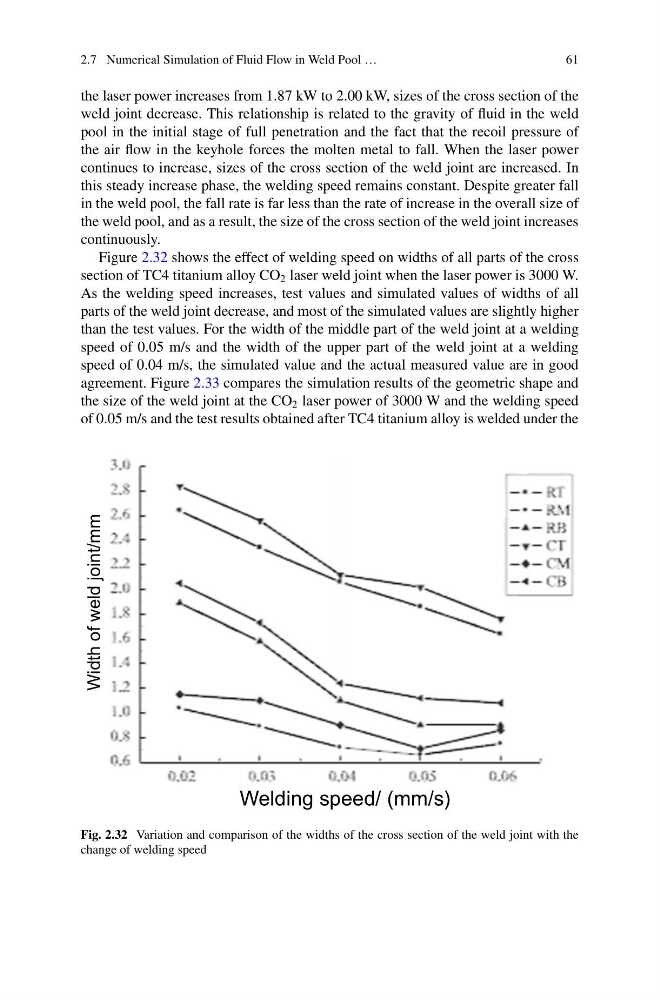
Figure 2.32 shows the effect of welding speed on widths of all parts of the cross
section of TC4 titanium alloy CO 2 laser weld joint when the laser power is 3000 W.
As the welding speed increases, test values and simulated values of widths of all
parts of the weld joint decrease, and most of the simulated values are slightly higher
than the test values. For the width of the middle part of the weld joint at a welding
speed of 0.05 m/s and the width of the upper part of the weld joint at a welding
speed of 0.04 m/s, the simulated value and the actual measured value are in good
agreement. Figure 2.33 compares the simulation results of the geometric shape and
the size of the weld joint at the CO 2 laser power of 3000 W and the welding speed
of 0.05 m/s and the test results obtained after TC4 titanium alloy is welded under the
Welding speed/ (mm/s)
Width of weld joint/mm
Fig. 2.32 Variation and comparison of the widths of the cross section of the weld joint with the
change of welding speed
61
the laser power increases from 1.87 kW to 2.00 kW, sizes of the cross section of the
weld joint decrease. This relationship is related to the gravity of fluid in the weld
pool in the initial stage of full penetration and the fact that the recoil pressure of
the air flow in the keyhole forces the molten metal to fall. When the laser power
continues to increase, sizes of the cross section of the weld joint are increased. In
this steady increase phase, the welding speed remains constant. Despite greater fall
in the weld pool, the fall rate is far less than the rate of increase in the overall size of
the weld pool, and as a result, the size of the cross section of the weld joint increases
continuously.
Figure 2.32 shows the effect of welding speed on widths of all parts of the cross
section of TC4 titanium alloy CO 2 laser weld joint when the laser power is 3000 W.
As the welding speed increases, test values and simulated values of widths of all
parts of the weld joint decrease, and most of the simulated values are slightly higher
than the test values. For the width of the middle part of the weld joint at a welding
speed of 0.05 m/s and the width of the upper part of the weld joint at a welding
speed of 0.04 m/s, the simulated value and the actual measured value are in good
agreement. Figure 2.33 compares the simulation results of the geometric shape and
the size of the weld joint at the CO 2 laser power of 3000 W and the welding speed
of 0.05 m/s and the test results obtained after TC4 titanium alloy is welded under the
Welding speed/ (mm/s)
Width of weld joint/mm
Fig. 2.32 Variation and comparison of the widths of the cross section of the weld joint with the
change of welding speed