

122
4 Simulation of Transient Keyhole and Weld Pool
(a) surface tension of 0.2 N/m
(b) surface tension of 0.6 N/m
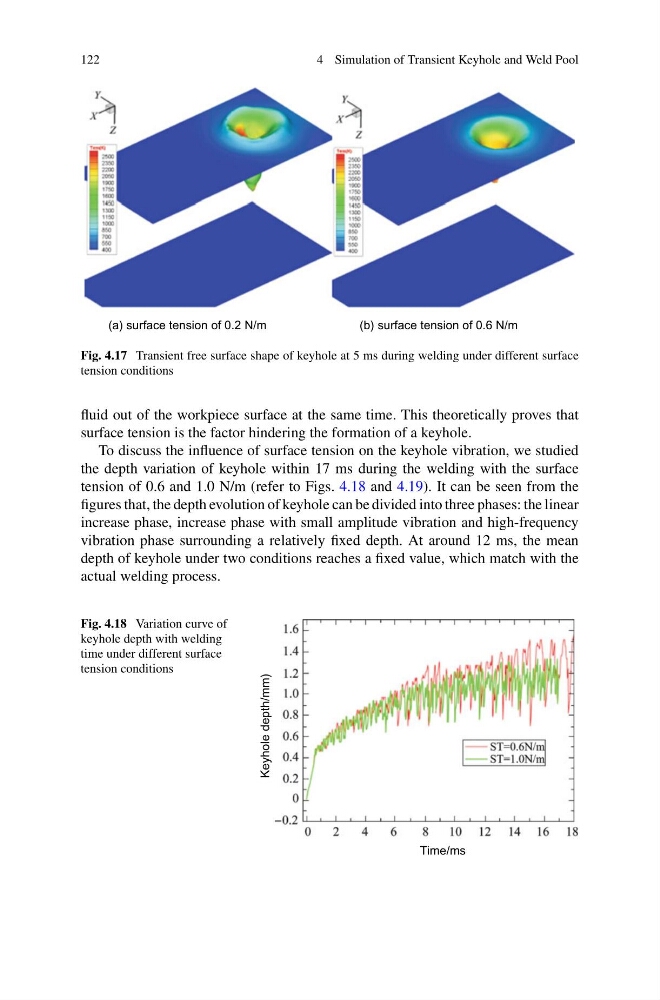
Fig. 4.17 Transient free surface shape of keyhole at 5 ms during welding under different surface
tension conditions
fluid out of the workpiece surface at the same time. This theoretically proves that
surface tension is the factor hindering the formation of a keyhole.
To discuss the influence of surface tension on the keyhole vibration, we studied
the depth variation of keyhole within 17 ms during the welding with the surface
tension of 0.6 and 1.0 N/m (refer to Figs. 4.18 and 4.19). It can be seen from the
figures that, the depth evolution of keyhole can be divided into three phases: the linear
increase phase, increase phase with small amplitude vibration and high-frequency
vibration phase surrounding a relatively fixed depth. At around 12 ms, the mean
depth of keyhole under two conditions reaches a fixed value, which match with the
actual welding process.
Fig. 4.18 Variation curve of
keyhole depth with welding
time under different surface
tension conditions
Time/ms
Keyhole depth/mm)
4 Simulation of Transient Keyhole and Weld Pool
(a) surface tension of 0.2 N/m
(b) surface tension of 0.6 N/m
Fig. 4.17 Transient free surface shape of keyhole at 5 ms during welding under different surface
tension conditions
fluid out of the workpiece surface at the same time. This theoretically proves that
surface tension is the factor hindering the formation of a keyhole.
To discuss the influence of surface tension on the keyhole vibration, we studied
the depth variation of keyhole within 17 ms during the welding with the surface
tension of 0.6 and 1.0 N/m (refer to Figs. 4.18 and 4.19). It can be seen from the
figures that, the depth evolution of keyhole can be divided into three phases: the linear
increase phase, increase phase with small amplitude vibration and high-frequency
vibration phase surrounding a relatively fixed depth. At around 12 ms, the mean
depth of keyhole under two conditions reaches a fixed value, which match with the
actual welding process.
Fig. 4.18 Variation curve of
keyhole depth with welding
time under different surface
tension conditions
Time/ms
Keyhole depth/mm)