

310
11 Spintronics
36220
36240
36260
36280
36300
36320
36340
36360
36380
36400
0
2
4
6
8
10
Frequency (GHz)
H (kgauss)
Spectrum for Exchange Interaction
1
2
3
4
5
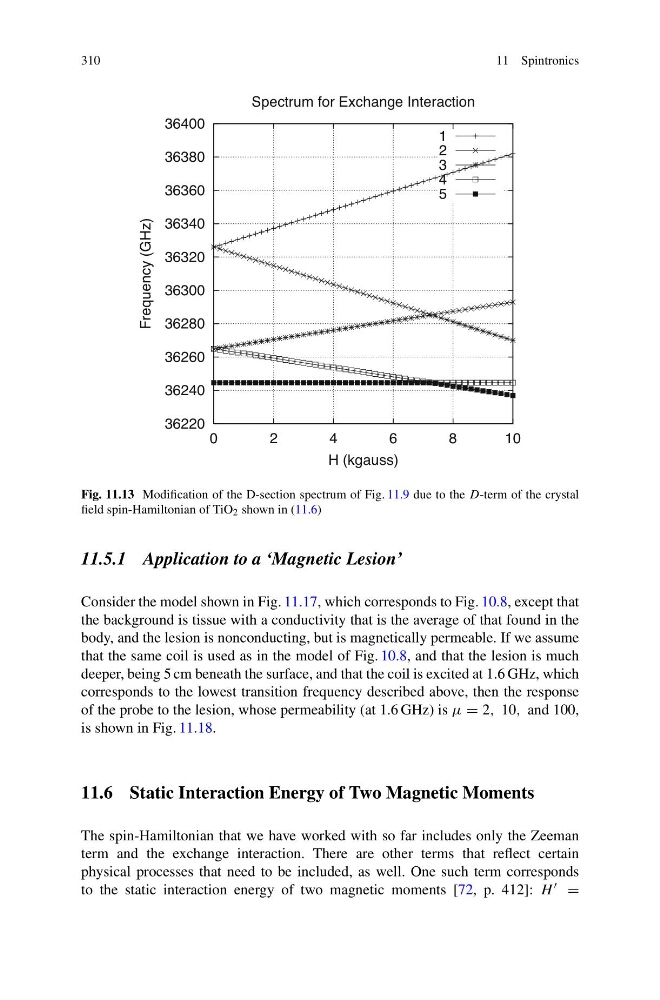
Fig. 11.13 Modification of the D-section spectrum of Fig. 11.9 due to the D-term of the crystal
field spin-Hamiltonian of TiO 2 shown in (11.6)
11.5.1 Application to a ‘Magnetic Lesion’
Consider the model shown in Fig. 11.17, which corresponds to Fig. 10.8, except that
the background is tissue with a conductivity that is the average of that found in the
body, and the lesion is nonconducting, but is magnetically permeable. If we assume
that the same coil is used as in the model of Fig. 10.8, and that the lesion is much
deeper, being 5 cm beneath the surface, and that the coil is excited at 1.6 GHz, which
corresponds to the lowest transition frequency described above, then the response
of the probe to the lesion, whose permeability (at 1.6 GHz) is μ = 2, 10, and 100,
is shown in Fig. 11.18.
11.6 Static Interaction Energy of Two Magnetic Moments
The spin-Hamiltonian that we have worked with so far includes only the Zeeman
term and the exchange interaction. There are other terms that reflect certain
physical processes that need to be included, as well. One such term corresponds
to the static interaction energy of two magnetic moments [72, p. 412]: H =
11 Spintronics
36220
36240
36260
36280
36300
36320
36340
36360
36380
36400
0
2
4
6
8
10
Frequency (GHz)
H (kgauss)
Spectrum for Exchange Interaction
1
2
3
4
5
Fig. 11.13 Modification of the D-section spectrum of Fig. 11.9 due to the D-term of the crystal
field spin-Hamiltonian of TiO 2 shown in (11.6)
11.5.1 Application to a ‘Magnetic Lesion’
Consider the model shown in Fig. 11.17, which corresponds to Fig. 10.8, except that
the background is tissue with a conductivity that is the average of that found in the
body, and the lesion is nonconducting, but is magnetically permeable. If we assume
that the same coil is used as in the model of Fig. 10.8, and that the lesion is much
deeper, being 5 cm beneath the surface, and that the coil is excited at 1.6 GHz, which
corresponds to the lowest transition frequency described above, then the response
of the probe to the lesion, whose permeability (at 1.6 GHz) is μ = 2, 10, and 100,
is shown in Fig. 11.18.
11.6 Static Interaction Energy of Two Magnetic Moments
The spin-Hamiltonian that we have worked with so far includes only the Zeeman
term and the exchange interaction. There are other terms that reflect certain
physical processes that need to be included, as well. One such term corresponds
to the static interaction energy of two magnetic moments [72, p. 412]: H =