

114
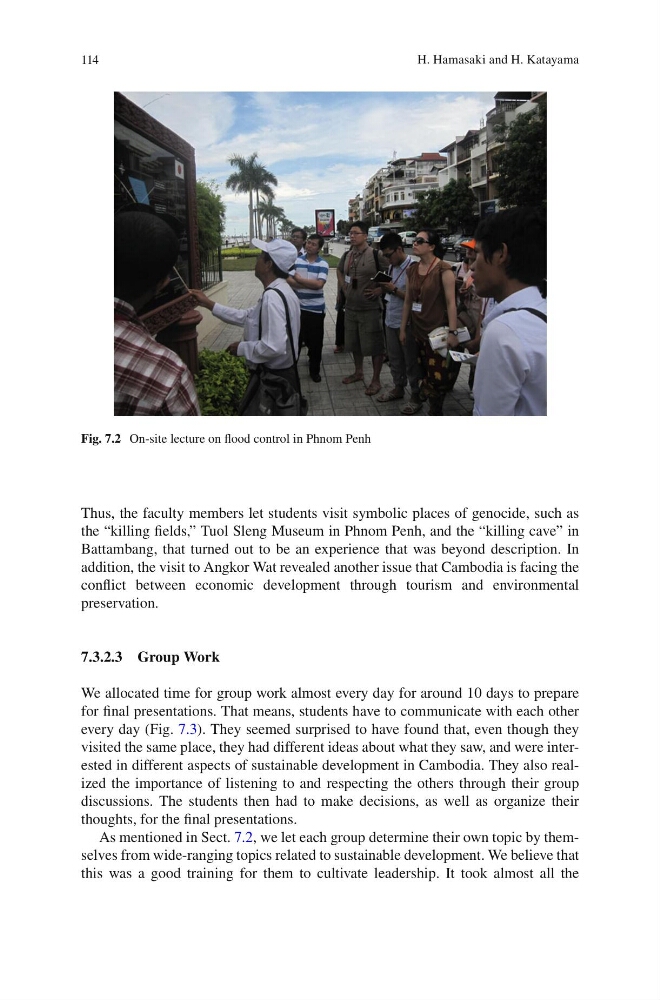
Fig. 7.2 On-site lecture on fl ood control in Phnom Penh
Thus, the faculty members let students visit symbolic places of genocide, such as
the “killing fi elds,” Tuol Sleng Museum in Phnom Penh, and the “killing cave” in
Battambang, that turned out to be an experience that was beyond description. In
addition, the visit to Angkor Wat revealed another issue that Cambodia is facing the
confl ict between economic development through tourism and environmental
preservation.
7.3.2.3 Group Work
We allocated time for group work almost every day for around 10 days to prepare
for fi nal presentations. That means, students have to communicate with each other
every day (Fig. 7.3 ). They seemed surprised to have found that, even though they
visited the same place, they had different ideas about what they saw, and were interested in different aspects of sustainable development in Cambodia. They also realized the importance of listening to and respecting the others through their group
discussions. The students then had to make decisions, as well as organize their
thoughts, for the fi nal presentations.
As mentioned in Sect. 7.2 , we let each group determine their own topic by themselves from wide-ranging topics related to sustainable development. We believe that
this was a good training for them to cultivate leadership. It took almost all the
H. Hamasaki and H. Katayama
Fig. 7.2 On-site lecture on fl ood control in Phnom Penh
Thus, the faculty members let students visit symbolic places of genocide, such as
the “killing fi elds,” Tuol Sleng Museum in Phnom Penh, and the “killing cave” in
Battambang, that turned out to be an experience that was beyond description. In
addition, the visit to Angkor Wat revealed another issue that Cambodia is facing the
confl ict between economic development through tourism and environmental
preservation.
7.3.2.3 Group Work
We allocated time for group work almost every day for around 10 days to prepare
for fi nal presentations. That means, students have to communicate with each other
every day (Fig. 7.3 ). They seemed surprised to have found that, even though they
visited the same place, they had different ideas about what they saw, and were interested in different aspects of sustainable development in Cambodia. They also realized the importance of listening to and respecting the others through their group
discussions. The students then had to make decisions, as well as organize their
thoughts, for the fi nal presentations.
As mentioned in Sect. 7.2 , we let each group determine their own topic by themselves from wide-ranging topics related to sustainable development. We believe that
this was a good training for them to cultivate leadership. It took almost all the
H. Hamasaki and H. Katayama