

113
Penh Water Supply Authority where he exercised strong leadership, and contributed
to the reconstruction of the water supply system in Phnom Penh. In particular, he
succeeded in collecting water fees from over 90 % of households, which is seldom
the case with developing countries that suffer from weak or lack of governance.
He is respected by the people in Cambodia and has been called an incredible person
[ 3 , 4 ]. His lecture gave some valuable insights on leadership to the students based
on his experiences of struggle to overcome many obstacles. His message greatly
impressed the students and helped them to appreciate the various aspects of leadership and their own lives.
7.3.2.2 Site Visits
The sites to visit were chosen carefully, taking the advices from lecturers. For example, for water supply and urban fl ood control projects arranged by JICA, we visited
a water treatment plant as well as a pumping station, and observed the drainage
system (Fig. 7.2 ).
In the Cambodia Unit, along with the specifi c environmental issues, students
were required to think about the nation’s history with a holistic viewpoint because
of the impact of Pol Pot regime on various aspects of people’s life in Cambodia.
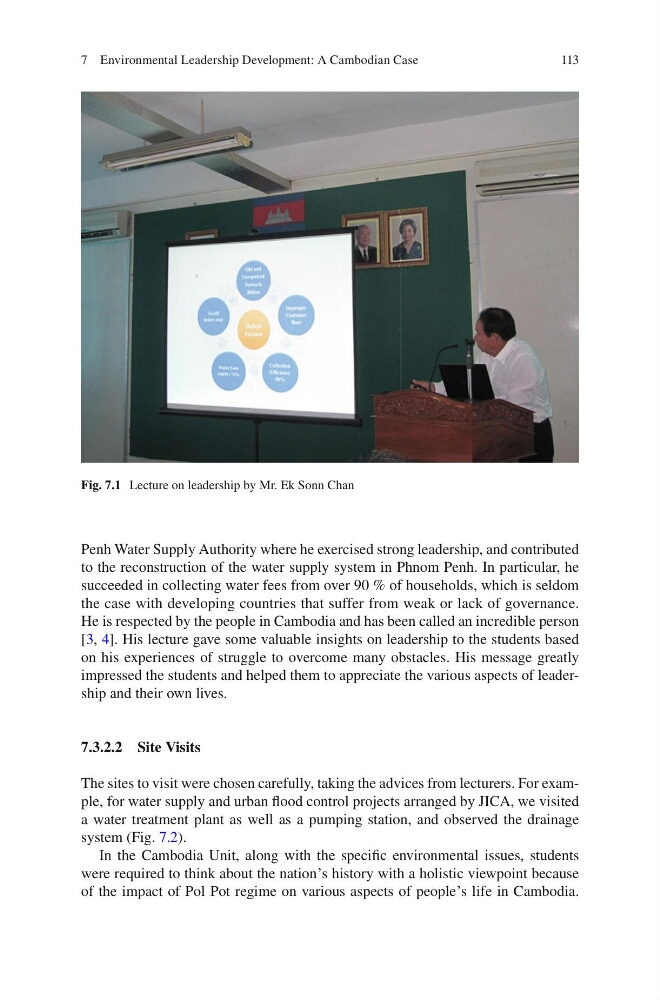
Fig. 7.1 Lecture on leadership by Mr. Ek Sonn Chan
7 Environmental Leadership Development: A Cambodian Case
Penh Water Supply Authority where he exercised strong leadership, and contributed
to the reconstruction of the water supply system in Phnom Penh. In particular, he
succeeded in collecting water fees from over 90 % of households, which is seldom
the case with developing countries that suffer from weak or lack of governance.
He is respected by the people in Cambodia and has been called an incredible person
[ 3 , 4 ]. His lecture gave some valuable insights on leadership to the students based
on his experiences of struggle to overcome many obstacles. His message greatly
impressed the students and helped them to appreciate the various aspects of leadership and their own lives.
7.3.2.2 Site Visits
The sites to visit were chosen carefully, taking the advices from lecturers. For example, for water supply and urban fl ood control projects arranged by JICA, we visited
a water treatment plant as well as a pumping station, and observed the drainage
system (Fig. 7.2 ).
In the Cambodia Unit, along with the specifi c environmental issues, students
were required to think about the nation’s history with a holistic viewpoint because
of the impact of Pol Pot regime on various aspects of people’s life in Cambodia.
Fig. 7.1 Lecture on leadership by Mr. Ek Sonn Chan
7 Environmental Leadership Development: A Cambodian Case