

115
groups a lot of time to agree on their own topic. They “struggled,” but later said in
their feedback that this was a very good experience.
7.3.3 Final Presentations and Reports
It was a requirement for UT students to make fi nal presentations and submit reports
after the completion of on-site program. They made the presentations more informative and better structured than the ones they gave in Cambodia on the last day of
the fi eldwork. They re-arranged the contents and added some new materials they
searched for after their return.
The fi nal reports that the UT students submitted were interesting. The question for
the fi nal report was “What is most important for sustainable development in Cambodia?”
the same question we asked for the preliminary assignment. Their answers were based
mainly on their own academic backgrounds. However, on the contrary, their fi nal
reports were written from a holistic view; that was, not only based on their own chosen
academic fi elds but also from diversifi ed viewpoints. Their fi nal reports became very
rich and impressive. This result indicates that our strategy was effective for cultivating
a holistic point of view, which is thought to be essential for environmental leaders.
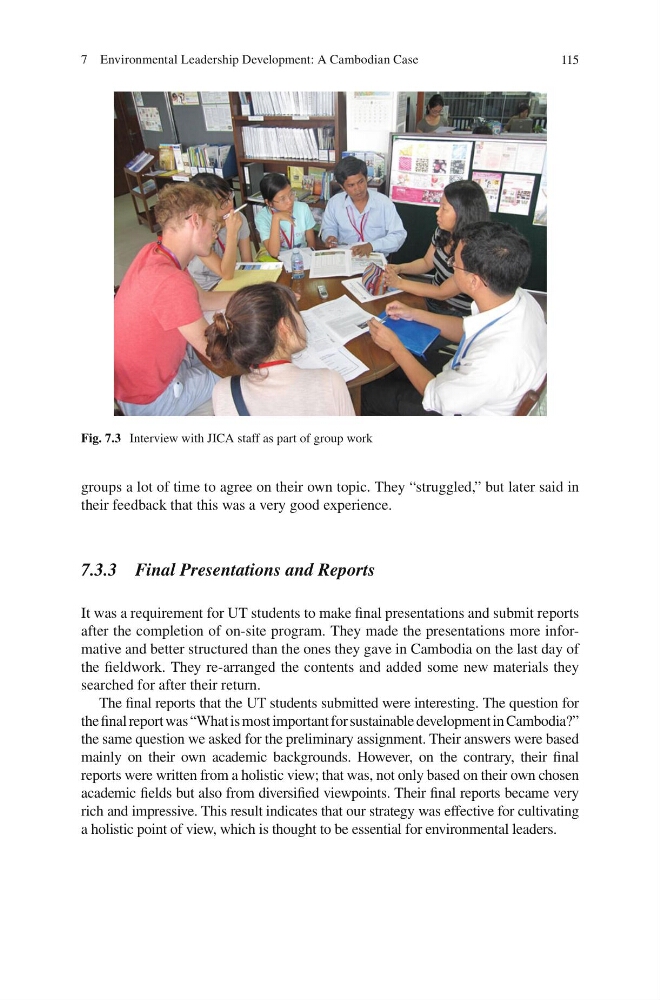
Fig. 7.3 Interview with JICA staff as part of group work
7 Environmental Leadership Development: A Cambodian Case
groups a lot of time to agree on their own topic. They “struggled,” but later said in
their feedback that this was a very good experience.
7.3.3 Final Presentations and Reports
It was a requirement for UT students to make fi nal presentations and submit reports
after the completion of on-site program. They made the presentations more informative and better structured than the ones they gave in Cambodia on the last day of
the fi eldwork. They re-arranged the contents and added some new materials they
searched for after their return.
The fi nal reports that the UT students submitted were interesting. The question for
the fi nal report was “What is most important for sustainable development in Cambodia?”
the same question we asked for the preliminary assignment. Their answers were based
mainly on their own academic backgrounds. However, on the contrary, their fi nal
reports were written from a holistic view; that was, not only based on their own chosen
academic fi elds but also from diversifi ed viewpoints. Their fi nal reports became very
rich and impressive. This result indicates that our strategy was effective for cultivating
a holistic point of view, which is thought to be essential for environmental leaders.
Fig. 7.3 Interview with JICA staff as part of group work
7 Environmental Leadership Development: A Cambodian Case