

136
A. S. Cerda-Kipper and S. Hosseini
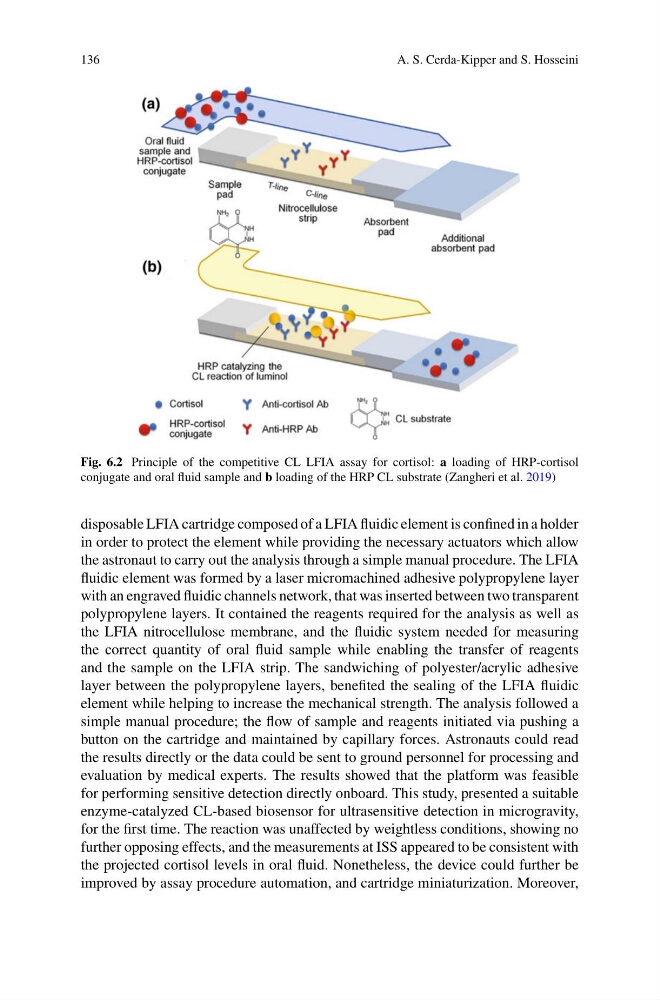
Fig. 6.2 Principle of the competitive CL LFIA assay for cortisol: a loading of HRP-cortisol
conjugate and oral fluid sample and b loading of the HRP CL substrate (Zangheri et al. 2019)
disposable LFIA cartridge composed of a LFIA fluidic element is confined in a holder
in order to protect the element while providing the necessary actuators which allow
the astronaut to carry out the analysis through a simple manual procedure. The LFIA
fluidic element was formed by a laser micromachined adhesive polypropylene layer
with an engraved fluidic channels network, that was inserted between two transparent
polypropylene layers. It contained the reagents required for the analysis as well as
the LFIA nitrocellulose membrane, and the fluidic system needed for measuring
the correct quantity of oral fluid sample while enabling the transfer of reagents
and the sample on the LFIA strip. The sandwiching of polyester/acrylic adhesive
layer between the polypropylene layers, benefited the sealing of the LFIA fluidic
element while helping to increase the mechanical strength. The analysis followed a
simple manual procedure; the flow of sample and reagents initiated via pushing a
button on the cartridge and maintained by capillary forces. Astronauts could read
the results directly or the data could be sent to ground personnel for processing and
evaluation by medical experts. The results showed that the platform was feasible
for performing sensitive detection directly onboard. This study, presented a suitable
enzyme-catalyzed CL-based biosensor for ultrasensitive detection in microgravity,
for the first time. The reaction was unaffected by weightless conditions, showing no
further opposing effects, and the measurements at ISS appeared to be consistent with
the projected cortisol levels in oral fluid. Nonetheless, the device could further be
improved by assay procedure automation, and cartridge miniaturization. Moreover,
A. S. Cerda-Kipper and S. Hosseini
Fig. 6.2 Principle of the competitive CL LFIA assay for cortisol: a loading of HRP-cortisol
conjugate and oral fluid sample and b loading of the HRP CL substrate (Zangheri et al. 2019)
disposable LFIA cartridge composed of a LFIA fluidic element is confined in a holder
in order to protect the element while providing the necessary actuators which allow
the astronaut to carry out the analysis through a simple manual procedure. The LFIA
fluidic element was formed by a laser micromachined adhesive polypropylene layer
with an engraved fluidic channels network, that was inserted between two transparent
polypropylene layers. It contained the reagents required for the analysis as well as
the LFIA nitrocellulose membrane, and the fluidic system needed for measuring
the correct quantity of oral fluid sample while enabling the transfer of reagents
and the sample on the LFIA strip. The sandwiching of polyester/acrylic adhesive
layer between the polypropylene layers, benefited the sealing of the LFIA fluidic
element while helping to increase the mechanical strength. The analysis followed a
simple manual procedure; the flow of sample and reagents initiated via pushing a
button on the cartridge and maintained by capillary forces. Astronauts could read
the results directly or the data could be sent to ground personnel for processing and
evaluation by medical experts. The results showed that the platform was feasible
for performing sensitive detection directly onboard. This study, presented a suitable
enzyme-catalyzed CL-based biosensor for ultrasensitive detection in microgravity,
for the first time. The reaction was unaffected by weightless conditions, showing no
further opposing effects, and the measurements at ISS appeared to be consistent with
the projected cortisol levels in oral fluid. Nonetheless, the device could further be
improved by assay procedure automation, and cartridge miniaturization. Moreover,