

5 Bio-microelectromechanical Systems (BioMEMS) in Bio-sensing …
119
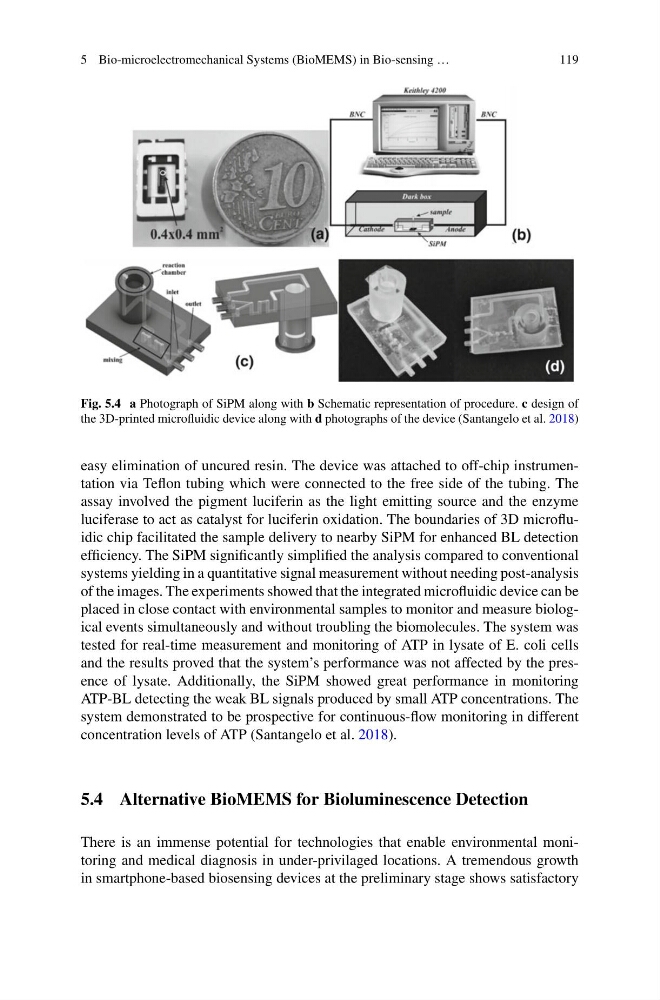
Fig. 5.4 a Photograph of SiPM along with b Schematic representation of procedure. c design of
the 3D-printed microfluidic device along with d photographs of the device (Santangelo et al. 2018)
easy elimination of uncured resin. The device was attached to off-chip instrumentation via Teflon tubing which were connected to the free side of the tubing. The
assay involved the pigment luciferin as the light emitting source and the enzyme
luciferase to act as catalyst for luciferin oxidation. The boundaries of 3D microfluidic chip facilitated the sample delivery to nearby SiPM for enhanced BL detection
efficiency. The SiPM significantly simplified the analysis compared to conventional
systems yielding in a quantitative signal measurement without needing post-analysis
of the images. The experiments showed that the integrated microfluidic device can be
placed in close contact with environmental samples to monitor and measure biological events simultaneously and without troubling the biomolecules. The system was
tested for real-time measurement and monitoring of ATP in lysate of E. coli cells
and the results proved that the system’s performance was not affected by the presence of lysate. Additionally, the SiPM showed great performance in monitoring
ATP-BL detecting the weak BL signals produced by small ATP concentrations. The
system demonstrated to be prospective for continuous-flow monitoring in different
concentration levels of ATP (Santangelo et al. 2018).
5.4 Alternative BioMEMS for Bioluminescence Detection
There is an immense potential for technologies that enable environmental monitoring and medical diagnosis in under-privilaged locations. A tremendous growth
in smartphone-based biosensing devices at the preliminary stage shows satisfactory
119
Fig. 5.4 a Photograph of SiPM along with b Schematic representation of procedure. c design of
the 3D-printed microfluidic device along with d photographs of the device (Santangelo et al. 2018)
easy elimination of uncured resin. The device was attached to off-chip instrumentation via Teflon tubing which were connected to the free side of the tubing. The
assay involved the pigment luciferin as the light emitting source and the enzyme
luciferase to act as catalyst for luciferin oxidation. The boundaries of 3D microfluidic chip facilitated the sample delivery to nearby SiPM for enhanced BL detection
efficiency. The SiPM significantly simplified the analysis compared to conventional
systems yielding in a quantitative signal measurement without needing post-analysis
of the images. The experiments showed that the integrated microfluidic device can be
placed in close contact with environmental samples to monitor and measure biological events simultaneously and without troubling the biomolecules. The system was
tested for real-time measurement and monitoring of ATP in lysate of E. coli cells
and the results proved that the system’s performance was not affected by the presence of lysate. Additionally, the SiPM showed great performance in monitoring
ATP-BL detecting the weak BL signals produced by small ATP concentrations. The
system demonstrated to be prospective for continuous-flow monitoring in different
concentration levels of ATP (Santangelo et al. 2018).
5.4 Alternative BioMEMS for Bioluminescence Detection
There is an immense potential for technologies that enable environmental monitoring and medical diagnosis in under-privilaged locations. A tremendous growth
in smartphone-based biosensing devices at the preliminary stage shows satisfactory