

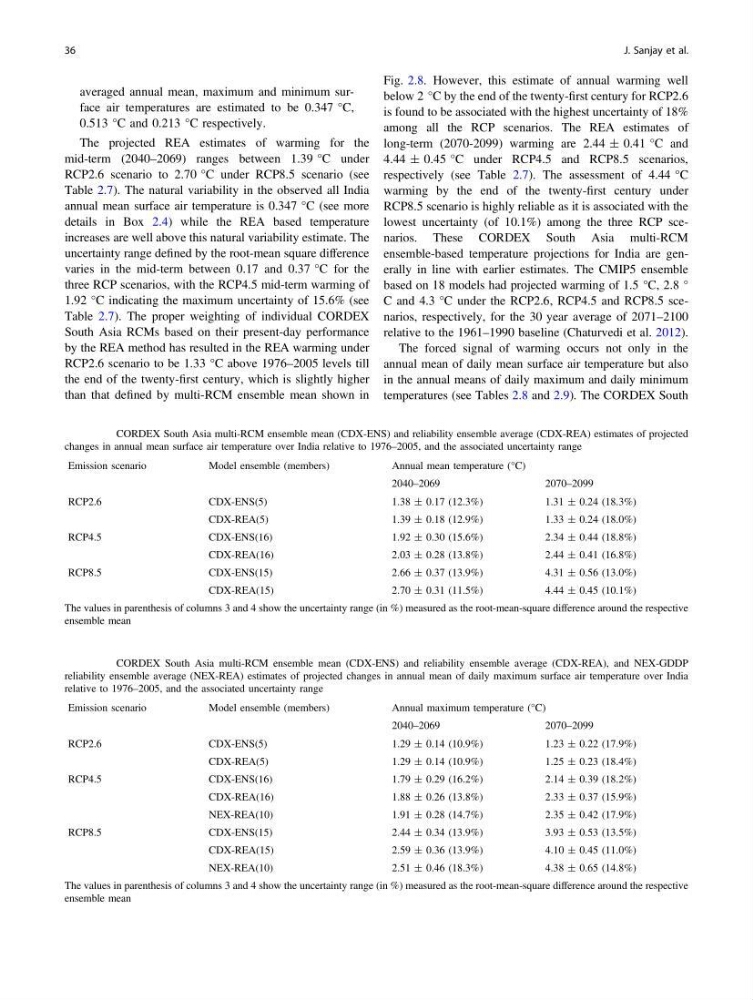
averaged annual mean, maximum and minimum surface air temperatures are estimated to be 0.347 °C,
0.513 °C and 0.213 °C respectively.
The projected REA estimates of warming for the
mid-term (2040–2069) ranges between 1.39 °C under
RCP2.6 scenario to 2.70 °C under RCP8.5 scenario (see
Table 2.7). The natural variability in the observed all India
annual mean surface air temperature is 0.347 °C (see more
details in Box 2.4) while the REA based temperature
increases are well above this natural variability estimate. The
uncertainty range defined by the root-mean square difference
varies in the mid-term between 0.17 and 0.37 °C for the
three RCP scenarios, with the RCP4.5 mid-term warming of
1.92 °C indicating the maximum uncertainty of 15.6% (see
Table 2.7). The proper weighting of individual CORDEX
South Asia RCMs based on their present-day performance
by the REA method has resulted in the REA warming under
RCP2.6 scenario to be 1.33 °C above 1976–2005 levels till
the end of the twenty-first century, which is slightly higher
than that defined by multi-RCM ensemble mean shown in
Fig. 2.8. However, this estimate of annual warming well
below 2 °C by the end of the twenty-first century for RCP2.6
is found to be associated with the highest uncertainty of 18%
among all the RCP scenarios. The REA estimates of
long-term (2070-2099) warming are 2.44 ± 0.41 °C and
4.44 ± 0.45 °C under RCP4.5 and RCP8.5 scenarios,
respectively (see Table 2.7). The assessment of 4.44 °C
warming by the end of the twenty-first century under
RCP8.5 scenario is highly reliable as it is associated with the
lowest uncertainty (of 10.1%) among the three RCP scenarios. These CORDEX South Asia multi-RCM
ensemble-based temperature projections for India are generally in line with earlier estimates. The CMIP5 ensemble
based on 18 models had projected warming of 1.5 °C, 2.8 °
C and 4.3 °C under the RCP2.6, RCP4.5 and RCP8.5 scenarios, respectively, for the 30 year average of 2071–2100
relative to the 1961–1990 baseline (Chaturvedi et al. 2012).
The forced signal of warming occurs not only in the
annual mean of daily mean surface air temperature but also
in the annual means of daily maximum and daily minimum
temperatures (see Tables 2.8 and 2.9). The CORDEX South
Table 2.7 CORDEX South Asia multi-RCM ensemble mean (CDX-ENS) and reliability ensemble average (CDX-REA) estimates of projected
changes in annual mean surface air temperature over India relative to 1976–2005, and the associated uncertainty range
Emission scenario
Model ensemble (members)
Annual mean temperature (°C)
2040–2069
2070–2099
RCP2.6
CDX-ENS(5)
1.38 ± 0.17 (12.3%)
1.31 ± 0.24 (18.3%)
CDX-REA(5)
1.39 ± 0.18 (12.9%)
1.33 ± 0.24 (18.0%)
RCP4.5
CDX-ENS(16)
1.92 ± 0.30 (15.6%)
2.34 ± 0.44 (18.8%)
CDX-REA(16)
2.03 ± 0.28 (13.8%)
2.44 ± 0.41 (16.8%)
RCP8.5
CDX-ENS(15)
2.66 ± 0.37 (13.9%)
4.31 ± 0.56 (13.0%)
CDX-REA(15)
2.70 ± 0.31 (11.5%)
4.44 ± 0.45 (10.1%)
The values in parenthesis of columns 3 and 4 show the uncertainty range (in %) measured as the root-mean-square difference around the respective
ensemble mean
Table 2.8 CORDEX South Asia multi-RCM ensemble mean (CDX-ENS) and reliability ensemble average (CDX-REA), and NEX-GDDP
reliability ensemble average (NEX-REA) estimates of projected changes in annual mean of daily maximum surface air temperature over India
relative to 1976–2005, and the associated uncertainty range
Emission scenario
Model ensemble (members)
Annual maximum temperature (°C)
2040–2069
2070–2099
RCP2.6
CDX-ENS(5)
1.29 ± 0.14 (10.9%)
1.23 ± 0.22 (17.9%)
CDX-REA(5)
1.29 ± 0.14 (10.9%)
1.25 ± 0.23 (18.4%)
RCP4.5
CDX-ENS(16)
1.79 ± 0.29 (16.2%)
2.14 ± 0.39 (18.2%)
CDX-REA(16)
1.88 ± 0.26 (13.8%)
2.33 ± 0.37 (15.9%)
NEX-REA(10)
1.91 ± 0.28 (14.7%)
2.35 ± 0.42 (17.9%)
RCP8.5
CDX-ENS(15)
2.44 ± 0.34 (13.9%)
3.93 ± 0.53 (13.5%)
CDX-REA(15)
2.59 ± 0.36 (13.9%)
4.10 ± 0.45 (11.0%)
NEX-REA(10)
2.51 ± 0.46 (18.3%)
4.38 ± 0.65 (14.8%)
The values in parenthesis of columns 3 and 4 show the uncertainty range (in %) measured as the root-mean-square difference around the respective
ensemble mean
36
J. Sanjay et al.
0.513 °C and 0.213 °C respectively.
The projected REA estimates of warming for the
mid-term (2040–2069) ranges between 1.39 °C under
RCP2.6 scenario to 2.70 °C under RCP8.5 scenario (see
Table 2.7). The natural variability in the observed all India
annual mean surface air temperature is 0.347 °C (see more
details in Box 2.4) while the REA based temperature
increases are well above this natural variability estimate. The
uncertainty range defined by the root-mean square difference
varies in the mid-term between 0.17 and 0.37 °C for the
three RCP scenarios, with the RCP4.5 mid-term warming of
1.92 °C indicating the maximum uncertainty of 15.6% (see
Table 2.7). The proper weighting of individual CORDEX
South Asia RCMs based on their present-day performance
by the REA method has resulted in the REA warming under
RCP2.6 scenario to be 1.33 °C above 1976–2005 levels till
the end of the twenty-first century, which is slightly higher
than that defined by multi-RCM ensemble mean shown in
Fig. 2.8. However, this estimate of annual warming well
below 2 °C by the end of the twenty-first century for RCP2.6
is found to be associated with the highest uncertainty of 18%
among all the RCP scenarios. The REA estimates of
long-term (2070-2099) warming are 2.44 ± 0.41 °C and
4.44 ± 0.45 °C under RCP4.5 and RCP8.5 scenarios,
respectively (see Table 2.7). The assessment of 4.44 °C
warming by the end of the twenty-first century under
RCP8.5 scenario is highly reliable as it is associated with the
lowest uncertainty (of 10.1%) among the three RCP scenarios. These CORDEX South Asia multi-RCM
ensemble-based temperature projections for India are generally in line with earlier estimates. The CMIP5 ensemble
based on 18 models had projected warming of 1.5 °C, 2.8 °
C and 4.3 °C under the RCP2.6, RCP4.5 and RCP8.5 scenarios, respectively, for the 30 year average of 2071–2100
relative to the 1961–1990 baseline (Chaturvedi et al. 2012).
The forced signal of warming occurs not only in the
annual mean of daily mean surface air temperature but also
in the annual means of daily maximum and daily minimum
temperatures (see Tables 2.8 and 2.9). The CORDEX South
Table 2.7 CORDEX South Asia multi-RCM ensemble mean (CDX-ENS) and reliability ensemble average (CDX-REA) estimates of projected
changes in annual mean surface air temperature over India relative to 1976–2005, and the associated uncertainty range
Emission scenario
Model ensemble (members)
Annual mean temperature (°C)
2040–2069
2070–2099
RCP2.6
CDX-ENS(5)
1.38 ± 0.17 (12.3%)
1.31 ± 0.24 (18.3%)
CDX-REA(5)
1.39 ± 0.18 (12.9%)
1.33 ± 0.24 (18.0%)
RCP4.5
CDX-ENS(16)
1.92 ± 0.30 (15.6%)
2.34 ± 0.44 (18.8%)
CDX-REA(16)
2.03 ± 0.28 (13.8%)
2.44 ± 0.41 (16.8%)
RCP8.5
CDX-ENS(15)
2.66 ± 0.37 (13.9%)
4.31 ± 0.56 (13.0%)
CDX-REA(15)
2.70 ± 0.31 (11.5%)
4.44 ± 0.45 (10.1%)
The values in parenthesis of columns 3 and 4 show the uncertainty range (in %) measured as the root-mean-square difference around the respective
ensemble mean
Table 2.8 CORDEX South Asia multi-RCM ensemble mean (CDX-ENS) and reliability ensemble average (CDX-REA), and NEX-GDDP
reliability ensemble average (NEX-REA) estimates of projected changes in annual mean of daily maximum surface air temperature over India
relative to 1976–2005, and the associated uncertainty range
Emission scenario
Model ensemble (members)
Annual maximum temperature (°C)
2040–2069
2070–2099
RCP2.6
CDX-ENS(5)
1.29 ± 0.14 (10.9%)
1.23 ± 0.22 (17.9%)
CDX-REA(5)
1.29 ± 0.14 (10.9%)
1.25 ± 0.23 (18.4%)
RCP4.5
CDX-ENS(16)
1.79 ± 0.29 (16.2%)
2.14 ± 0.39 (18.2%)
CDX-REA(16)
1.88 ± 0.26 (13.8%)
2.33 ± 0.37 (15.9%)
NEX-REA(10)
1.91 ± 0.28 (14.7%)
2.35 ± 0.42 (17.9%)
RCP8.5
CDX-ENS(15)
2.44 ± 0.34 (13.9%)
3.93 ± 0.53 (13.5%)
CDX-REA(15)
2.59 ± 0.36 (13.9%)
4.10 ± 0.45 (11.0%)
NEX-REA(10)
2.51 ± 0.46 (18.3%)
4.38 ± 0.65 (14.8%)
The values in parenthesis of columns 3 and 4 show the uncertainty range (in %) measured as the root-mean-square difference around the respective
ensemble mean
36
J. Sanjay et al.