

40
2 Fundamental Properties of Mem-Elements
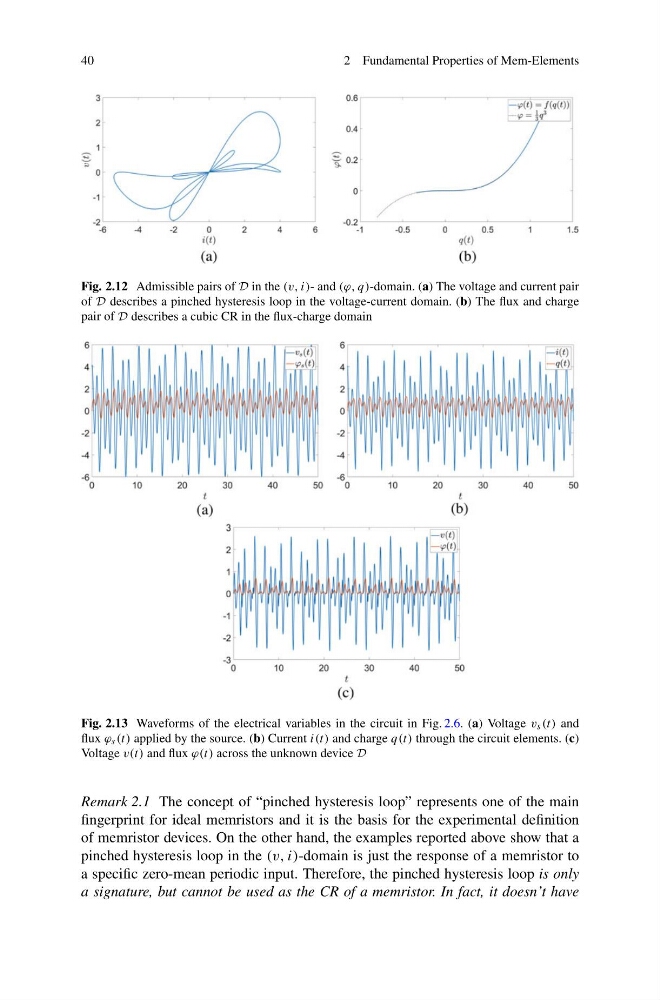
Fig. 2.12 Admissible pairs of D in the (v, i)- and (ϕ, q)-domain. (a) The voltage and current pair
of D describes a pinched hysteresis loop in the voltage-current domain. (b) The flux and charge
pair of D describes a cubic CR in the flux-charge domain
Fig. 2.13 Waveforms of the electrical variables in the circuit in Fig. 2.6. (a) Voltage v s (t) and
flux ϕ s (t) applied by the source. (b) Current i(t) and charge q(t) through the circuit elements. (c)
Voltage v(t) and flux ϕ(t) across the unknown device D
Remark 2.1 The concept of “pinched hysteresis loop” represents one of the main
fingerprint for ideal memristors and it is the basis for the experimental definition
of memristor devices. On the other hand, the examples reported above show that a
pinched hysteresis loop in the (v, i)-domain is just the response of a memristor to
a specific zero-mean periodic input. Therefore, the pinched hysteresis loop is only
a signature, but cannot be used as the CR of a memristor. In fact, it doesn’t have
2 Fundamental Properties of Mem-Elements
Fig. 2.12 Admissible pairs of D in the (v, i)- and (ϕ, q)-domain. (a) The voltage and current pair
of D describes a pinched hysteresis loop in the voltage-current domain. (b) The flux and charge
pair of D describes a cubic CR in the flux-charge domain
Fig. 2.13 Waveforms of the electrical variables in the circuit in Fig. 2.6. (a) Voltage v s (t) and
flux ϕ s (t) applied by the source. (b) Current i(t) and charge q(t) through the circuit elements. (c)
Voltage v(t) and flux ϕ(t) across the unknown device D
Remark 2.1 The concept of “pinched hysteresis loop” represents one of the main
fingerprint for ideal memristors and it is the basis for the experimental definition
of memristor devices. On the other hand, the examples reported above show that a
pinched hysteresis loop in the (v, i)-domain is just the response of a memristor to
a specific zero-mean periodic input. Therefore, the pinched hysteresis loop is only
a signature, but cannot be used as the CR of a memristor. In fact, it doesn’t have