

54
3 Active Colloids
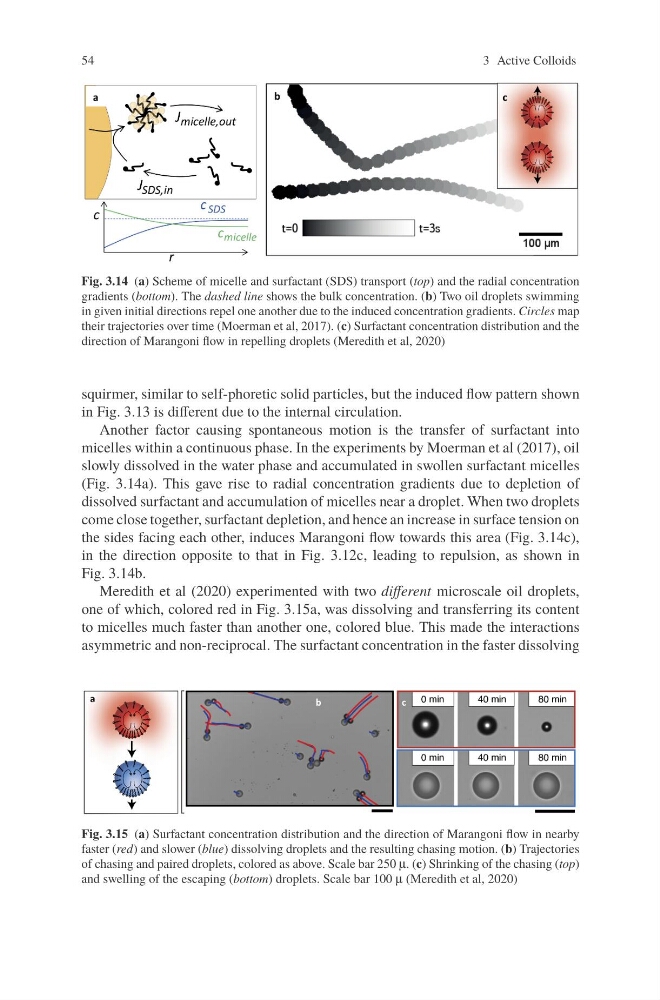
Fig. 3.14 (a) Scheme of micelle and surfactant (SDS) transport (top) and the radial concentration
gradients (bottom). The dashed line shows the bulk concentration. (b) Two oil droplets swimming
in given initial directions repel one another due to the induced concentration gradients. Circles map
their trajectories over time (Moerman et al, 2017). (c) Surfactant concentration distribution and the
direction of Marangoni flow in repelling droplets (Meredith et al, 2020)
squirmer, similar to self-phoretic solid particles, but the induced flow pattern shown
in Fig. 3.13 is different due to the internal circulation.
Another factor causing spontaneous motion is the transfer of surfactant into
micelles within a continuous phase. In the experiments by Moerman et al (2017), oil
slowly dissolved in the water phase and accumulated in swollen surfactant micelles
(Fig. 3.14a). This gave rise to radial concentration gradients due to depletion of
dissolved surfactant and accumulation of micelles near a droplet. When two droplets
come close together, surfactant depletion, and hence an increase in surface tension on
the sides facing each other, induces Marangoni flow towards this area (Fig. 3.14c),
in the direction opposite to that in Fig. 3.12c, leading to repulsion, as shown in
Fig. 3.14b.
Meredith et al (2020) experimented with two different microscale oil droplets,
one of which, colored red in Fig. 3.15a, was dissolving and transferring its content
to micelles much faster than another one, colored blue. This made the interactions
asymmetric and non-reciprocal. The surfactant concentration in the faster dissolving
Fig. 3.15 (a) Surfactant concentration distribution and the direction of Marangoni flow in nearby
faster (red) and slower (blue) dissolving droplets and the resulting chasing motion. (b) Trajectories
of chasing and paired droplets, colored as above. Scale bar 250 μ. (c) Shrinking of the chasing (top)
and swelling of the escaping (bottom) droplets. Scale bar 100 μ (Meredith et al, 2020)
3 Active Colloids
Fig. 3.14 (a) Scheme of micelle and surfactant (SDS) transport (top) and the radial concentration
gradients (bottom). The dashed line shows the bulk concentration. (b) Two oil droplets swimming
in given initial directions repel one another due to the induced concentration gradients. Circles map
their trajectories over time (Moerman et al, 2017). (c) Surfactant concentration distribution and the
direction of Marangoni flow in repelling droplets (Meredith et al, 2020)
squirmer, similar to self-phoretic solid particles, but the induced flow pattern shown
in Fig. 3.13 is different due to the internal circulation.
Another factor causing spontaneous motion is the transfer of surfactant into
micelles within a continuous phase. In the experiments by Moerman et al (2017), oil
slowly dissolved in the water phase and accumulated in swollen surfactant micelles
(Fig. 3.14a). This gave rise to radial concentration gradients due to depletion of
dissolved surfactant and accumulation of micelles near a droplet. When two droplets
come close together, surfactant depletion, and hence an increase in surface tension on
the sides facing each other, induces Marangoni flow towards this area (Fig. 3.14c),
in the direction opposite to that in Fig. 3.12c, leading to repulsion, as shown in
Fig. 3.14b.
Meredith et al (2020) experimented with two different microscale oil droplets,
one of which, colored red in Fig. 3.15a, was dissolving and transferring its content
to micelles much faster than another one, colored blue. This made the interactions
asymmetric and non-reciprocal. The surfactant concentration in the faster dissolving
Fig. 3.15 (a) Surfactant concentration distribution and the direction of Marangoni flow in nearby
faster (red) and slower (blue) dissolving droplets and the resulting chasing motion. (b) Trajectories
of chasing and paired droplets, colored as above. Scale bar 250 μ. (c) Shrinking of the chasing (top)
and swelling of the escaping (bottom) droplets. Scale bar 100 μ (Meredith et al, 2020)