

52
3 Active Colloids
attractive to the fully repulsive mode is not abrupt (Fig. 3.10). Oscillatory “waltzing”
in Fig. 3.9c requires a special design of the catalytic coat.
According to Fig. 3.10, taking into account hydrodynamic interactions does not
change the picture in a qualitative way, but the theory has another weak point: it
views the concentration distribution as quasistationary at current particle positions.
This approach is justified for hydrodynamic interactions, as we mentioned at the end
of Sect. 2.1, but diffusion in liquids is very slow, and quasistationarity, while valid
in nanoscale layers that define the slip velocity (Sect. 3.2), may already become
questionable on the microscale. Of course, solving the time-dependent diffusion
equation would make the theory far more complicated.
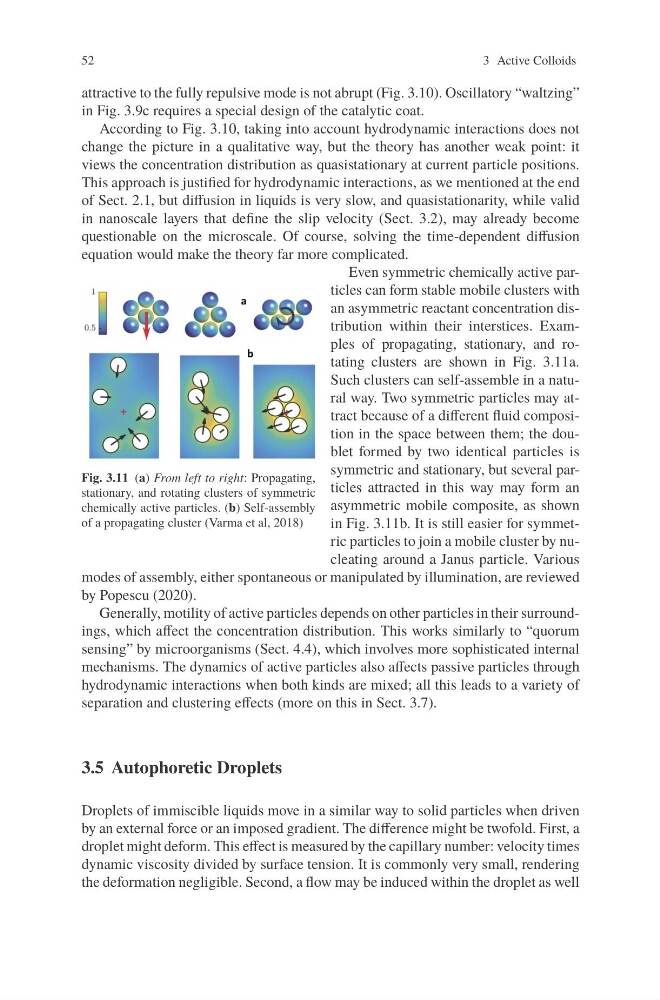
Fig. 3.11 (a) From left to right: Propagating,
stationary, and rotating clusters of symmetric
chemically active particles. (b) Self-assembly
of a propagating cluster (Varma et al, 2018)
Even symmetric chemically active particles can form stable mobile clusters with
an asymmetric reactant concentration distribution within their interstices. Examples of propagating, stationary, and rotating clusters are shown in Fig. 3.11a.
Such clusters can self-assemble in a natural way. Two symmetric particles may attract because of a different fluid composition in the space between them; the doublet formed by two identical particles is
symmetric and stationary, but several particles attracted in this way may form an
asymmetric mobile composite, as shown
in Fig. 3.11b. It is still easier for symmetric particles to join a mobile cluster by nucleating around a Janus particle. Various
modes of assembly, either spontaneous or manipulated by illumination, are reviewed
by Popescu (2020).
Generally, motility of active particles depends on other particles in their surroundings, which affect the concentration distribution. This works similarly to “quorum
sensing” by microorganisms (Sect. 4.4), which involves more sophisticated internal
mechanisms. The dynamics of active particles also affects passive particles through
hydrodynamic interactions when both kinds are mixed; all this leads to a variety of
separation and clustering effects (more on this in Sect. 3.7).
3.5 Autophoretic Droplets
Droplets of immiscible liquids move in a similar way to solid particles when driven
by an external force or an imposed gradient. The difference might be twofold. First, a
droplet might deform. This effect is measured by the capillary number: velocity times
dynamic viscosity divided by surface tension. It is commonly very small, rendering
the deformation negligible. Second, a flow may be induced within the droplet as well
3 Active Colloids
attractive to the fully repulsive mode is not abrupt (Fig. 3.10). Oscillatory “waltzing”
in Fig. 3.9c requires a special design of the catalytic coat.
According to Fig. 3.10, taking into account hydrodynamic interactions does not
change the picture in a qualitative way, but the theory has another weak point: it
views the concentration distribution as quasistationary at current particle positions.
This approach is justified for hydrodynamic interactions, as we mentioned at the end
of Sect. 2.1, but diffusion in liquids is very slow, and quasistationarity, while valid
in nanoscale layers that define the slip velocity (Sect. 3.2), may already become
questionable on the microscale. Of course, solving the time-dependent diffusion
equation would make the theory far more complicated.
Fig. 3.11 (a) From left to right: Propagating,
stationary, and rotating clusters of symmetric
chemically active particles. (b) Self-assembly
of a propagating cluster (Varma et al, 2018)
Even symmetric chemically active particles can form stable mobile clusters with
an asymmetric reactant concentration distribution within their interstices. Examples of propagating, stationary, and rotating clusters are shown in Fig. 3.11a.
Such clusters can self-assemble in a natural way. Two symmetric particles may attract because of a different fluid composition in the space between them; the doublet formed by two identical particles is
symmetric and stationary, but several particles attracted in this way may form an
asymmetric mobile composite, as shown
in Fig. 3.11b. It is still easier for symmetric particles to join a mobile cluster by nucleating around a Janus particle. Various
modes of assembly, either spontaneous or manipulated by illumination, are reviewed
by Popescu (2020).
Generally, motility of active particles depends on other particles in their surroundings, which affect the concentration distribution. This works similarly to “quorum
sensing” by microorganisms (Sect. 4.4), which involves more sophisticated internal
mechanisms. The dynamics of active particles also affects passive particles through
hydrodynamic interactions when both kinds are mixed; all this leads to a variety of
separation and clustering effects (more on this in Sect. 3.7).
3.5 Autophoretic Droplets
Droplets of immiscible liquids move in a similar way to solid particles when driven
by an external force or an imposed gradient. The difference might be twofold. First, a
droplet might deform. This effect is measured by the capillary number: velocity times
dynamic viscosity divided by surface tension. It is commonly very small, rendering
the deformation negligible. Second, a flow may be induced within the droplet as well