

125
Social norms
Personal norms
Awareness of
Consequences
Ascribed
Responsibility
Recy cling/
Non-Littering
(Altruism)
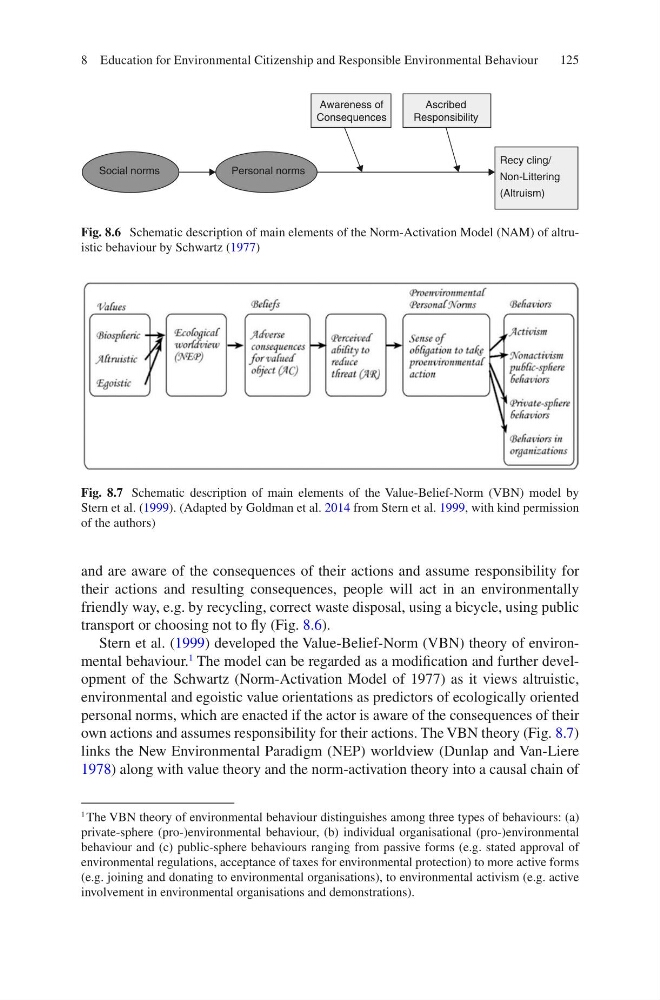
Fig. 8.6 Schematic description of main elements of the Norm-Activation Model (NAM) of altruistic behaviour by Schwartz (1977)
Fig. 8.7 Schematic description of main elements of the Value-Belief-Norm (VBN) model by
Stern et al. (1999). (Adapted by Goldman et al. 2014 from Stern et al. 1999, with kind permission
of the authors)
and are aware of the consequences of their actions and assume responsibility for
their actions and resulting consequences, people will act in an environmentally
friendly way, e.g. by recycling, correct waste disposal, using a bicycle, using public
transport or choosing not to fly (Fig. 8.6).
Stern et al. (1999) developed the Value-Belief-Norm (VBN) theory of environmental behaviour.
1
The model can be regarded as a modification and further development of the Schwartz (Norm-Activation Model of 1977) as it views altruistic,
environmental and egoistic value orientations as predictors of ecologically oriented
personal norms, which are enacted if the actor is aware of the consequences of their
own actions and assumes responsibility for their actions. The VBN theory (Fig. 8.7)
links the New Environmental Paradigm (NEP) worldview (Dunlap and Van-Liere
1978) along with value theory and the norm-activation theory into a causal chain of
1 The VBN theory of environmental behaviour distinguishes among three types of behaviours: (a)
private-sphere (pro-)environmental behaviour, (b) individual organisational (pro-)environmental
behaviour and (c) public-sphere behaviours ranging from passive forms (e.g. stated approval of
environmental regulations, acceptance of taxes for environmental protection) to more active forms
(e.g. joining and donating to environmental organisations), to environmental activism (e.g. active
involvement in environmental organisations and demonstrations).
8 Education for Environmental Citizenship and Responsible Environmental Behaviour
Social norms
Personal norms
Awareness of
Consequences
Ascribed
Responsibility
Recy cling/
Non-Littering
(Altruism)
Fig. 8.6 Schematic description of main elements of the Norm-Activation Model (NAM) of altruistic behaviour by Schwartz (1977)
Fig. 8.7 Schematic description of main elements of the Value-Belief-Norm (VBN) model by
Stern et al. (1999). (Adapted by Goldman et al. 2014 from Stern et al. 1999, with kind permission
of the authors)
and are aware of the consequences of their actions and assume responsibility for
their actions and resulting consequences, people will act in an environmentally
friendly way, e.g. by recycling, correct waste disposal, using a bicycle, using public
transport or choosing not to fly (Fig. 8.6).
Stern et al. (1999) developed the Value-Belief-Norm (VBN) theory of environmental behaviour.
1
The model can be regarded as a modification and further development of the Schwartz (Norm-Activation Model of 1977) as it views altruistic,
environmental and egoistic value orientations as predictors of ecologically oriented
personal norms, which are enacted if the actor is aware of the consequences of their
own actions and assumes responsibility for their actions. The VBN theory (Fig. 8.7)
links the New Environmental Paradigm (NEP) worldview (Dunlap and Van-Liere
1978) along with value theory and the norm-activation theory into a causal chain of
1 The VBN theory of environmental behaviour distinguishes among three types of behaviours: (a)
private-sphere (pro-)environmental behaviour, (b) individual organisational (pro-)environmental
behaviour and (c) public-sphere behaviours ranging from passive forms (e.g. stated approval of
environmental regulations, acceptance of taxes for environmental protection) to more active forms
(e.g. joining and donating to environmental organisations), to environmental activism (e.g. active
involvement in environmental organisations and demonstrations).
8 Education for Environmental Citizenship and Responsible Environmental Behaviour