

124
Normative
Beliefs
Behavioral
Beliefs
Subjective
Norm
Intention
Behavior
Control
Beliefs
Perceived
Behavioral
Control
Attitude
toward the
Behavior
Actual
Behavioral
Control
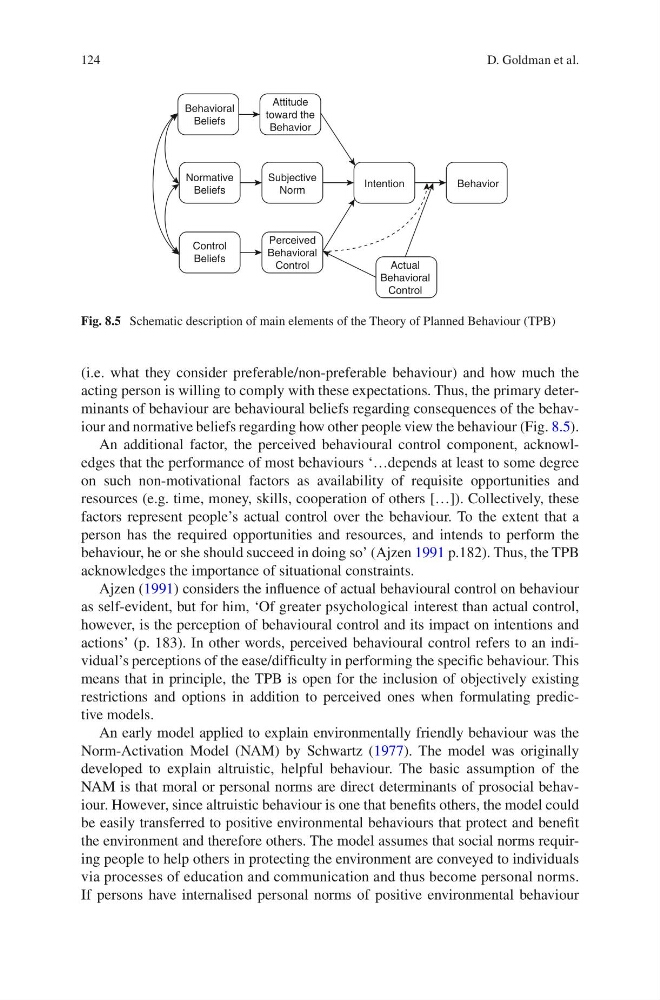
Fig. 8.5 Schematic description of main elements of the Theory of Planned Behaviour (TPB)
(i.e. what they consider preferable/non-preferable behaviour) and how much the
acting person is willing to comply with these expectations. Thus, the primary determinants of behaviour are behavioural beliefs regarding consequences of the behaviour and normative beliefs regarding how other people view the behaviour (Fig. 8.5).
An additional factor, the perceived behavioural control component, acknowledges that the performance of most behaviours ‘…depends at least to some degree
on such non-motivational factors as availability of requisite opportunities and
resources (e.g. time, money, skills, cooperation of others […]). Collectively, these
factors represent people’s actual control over the behaviour. To the extent that a
person has the required opportunities and resources, and intends to perform the
behaviour, he or she should succeed in doing so’ (Ajzen 1991 p.182). Thus, the TPB
acknowledges the importance of situational constraints.
Ajzen (1991) considers the influence of actual behavioural control on behaviour
as self-evident, but for him, ‘Of greater psychological interest than actual control,
however, is the perception of behavioural control and its impact on intentions and
actions’ (p. 183). In other words, perceived behavioural control refers to an individual’s perceptions of the ease/difficulty in performing the specific behaviour. This
means that in principle, the TPB is open for the inclusion of objectively existing
restrictions and options in addition to perceived ones when formulating predictive models.
An early model applied to explain environmentally friendly behaviour was the
Norm-Activation Model (NAM) by Schwartz (1977). The model was originally
developed to explain altruistic, helpful behaviour. The basic assumption of the
NAM is that moral or personal norms are direct determinants of prosocial behaviour. However, since altruistic behaviour is one that benefits others, the model could
be easily transferred to positive environmental behaviours that protect and benefit
the environment and therefore others. The model assumes that social norms requiring people to help others in protecting the environment are conveyed to individuals
via processes of education and communication and thus become personal norms.
If persons have internalised personal norms of positive environmental behaviour
D. Goldman et al.
Normative
Beliefs
Behavioral
Beliefs
Subjective
Norm
Intention
Behavior
Control
Beliefs
Perceived
Behavioral
Control
Attitude
toward the
Behavior
Actual
Behavioral
Control
Fig. 8.5 Schematic description of main elements of the Theory of Planned Behaviour (TPB)
(i.e. what they consider preferable/non-preferable behaviour) and how much the
acting person is willing to comply with these expectations. Thus, the primary determinants of behaviour are behavioural beliefs regarding consequences of the behaviour and normative beliefs regarding how other people view the behaviour (Fig. 8.5).
An additional factor, the perceived behavioural control component, acknowledges that the performance of most behaviours ‘…depends at least to some degree
on such non-motivational factors as availability of requisite opportunities and
resources (e.g. time, money, skills, cooperation of others […]). Collectively, these
factors represent people’s actual control over the behaviour. To the extent that a
person has the required opportunities and resources, and intends to perform the
behaviour, he or she should succeed in doing so’ (Ajzen 1991 p.182). Thus, the TPB
acknowledges the importance of situational constraints.
Ajzen (1991) considers the influence of actual behavioural control on behaviour
as self-evident, but for him, ‘Of greater psychological interest than actual control,
however, is the perception of behavioural control and its impact on intentions and
actions’ (p. 183). In other words, perceived behavioural control refers to an individual’s perceptions of the ease/difficulty in performing the specific behaviour. This
means that in principle, the TPB is open for the inclusion of objectively existing
restrictions and options in addition to perceived ones when formulating predictive models.
An early model applied to explain environmentally friendly behaviour was the
Norm-Activation Model (NAM) by Schwartz (1977). The model was originally
developed to explain altruistic, helpful behaviour. The basic assumption of the
NAM is that moral or personal norms are direct determinants of prosocial behaviour. However, since altruistic behaviour is one that benefits others, the model could
be easily transferred to positive environmental behaviours that protect and benefit
the environment and therefore others. The model assumes that social norms requiring people to help others in protecting the environment are conveyed to individuals
via processes of education and communication and thus become personal norms.
If persons have internalised personal norms of positive environmental behaviour
D. Goldman et al.