

6 Cocoon Silk: From Mesoscopic Materials Design …
249
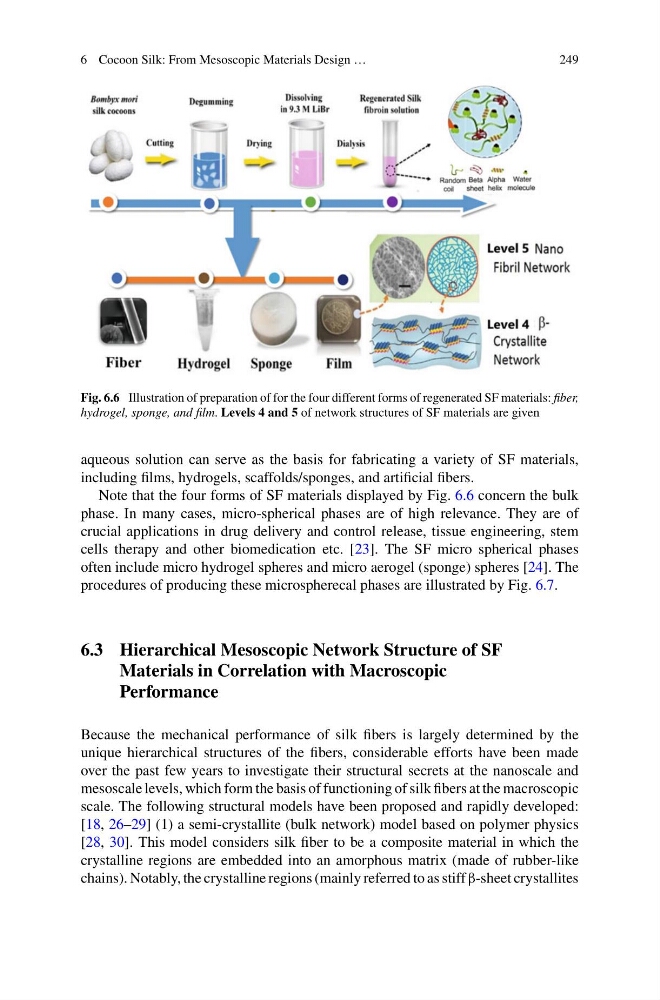
Fig. 6.6 Illustration of preparation of for the four different forms of regenerated SF materials: fiber,
hydrogel, sponge, and film. Levels 4 and 5 of network structures of SF materials are given
aqueous solution can serve as the basis for fabricating a variety of SF materials,
including films, hydrogels, scaffolds/sponges, and artificial fibers.
Note that the four forms of SF materials displayed by Fig. 6.6 concern the bulk
phase. In many cases, micro-spherical phases are of high relevance. They are of
crucial applications in drug delivery and control release, tissue engineering, stem
cells therapy and other biomedication etc. [23]. The SF micro spherical phases
often include micro hydrogel spheres and micro aerogel (sponge) spheres [24]. The
procedures of producing these microspherecal phases are illustrated by Fig. 6.7.
6.3 Hierarchical Mesoscopic Network Structure of SF
Materials in Correlation with Macroscopic
Performance
Because the mechanical performance of silk fibers is largely determined by the
unique hierarchical structures of the fibers, considerable efforts have been made
over the past few years to investigate their structural secrets at the nanoscale and
mesoscale levels, which form the basis of functioning of silk fibers at the macroscopic
scale. The following structural models have been proposed and rapidly developed:
[18, 26–29] (1) a semi-crystallite (bulk network) model based on polymer physics
[28, 30]. This model considers silk fiber to be a composite material in which the
crystalline regions are embedded into an amorphous matrix (made of rubber-like
chains). Notably, the crystalline regions (mainly referred to as stiff β-sheet crystallites
249
Fig. 6.6 Illustration of preparation of for the four different forms of regenerated SF materials: fiber,
hydrogel, sponge, and film. Levels 4 and 5 of network structures of SF materials are given
aqueous solution can serve as the basis for fabricating a variety of SF materials,
including films, hydrogels, scaffolds/sponges, and artificial fibers.
Note that the four forms of SF materials displayed by Fig. 6.6 concern the bulk
phase. In many cases, micro-spherical phases are of high relevance. They are of
crucial applications in drug delivery and control release, tissue engineering, stem
cells therapy and other biomedication etc. [23]. The SF micro spherical phases
often include micro hydrogel spheres and micro aerogel (sponge) spheres [24]. The
procedures of producing these microspherecal phases are illustrated by Fig. 6.7.
6.3 Hierarchical Mesoscopic Network Structure of SF
Materials in Correlation with Macroscopic
Performance
Because the mechanical performance of silk fibers is largely determined by the
unique hierarchical structures of the fibers, considerable efforts have been made
over the past few years to investigate their structural secrets at the nanoscale and
mesoscale levels, which form the basis of functioning of silk fibers at the macroscopic
scale. The following structural models have been proposed and rapidly developed:
[18, 26–29] (1) a semi-crystallite (bulk network) model based on polymer physics
[28, 30]. This model considers silk fiber to be a composite material in which the
crystalline regions are embedded into an amorphous matrix (made of rubber-like
chains). Notably, the crystalline regions (mainly referred to as stiff β-sheet crystallites