

352
7 The Amazing Diversity of Brass Instruments
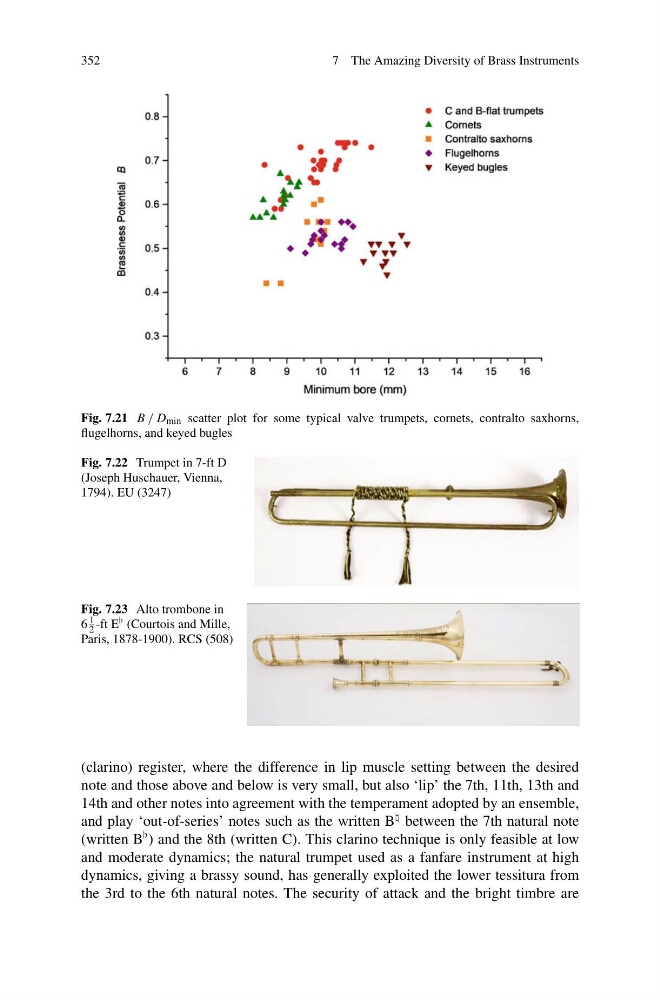
Fig. 7.21 B / D min scatter plot for some typical valve trumpets, cornets, contralto saxhorns,
flugelhorns, and keyed bugles
Fig. 7.22 Trumpet in 7-ft D
(Joseph Huschauer, Vienna,
1794). EU (3247)
Fig. 7.23 Alto trombone in
6
1
2 -ft E (Courtois and Mille,
Paris, 1878-1900). RCS (508)
(clarino) register, where the difference in lip muscle setting between the desired
note and those above and below is very small, but also ‘lip’ the 7th, 11th, 13th and
14th and other notes into agreement with the temperament adopted by an ensemble,
and play ‘out-of-series’ notes such as the written B between the 7th natural note
(written B ) and the 8th (written C). This clarino technique is only feasible at low
and moderate dynamics; the natural trumpet used as a fanfare instrument at high
dynamics, giving a brassy sound, has generally exploited the lower tessitura from
the 3rd to the 6th natural notes. The security of attack and the bright timbre are
7 The Amazing Diversity of Brass Instruments
Fig. 7.21 B / D min scatter plot for some typical valve trumpets, cornets, contralto saxhorns,
flugelhorns, and keyed bugles
Fig. 7.22 Trumpet in 7-ft D
(Joseph Huschauer, Vienna,
1794). EU (3247)
Fig. 7.23 Alto trombone in
6
1
2 -ft E (Courtois and Mille,
Paris, 1878-1900). RCS (508)
(clarino) register, where the difference in lip muscle setting between the desired
note and those above and below is very small, but also ‘lip’ the 7th, 11th, 13th and
14th and other notes into agreement with the temperament adopted by an ensemble,
and play ‘out-of-series’ notes such as the written B between the 7th natural note
(written B ) and the 8th (written C). This clarino technique is only feasible at low
and moderate dynamics; the natural trumpet used as a fanfare instrument at high
dynamics, giving a brassy sound, has generally exploited the lower tessitura from
the 3rd to the 6th natural notes. The security of attack and the bright timbre are